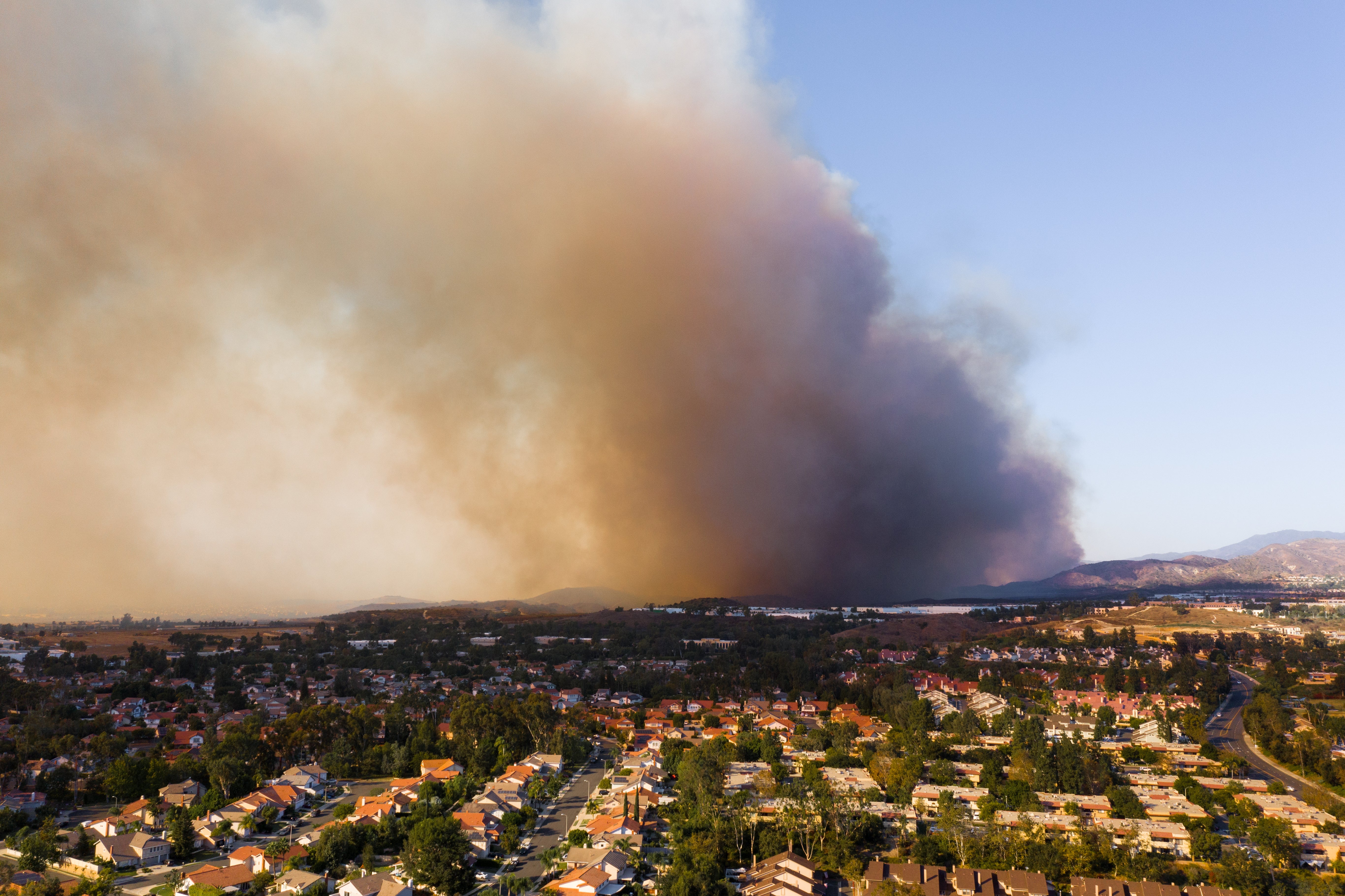
In California, the question of utility infrastructure maintenance arrived on the floor of the state legislature this year. The debate centers around the contentious question of how much financial responsibility should utility companies face if their equipment causes a catastrophic wildfire. But there is another, equally pressing, question: Where exactly does infrastructure pose wildfire risk to homes, and how big could the bill be if a wildfire sweeps through the area?
Cotality analyzed this question across the service territories of California’s three major investor-owned utilities: Pacific Gas & Electric (PG&E), Southern California Edison (SCE), and San Diego Gas & Electric (SDG&E).
It turns out that over one million residential properties are at moderate or greater risk of wildfires. That number of homes translates to $702 billion in total reconstruction cost value.
Utility service territory risk profiles
Data source: Cotality, 2026
That number isn’t the full story. California is served by 85 electric utility providers. A good number of those utilities serve densely populated, wildfire-prone areas.
In the state’s legislative seat of Sacramento County, PG&E only serves 2,500 homes. And those homes are on flat, irrigated land, which brings down the utility’s total home exposure risk. The wildfire risk in that area falls primarily on Sacramento Municipal Utility District utilities. Navigating that boundary division for a cohesive mitigation strategy requires coordination. Coordination requires insight.

Well-priced policy
The cost of wildfires is high. In California, they strain insurance operations. They can leave utilities struggling to maintain solvency. Even in some of the wealthiest ZIP codes in the U.S., their destruction is leading to homeowners putting off mortgage payments in the wake of their destruction.
These acute events ignite without warning, but they don’t have to arrive without preparation. The California bill calls on utilities to have a wildfire mitigation plan. But to plan, you need to understand the risk.
Risk is quietly shifting the narrative of home ownership. Buyers, lenders, and insurers need property-level clarity before the total price can be judged with confidence, and they can implement risk mitigation to build long-term resilience.
Knowing the size and scope of the risk exposure will aid lawmakers and communities with objective hazard assessment, community hardening, and mitigation.