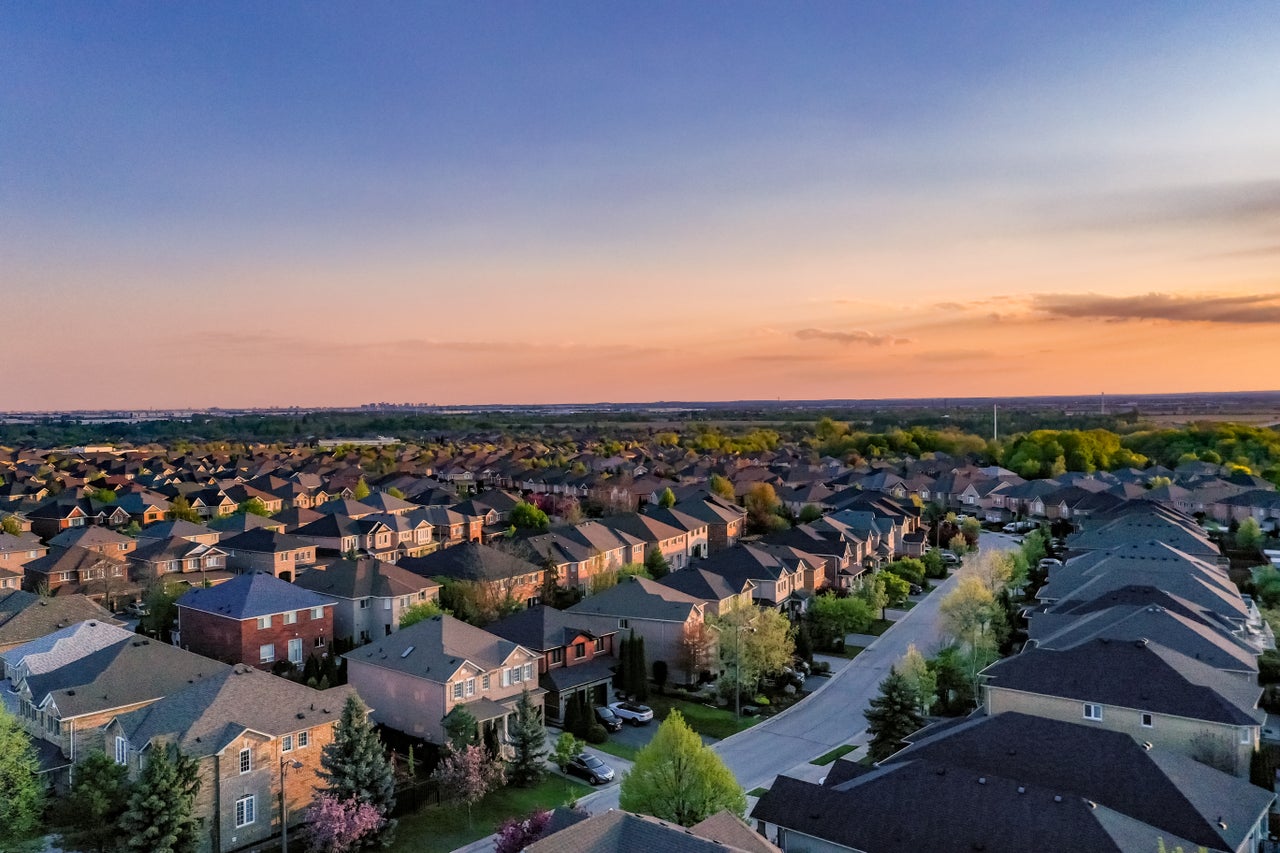
- There's an equity gap. Buyers in 2020–2021 accumulated $86,000 more home equity than post-2022 buyers due to rapid home price surges.
- Locked-in mortgage rates from 2020 save buyers $915 monthly compared to 2023 buyers, freeing up capital to invest.
- High rates and trapped equity have stalled inventory, driving an 11% uptick in HELOCs and second mortgages.

There’s a growing divide among homeowners, and it has nothing to do with square footage or location — it comes down to the date on the deed. Cotality’s latest findings reveal that when someone enters the market is as important that how long they’ve been in it. Entering the market even a few months apart can translate to hundreds of thousands of dollars in savings, fundamentally shifting the starting point from which someone builds long-term wealth.
The pandemic drew a dividing line for homeowners. According to a new analysis by Cotality, those who bought in 2020 saw a 268% return on their equity. Those who bought three years later squeezed out a 102% return.
Triple-digit returns translate to tens of thousands of dollars in equity. Homeowners who bought in 2020 or 2021 accumulated $86,000 more in equity than those who bought in 2022 or later, according to Cotality data. From a more localized perspective, the delta in wealth accumulation can be staggering.
In California, those who bought during the pandemic hold $122,000 more in equity than those who bought in 2023. In Hawaii the difference is $171,000. But even in low-cost states, the gap persists. In Kansas buyers who stepped on the property ladder in 2020 accumulated $42,000 more than those who started in 2023.
It’s not just time in the market that is inflating these figures. When a buyer enters the property market is what creates true long-term wealth and fundamentally shift their financial future.
In 2020, home prices appreciated 10%. In 2021, they jumped another 18%. Since then, home prices have only increased an additional 18%.
“People don’t buy houses regularly, so luck is a big part of the equation,” said Cotality Principal Economist Thom Malone. “The same pattern holds for buyers who purchased around the Great Recession. Borrowers who bought in 2003 still have roughly $80,000 more home equity than buyers who purchased in 2006.”
Current market dynamics are reinforcing the gap, and not in the way we might expect.
Date the rate, marry the equity
Yes, price appreciation bolsters wealth, but an interest rate can erase those gains and monthly margins, leaving homeowners with higher payments and less room to save and invest elsewhere.
“When you get into the market will define your wealth-building trajectory,” said Malone. “Pre-2023 buyers are locked into incredibly low mortgage rates that provide monthly margin for them to build wealth outside their homes. That advantage won’t be erased over time.”
In the first quarter of 2020, when interest rates hovered around 3%, the average monthly payment was $1,215. That’s $915 dollar in savings compared to three years later. Over that time, that monthly sum can become thousands of dollars. If a homeowner invested that monthly difference into a broad index-tracking fund starting in January 2023, the account would sit at around $55,000 by mid-2026. When that is combined with property equity gains over the same period, that homeowner would be $173,000 wealthier than if they had waited until 2023 to buy a home.
However, that wealth currently remains on paper. Cotality data shows home equity totaled $17.9 trillion in the second quarter of 2026, but most of it remains untapped.
Tracking homeowners' average equity
Data source: Cotality, 2026
The new chronology of wealth
Historically, property wealth was accumulated through home equity that was periodically used to upgrade to a more expensive home. That timeline to wealth no longer has the same rhythm.
Prices are high. Interest rates are back up. Inventory is limited. No one is moving.
Equity is largely trapped within homes that people aren’t selling. Instead, some people are becoming accidental landlords. Others are looking to upgrade the homes in which they currently live. Cotality data shows a subtle 11% uptick in home equity lines of credit (HELOCs) and closed end second mortgages in the last year.
The market is in a stalemate as people position themselves to keep their financial advantage. But the waiting game can mean missed opportunity.
People who waited for the market to settle when the pandemic hit were faced with higher home prices and larger interest rates. The same pattern was seen during the Great Recession. Waiting to get into the market limited the ability to build wealth.
At Cotality, seeing the full picture of property is the name of the game. Knowing what is happening around home prices is only part of the equation. There are layers to understanding when refinancing an interest rate increases monthly margins or when a HELOC or a second mortgage can improve a property for when the market reactivates.
For homeowners and mortgage professionals alike, we track property from every angle to see exactly what is happening and what that means next for the market.




















.jpg)