


Insurance needs a high-fidelity approach to non-weather water risk


Non-weather water losses demand a more precise, property-level approach to risk assessment and underwriting.
- Understand why indoor water is a high-frequency, multi-billion-dollar property peril.
- See how plumbing, building materials and vertical layout influence water-loss severity.
- Learn how Cotality Water Resiliency™ uses property intelligence and claims experience to help carriers quantify risk and protect loss ratios.
Insurance needs a high-fidelity approach to non-weather water risk
The world of water and flood insurance has undergone quite a transformation over the last few years, with a surging number of private carriers stepping forward to write flood coverage.
This has demanded a new understanding of natural water, where it can go, and a deeper look into quantifying its potential damage.
But no insurer can fully optimize its approach to water damage without evaluating natural flooding's inside counterpart: non-weather water risk.
This risk hides indoors. Most homeowners rarely check their pipes, and few can tell when an appliance is about to fail, so leaks and bursts often go unnoticed until the damage is done.
Insurers have not always prioritized tools to address these indoor perils, but today’s environment demands a high-fidelity understanding of structural vulnerability against everyday disasters at home.

Why is non-weather water the most frequent property insurance claim?
- Non-weather water is a frequent, multi-billion-dollar property risk.
- It accounts for 20%–25% of U.S. property claims.
- It is often the leading homeowners claim in states without severe annual hail.
Yet, despite indoor water events occurring at an overwhelming frequency, insurers do not universally recognize the role that high-fidelity risk models specifically for non-weather water can play in risk analysis.
It’s more common for insurers to seek out hazard risk scores that evaluate natural disasters than it is for them to secure solutions that evaluate a home’s ability to withstand non-weather water events.
Traditional underwriting models that rely on broad neighborhood loss histories or superficial exterior drive-by inspections miss internal vulnerabilities that can vary wildly even within a tightly packed community. A home with an immaculate exterior and zero-elevation flood threat can still carry major risk if its 40-year-old pressurized supply line is waiting to burst three stories above finished living spaces.
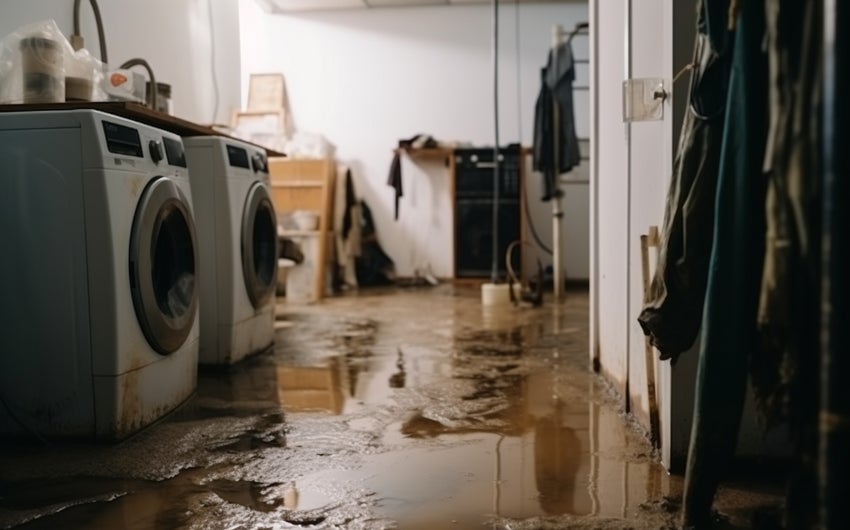
How do carriers quantify property resilience against indoor water leaks?
Accurate underwriting for indoor water risk requires an understanding of both the hazard source and the property’s physical resilience against that source.
When analyzing weather risks, carriers measure the probability and intensity of an external peril (such as precipitation volume, terrain slope, or proximity to a body of water). Non-weather water is fundamentally different: the hazard source is engineered directly into the home. Every individual structure can respond differently to a burst pipe or overflowing system. How a structure is built and updated matters for lower severity, high frequency events like non-weather losses.
That is where property resilience becomes decisive. Two adjacent homes with identical square footage and fixture counts will experience radically different loss severities during an appliance hose failure, depending on:
- Vertical exposure and spatial layout: Water originating in a second- or third-story laundry room cascades downward through finished ceilings, electrical channels, and subfloors, magnifying repair costs compared to a single-story ground-floor incident.
- Plumbing system integrity: The age, layout, and material composition of primary supply and drainage stacks dictate whether a system tolerates pressure fluctuations or triggers sudden burst failures.
- Structural material vulnerability: The ability of subfloors, framing, and insulation to withstand temporary moisture versus rapidly succumbing to rot, mold infestation, and structural degradation.
By evaluating structural resilience alongside source exposure, carriers turn indoor perils that were previously considered “invisible” into quantifiable, priceable risks.
Why property resilience matters more today
Gaining precise control over indoor water risk is far more consequential today than in earlier underwriting cycles, driven primarily by two converging market dynamics:
- Balancing Water Volatility as Private Flood Expands: As more private carriers step forward to underwrite outdoor flood coverage, their cumulative portfolio exposure to water perils increases substantially. When insurers take on greater external flood volatility, their tolerance for unpriced, preventable losses on the inside must drop.
- Economic Pressures Drive Extended Tenure and DIY Mitigation: Rising costs of living, persistent inflation, and higher mortgage interest rates have kept homeowners in place far longer than in past decades. Compounding this, higher policy deductibles and fear of rate hikes have led homeowners to avoid filing claims for minor leaks. Instead of bringing in licensed restoration professionals, residents increasingly attempt self-mitigation—relying on shop vacuums, surface towels, or retail box fans. These unmitigated dry-outs frequently fail, trapping moisture that silently cultivates rot and transforms minor water intrusions into extensive, six-figure structural remediations.
If carriers are going to take on the inevitable risks of external floodwaters, they cannot afford to overlook non-weather water risk, which is mounting across current housing stock.

How Cotality Water Resiliency™ scores property-level indoor water risk
Carriers do not have to sacrifice market competitiveness to protect portfolio profitability. With the right tools, insurers don’t have to “write off” (literally) applications based on broad territorial assumptions.
Water Resiliency™ from Cotality™ delivers the more precise property-level intelligence that carriers need to quantify non-weather water risk . Scored on an intuitive 1–100 scale, it evaluates an individual structure's vulnerability to indoor water loss by analyzing three core dimensions:
- Systemic plumbing vulnerabilities: Proprietary predictive modeling cross-references property age, regional piping materials, and appliance layout to forecast supply-line failures and hidden leak points.
- Spatial and vertical pathways: Granular evaluation of how water migrates through multi-story environments, elevation of water fixtures, and proximity to finished living spaces.
- Dynamic property intelligence: Continuous enrichment from Cotality’s nationwide database of municipal building permits, recorded renovations, and structural attributes.
And unlike theoretical models, Cotality’s Water Resiliency Score is calibrated against an empirical claims foundation, including more than 19 million earned exposures, more than 227,000, analyzed water claims, and $2.4 Billion in validated non-weather losses
By replacing broad ZIP-code averages with property-specific scoring, carriers can more confidently straight-through process low-risk submissions —and protect loss ratios.
Ready to resolve the non-weather dilemma and improve your non-weather water risk assessment? Contact Cotality today to discover how our Water Resiliency™ can optimize your underwriting workflow.