


Overview
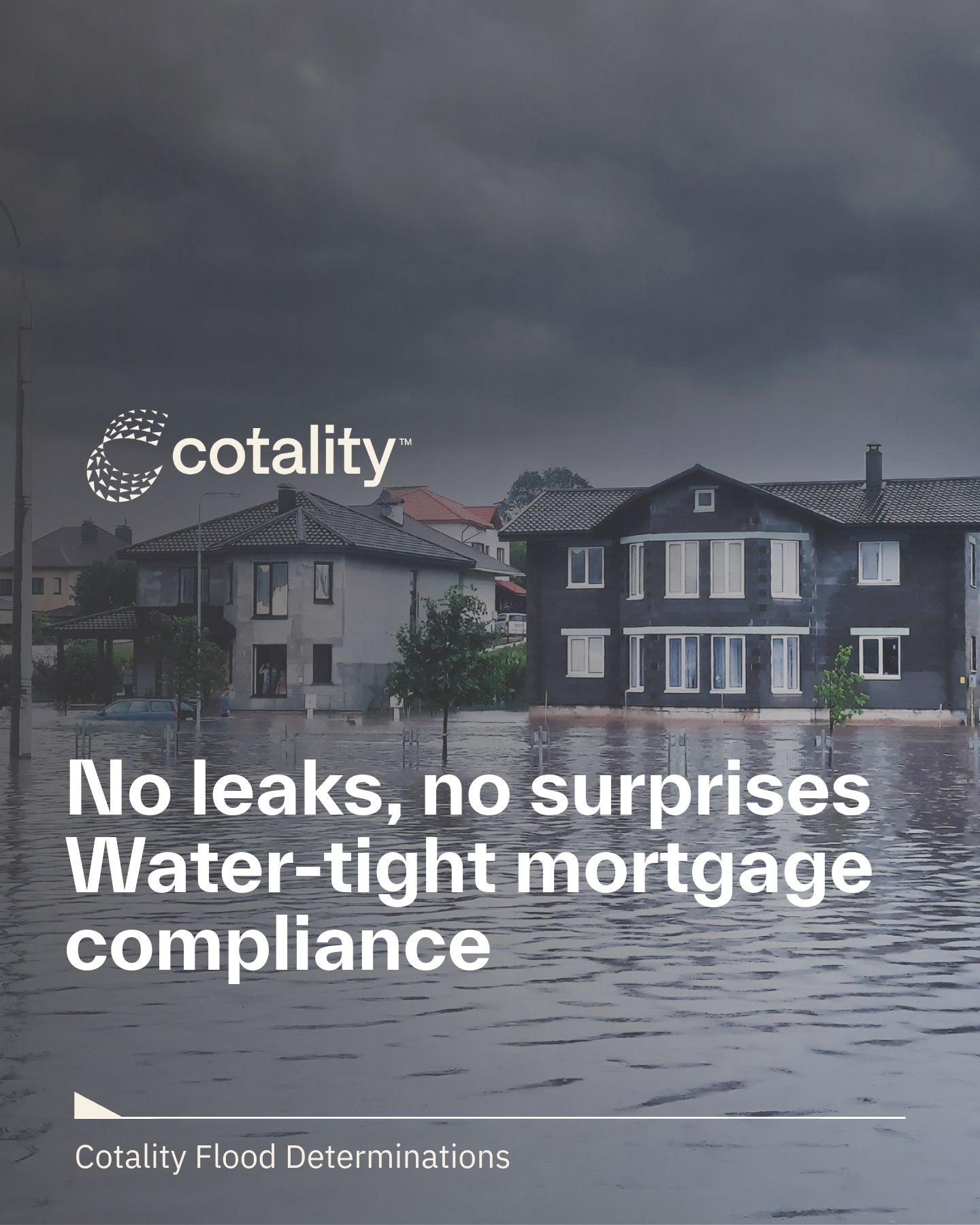
For thousands of families, flood risk can be the precursor to significant financial challenges, but knowing risk ahead of time can provide the signal a homeowner needs for faster recovery.
For servicers, floodwaters bring a shift in strategy. Seeing both the risk and resilience begins with a single message; that message arrived on June 10, 2026.

FEMA redrew flood map boundaries for the United States this summer, and for many, those boundaries are redefining homeownership. In 100 communities across 12 states, thousands of properties now sit inside a high-risk Special Flood Hazard Area (SFHA). Along with that boundary shift comes a costly mandate: secure flood insurance within 45 days, or face disruptions.
Nationwide view of revised flood map panels
Data source: Cotality, 2026
High and dry
By expanding the SFHA — an area where in any given year a house has a 1% chance of flooding — FEMA aims to align insurance requirements with real-world environmental exposure.
However, the speed of this transition can create a financial shock. Properties marketed as "safe and dry" just months ago are suddenly flagged as high-risk. Those properties now must be sold with flood insurance, which can add hundreds of dollars per month to a mortgage. For 10% of homeowners, Cotality data shows that the amount paid into escrow, which accounts for property taxes and hazard insurance, exceeds the principal and interest owed on a home. This creates a direct conflict between physical property protection and household financial survival.
The burden of these new insurance mandates does not fall equally across the housing market. It hits the most vulnerable, cost-sensitive segment of homebuyers the hardest: those with Federal Housing Administration (FHA) loans.
Cotality delinquency data reveals a troubling trend. Serious mortgage delinquencies — defined as payments that are 90 or more days late — are increasing for some of the country’s most vulnerable buyers in the states where there are the largest number of NFIP policies in force.
FHA borrowers typically have lower down payments, tighter debt-to-income ratios, and a thinner financial cushion to absorb sudden cost increases. When these homeowners find themselves in a Special Flood Hazard Area (SFHA), the mandatory flood insurance premiums are wrapped directly into their monthly mortgage payments through their escrow accounts. This sudden, unexpected cost can tip these borrowers’ finances into the red.
“My insurance in thirty days went from $1,500 to about $4,700 a year, and this is in the early nineties,” said Tellum Advisory EVP Joe Posavec on a Cotality webinar about his personal experience after Hurricane Andrew. “Can you imagine what this impact is nowadays to these borrowers when they're in a flood situation or a windstorm loss? It’s massive. And especially if they're just mapping in, they don't get the benefit of the glide path of the NFIP, which means they're subject to risk pricing for flood 2.0.”
However, without insurance, consequences can be catastrophic. That’s why early notification is essential. When changes happen, homeowners need to be prepared for the financial and logistical challenges they may face.
“Insurance in general, is something we have to pay really close attention to as it pertains to affordability,” said Linda Case, the EVP, Loan Administration at Servbank said on the same webinar. “There's no like plan b for [insurance]. So it's just being prepared to find methods to help our customers through the financial challenges they might face.”

Succeeding through peaks and valleys of FEMA’s map revisions
Still, change notifications aren’t mandatory, and some homeowners are left out of the loop. Without time to prepare, some are left behind. FHA delinquencies are hundreds of basis points higher than conventional loans in states like Florida and Texas where buyers have flocked in search of more affordable living options, and where the largest numbers of NFIP policies are in force. For homeowners walking a financial tightrope, even a fifty-dollar monthly increase can push a household into default.
Flood map changes drive insurance requirements on mortgages
Data source: Cotality, 2026
Looking at historical delinquency data in Gulf Coast states like Louisiana, Mississippi, and Texas, we see a clear correlation between environmental events, insurance premium spikes, and mortgage defaults.
But flood risk and high costs aren’t isolated to the Gulf Coast. New Jersey has the fourth-most NFIP policies in force across the nation, which means properties are obliged to have flood insurance. However, it’s the Sunshine State that still dominates in the total number of properties that are within the SFHA.
In these regions, where hurricanes and severe storms frequently rewrite the landscape, homeowners already struggle with some of the highest property insurance premiums in the nation. That is pushing homeowners to the brink.
Insurance premiums have helped inflate escrow payments, which are up by 45% compared with five years ago, according to Cotality data. This additional monthly financial obligation is increasingly a precursor to mortgage distress Escrow payments, which are made up of both insurance and property tax payments, are not fixed; as risk increases, premiums follow suit. Cotality data highlights how in states with revised flood maps, escrow costs now represent over one-third of a mortgage payment.
2025 escrow share out of the total monthly mortgage payment
Data source: Cotality, 2026
When mandatory flood insurance is layered on top of existing escrow costs, struggling homeowners face a difficult choice: pay for often high-cost flood insurance to protect a property they might lose, or pay their basic mortgage. When budgets stretch, delinquencies risk can rise. Cotality data reveals that in states where flood map panels were heavily revised, average escrow costs already consume a substantial portion of monthly mortgage payments , including North Carolina (+30%), Missouri (+36%), and New York (+41%).
Well-timed protection
Expanding flood maps may tip the scales, destabilizing the security of mortgage servicer portfolios. But without flood insurance, the possibility of homeownership can be washed away.

It was crucial that the bank complied and required us to have flood insurance. As young homeowners focused on expenses, we would not have purchased flood insurance if it had not been required. Without it we would not have been able to recover.
This tug-o-war sits at the center of these flood map revisions.
“Stability is invaluable, and having the most accurate view of risk will mean millions more homeowners are prepared when the storm inevitably arrives,” said Howard Botts, Cotality’s chief scientist. “Preparation leads to community resilience, which can lessen the burden of recovery.”
For thousands of families, flood insurance has made the difference between buying a home and keeping it. Just securing a home has become financially challenging. Homebuyers need an additional $200,000 compared to 10 years ago to close on a median-priced home, Cotality data found. That rising figure also revises the calculation for disaster recovery.
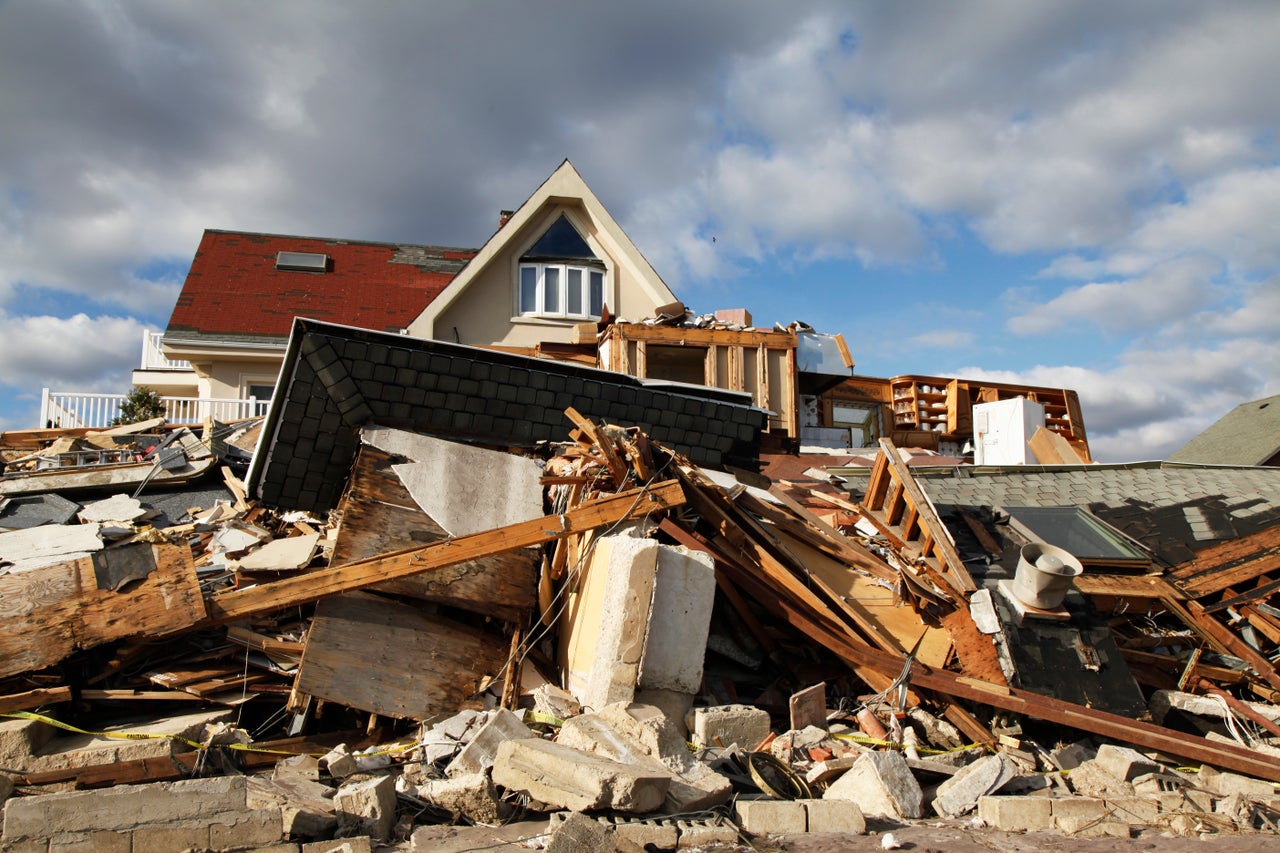
Without flood insurance, homeowners independently shoulder the costs of rebuilding following a hurricane or a severe storm. That cost can be tremendous. Cotality data found reconstruction costs are up 40% in 5 years.
Those costs can be amplified by an order of magnitude when storms arrive.
When large numbers of homeowners are uninsured, communities risk destabilization that can require years — if not decades — to repair. Just look at the aftermath of Hurricane Helene. At the time of the storm, Cotality calculated that there was between $20 and $30 billion in uninsured flood loss. Those losses are still being realized.
Closing the insurance gap by better understanding flood risk means a faster recovery. It also means people are more secure in their homes.
Safety begins with certainty
Safety and stability are the new variables in the financial calculation for homeownership.
Requiring flood insurance is a proven proactive step that help close the insurance gap. But high flood insurance premiums inflate escrow accounts and monthly mortgage payments, which can tip vulnerable families over the edge and drive stable loans into serious mortgage delinquencies.
Balance begins with the whole story behind every property. When mortgage professionals can see beyond historical trends to forecast future environmental outcomes and assess long-term risk, and people can navigate monthly financial commitments with accuracy, a more resilient future forms.
The homebuyer no longer moves through the market alone. Their choices are filtered through eligibility requirements, property risk profiles, and financial constraints. That’s why trust — in data and in professional guidance — is increasingly becoming the deciding factor to open the pathway to the dream of homeownership.










.jpg)