


Manufactured housing standards and practices in the United States and Canada


Manufactured housing is a critical source of affordable housing across North America, but understanding the differences between manufactured, mobile, and modular homes is essential for accurate property evaluation and risk assessment. This article explores:
- U.S. and Canadian housing standards, including HUD Code and CSA requirements, and how they shape construction, safety, and performance.
- Key distinctions between manufactured, mobile, and modular homes, including construction methods, certification labels, and installation practices.
- Identification best practices that help insurers, valuation professionals, and property stakeholders classify homes correctly.
- Impacts on valuation, underwriting, and claims estimation, including the tools and methodologies used to assess these property types.

Historical context and regulatory foundations
United States:
Prior to 1976, manufactured homes were often termed “mobile homes,” reflecting their simplified manufacturing processes and reduced regulatory oversight. The pivotal shift occurred with the enactment of the Housing and Urban Development (HUD) standards, formalized as the *HUD Code*, or the *Manufactured Home Construction and Safety Standards (MHCSS)*. This federal regulation established uniform construction, safety, and energy efficiency standards nationwide, emphasizing quality and transportability.
Canada:
Canadian regulation primarily operates through the *CSA A277* standard, complemented by provincial building codes and the National Building Code (NBC). Here, factory-built homes—including modular and panelized variants—must undergo certification processes, ensuring compliance with both national and local environmental, structural, and safety criteria.
Manufactured housing industry landscape
Industry Size and Manufacturers:
Approximately 36 U.S. manufacturers and 45 Canadian manufacturers operate across multiple locations, serving a diverse market with varying size, layout, and quality configurations.
Design and Construction Parameters:
Homes across both countries are designed for durability during transit and long-term residence. Manufactured housing incorporate specialized framing, a permanent chassis/undercarriage, and adaptable interior finishes. The degree of interior completion ranges from basic shell structures to fully furnished units.
Standards and compliance
U.S. HUD Code (Manufactured Home Construction and Safety Standards):
- Ensures quality, safety, and energy efficiency.
- Mandates certification for each unit, affirming adherence to nationwide standards.
- Enforces transportation stability via requirements for chassis and framing techniques.
- Permits placements on piers, blocks, or permanent foundations, depending on engineering specifications.
- Material standards focus on durability and resistance to pests and environmental factors.
Canadian CSA A277 Standard:
- Guarantees compliance with provincial building codes and the NBC, especially regarding structural integrity, fire safety, electrical, plumbing, and gas systems.
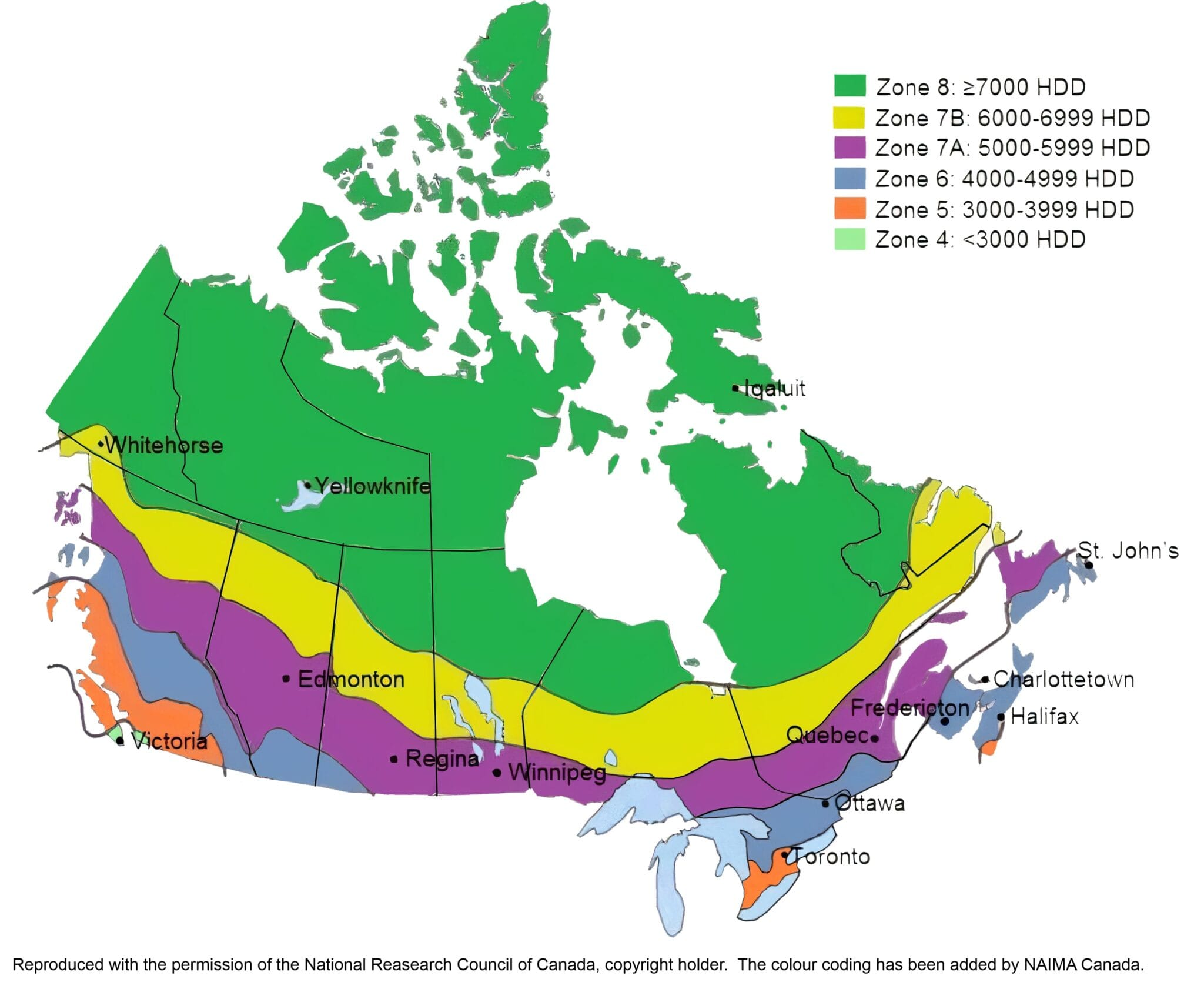
- Emphasizes insulation and climate adaptation, with R-value requirements increasing progressively from coast to arctic regions.
- Homes are typically built for permanent foundations, with some variants capable of transport but retaining a closer resemblance to traditional site-built dwellings.
- Construction accounts for regional seismic risks, incorporating appropriate materials and techniques in earthquake-prone zones.
Transportation and installation practices
U.S. Approach:
The HUD Code emphasizes transportability, requiring units to withstand stresses during transit. Homes are transported on chassis and can be installed temporarily or permanently, dependent on-site conditions and local regulations.
Canadian Approach:
The CSA A277 standard emphasizes a more permanent installation on foundations, akin to traditional construction practices. The certification process facilitates quicker inspections onsite, reducing time and costs associated with compliance verification.
Materials and construction techniques
Like traditional homes, both systems utilize conventional construction materials like wood framing, insulation, roofing, and exterior cladding, aligned with local building requirements. The primary distinctions relate to environmental adaptations, such as higher insulation values in colder Canadian climates or termite-resistant materials in warmer U.S. regions.
Advantages and challenges
Advantages:
- Cost-effectiveness, making affordable housing accessible.
- Rapid construction timelines
- Design versatility accommodating varied layouts and finishes.
- Environmentally conscious practices through optimized materials and energy standards
Challenges:
- Resale value perception and market acceptance
- Financing and land acquisition costs
- Transportation and site preparation logistics
Identification of "mobile homes" and manufactured homes vs modular homes
When performing an evaluation of a home for purposes of creating an insurance reconstruction estimate, it is important to note the differences between a Mobile Home and other types of Manufactured housing such as Modular Homes. These differences can impact the valuation of the home significantly and ensuring the proper identification of a home can help ensure that the property owner is sufficiently protected in the event of a loss. As previously referenced, the designation of “Mobile Home” was assigned to Manufactured homes prior to 1976. After 1976, Manufactured homes are required to comply with the HUD Manufactured Home Construction and Safety Standards created by the U.S. Department of Housing and Urban Development. These national standards, usually called the HUD code, include requirements for the home’s construction, fire safety, energy efficiency and more. A manufactured home’s certification label signifies that the home has been built to HUD code, or for Canada, the Canadian Standards Association (CSA) code.
The HUD certification tag, also known as the HUD tag, is a metal plate attached to the outside of the manufactured home that indicates the home complies with HUD standards. The HUD plate is typically found on the back right corner of the home, and if lost, the same information is available on the home's data plate. Federal law requires that every manufactured home built since 1976 have one before it can be moved from the factory. This metal tag is usually red with silver text, but the color typically fades quickly to a dull silver color.
The HUD plate (Data Plate) has both the serial number, and the code certification number listed on it. The Data Plate is a piece of white paper you will typically see glued to a wall or cabinet. Data Plates contain important information about the home along with a line map of the United States. The IBTS, or Institute for Building Technology and Safety, is a long-term HUD subcontractor that handles all requests for missing manufactured home Data Plates.
For Canadian Mobile Homes, the CSA plate (or sticker) is normally located near one of exterior entrances to the home or near the electrical panel and can be a silver on black label or silver on purple label. For Manufactured homes, this label is normally black on yellow in color. There are several types of CSA labels that apply to manufactured homes, including:
- CSA Z240: This is the most common label for manufactured homes and indicates compliance with the National Building Code of Canada (NBCC). It covers all aspects of the home, including structure, plumbing, and electrical systems.
- CSA A277: This label applies to factory-built modules or panels that are assembled on-site. It ensures that the parts of the home built off-site meet national standards before their incorporation into the full structure.
- CSA Z241: This label applies to park model trailers, which are recreational vehicles intended for seasonal use and must meet specific safety standards.
The most important distinction between a Mobile Home and a Manufactured Home remains the presence of an integrated chassis/undercarriage, and if the home is pre-assembled off-site vs on-site. Manufactured homes are homes that are built in a factory and then transported to their final location. These homes are constructed on a permanent chassis and can be placed on either a temporary foundation or a permanent one and are designed to potentially be moved at some future date. It is important to know that some Modular Homes may be partially assembled off-site, with final assembly occurring on-site, however the intent is that a Modular Home is not relocated after final assembly.
As a rule-of-thumb, Modular homes are differentiated by the lack of an integrated chassis/undercarriage and lack of a HUD or CSA plate/label.
Future perspectives
As manufactured housing continues to expand, adherence to and refinement of standards like the HUD Code and CSA A277 will be crucial. Improved regulations can foster transparency, promote sustainable and resilient structures, and boost public confidence. Embracing technological innovations and climate-responsive designs will enhance the sector’s capacity to deliver safe, efficient, and attractive housing solutions aligned with environmental and societal needs.
Manufactured housing in North America is governed by robust, tailored standards that ensure safety, durability, and environmental performance. While the regulatory frameworks in the U.S. and Canada differ reflecting regional needs and construction practices, their shared goal remains to produce high-quality, cost-effective dwellings that contribute to sustainable urban and rural development. Strengthening these standards and fostering industry innovation will be vital for addressing future housing demands and environmental challenges.
Cotality mobile/manufactured and modular product offerings
Cotality offers several Product offerings for customers to evaluate Manufactured/Mobile Homes as well as Modular Homes in both the United States and Canada. In addition to homes, Cotality also provides valuation product offerings for Mobile Home parks in the United States.
Cotality Underwriting Residential Valuation™
Residential Valuation provides customers the ability to create reconstruction values for Mobile/Manufactured Homes, as well as Modular Homes in the United States and Canada. Within Residential Valuation, Modular Homes are treated as a typical Single-Family home for occupancy purposes. Proper identification of Mobile/Manufactured construction vs Modular construction is key to ensuring proper valuations.
Cotality Claims Estimate™
Claims Estimate™ contains specific Action Items within the Claims Construction Cost Database for Mobile Homes, including a specific Construction Category for Mobile Home Skirting & Setup for both the United States and Canada.
Cotality Marshall & Swift® Valuation
Marshall & Swift® Valuation products offer the ability to create replacement cost valuations for Mobile/Manufactured Homes, Modular Homes and Mobile/Manufactured Home Parks in the United States. From appraisers and assessors to lenders, tax services, and insurers, replacement cost valuations offer a proven methodology for valuing these types of properties.

[1] Department of Housing and Urban Development (HUD). (1976). Manufactured Home Construction and Safety Standards.
[2] Industry reports and market analyses on manufacturing capacity in North America.
[3] Manufactured Home HUD Tags, Labels, Serial Numbers, and Data Plates
[4] What are the Manufactured Homes and the CSA Labels?
For further information or specific technical inquiries regarding manufactured housing standards, please contact relevant industry associations or regulatory authorities.
