


Mobile-Native Claims Estimating Software for the Modern Property Adjuster


Traditional mobile tech forces adjusters to spend late nights on manual data entry, driving up LAE and delaying cycles.
- True iOS-Native Design: Shrunk desktop interfaces fail; adjusters require mobile-native tools engineered for agile, onsite workflows.
- Next-Gen Capabilities: LiDAR scanning and AI voice-to-estimate eliminate manual sketching and drop-down menus to slash onsite time.
- Guardrails for Talent: Guided scoping and intelligent assemblies enforce carrier compliance, turning novice adjusters into top performers.
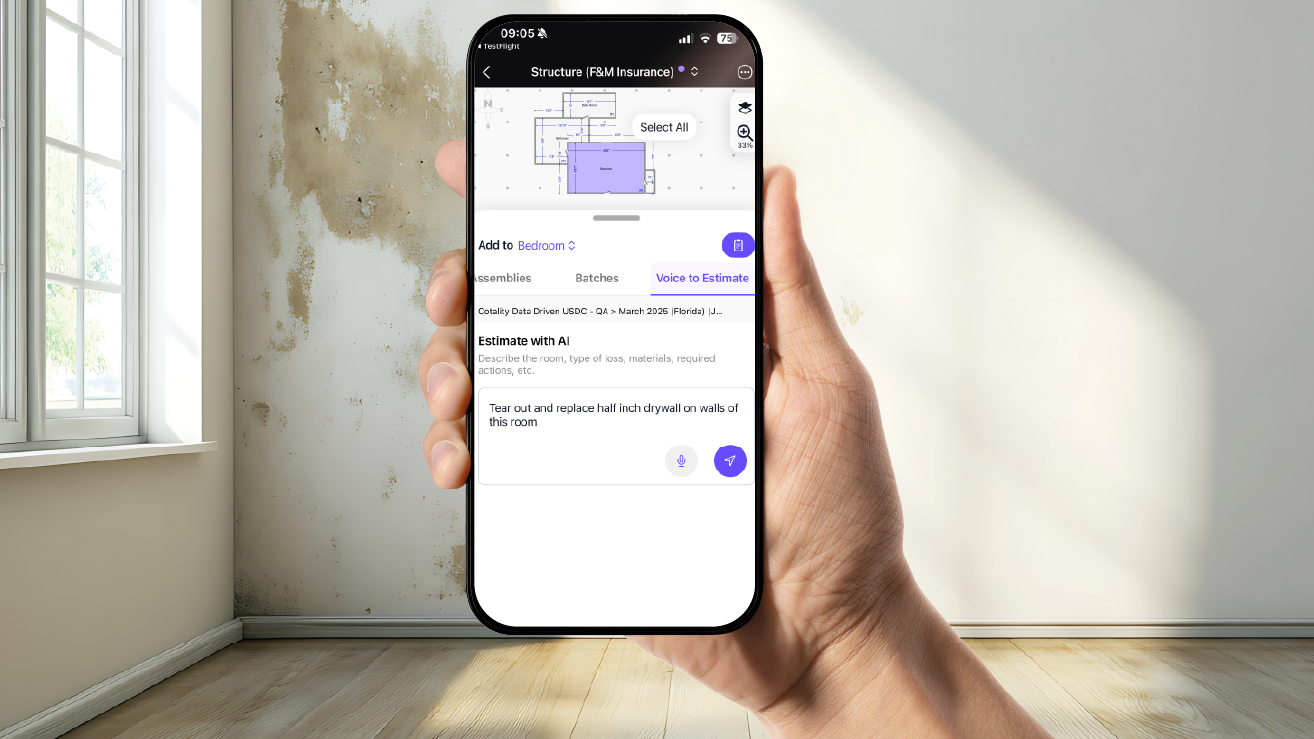
Property insurance claims technology has taken massive leaps over the past decade, but its mobile counterparts—applications used by adjusters directly in the field—have not kept quite the same pace.
So many professionals have come to realize that simply shrinking a desktop interface to fit a smartphone or tablet screen doesn’t mean the workflows translate for optimal field use.
Even with access to some of the most common mobile estimating tools, adjusters frequently find themselves spending far too much time executing tasks manually—using disparate camera apps, hand-drawing sketches, and then performing manual data entry later into traditional computers in the evening.
In essence, just because there is a mobile version of an excellent claims management software, it won’t necessarily perform optimally for field adjusters. Field adjusters need claims estimating software that operates intuitively on their mobile devices.
Why do adjusters need estimating software designed specifically for field work?
Without onsite estimating tools designed and optimized for the field, end-to-end operations suffer by way of delays and costly errors for insurance carriers and independent adjusting firms:
- Data silos and disparate workflows: Disconnected processes between the office and jobsites prevent real-time collaboration, leave room for bad assumptions, and double the documentation efforts.
- Inconsistent settlements and surging LAE: Manual errors and workflow bottlenecks directly drive up loss adjustment expenses (LAE).
- The talent and experience gap: Customers today expect speedy, high-quality work, and these demands of the digital age are a challenge for the insurance workforce that often lacks institutional knowledge and expertise.
With any mobile device used by field adjusters, the real value comes from a claims estimating platform that was designed for the onsite, agile adjuster of any skill level.
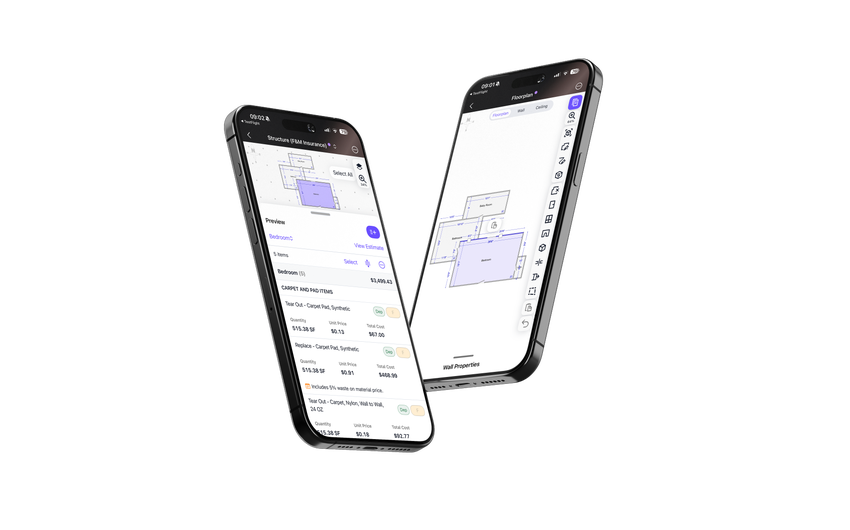
The non-negotiable features of estimating software for the field
A viable mobile tool cannot just be a web browser wrapper retrofitted for a phone. It must be engineered for multi-touch interactions and the harsh realities of field work.
When evaluating modern insurance claim estimating software, these five mobile features are absolutely non-negotiable:
- LiDAR-powered room scanning and advanced diagramming: Physical tape measures and old-school CAD-style sketching programs have a steep learning curve and leave too much room for error, especially among the burgeoning group of novice adjusters in the industry. Modern field tools must feature LiDAR Room Scanning(integrating with technologies like Apple Room Plan) to instantly map a room with high-precision accuracy using the device's camera sensors. This feature enables adjusters to able to seamlessly draw floorplans, conveniently onsite.
- AI-Driven Voice-to-Estimate: Instead of manually clicking through thousands of line items in a tight drop-down menu on a phone, adjusters need to talk to their tech(literally). Leveraging advanced AI through Google Gemini , Cotality’s optimized experience allows adjusters to dictate damage aloud. The system automatically translates that voice description into precise estimate line items tied to a comprehensive pricing database.
- Guided scoping and intelligent assemblies: The guided scoping feature utilizes configurable questionnaires and conditional logic to walk novice adjusters through exact carrier best practices. Also, with intelligent assemblies and batches, adjusters no longer have to enter line items one by one. Instead, they can launch pre-set groups of related items (like all the materials needed for a drywall repair) and generate comprehensive scoping lists instantly. These “mentor” features ensure veteran-level consistency and accuracy regardless of user tenure.
- Full offline capability and instant synchronization: Field adjusters frequently lose cell service in basements or remote catastrophe zones. A transformational feature is an offline mode that provides basic functionality (including diagramming and assembly launching)without a signal, automatically syncing to the cloud the moment a connection is re-established.
- Indisputable field evidence: To eliminate carrier kickbacks and auditing headaches, the best field application embeds data into photos. This includes orientation tags, GPS location markers, and integrated annotations to create an undeniable "single source of truth" right from the property.
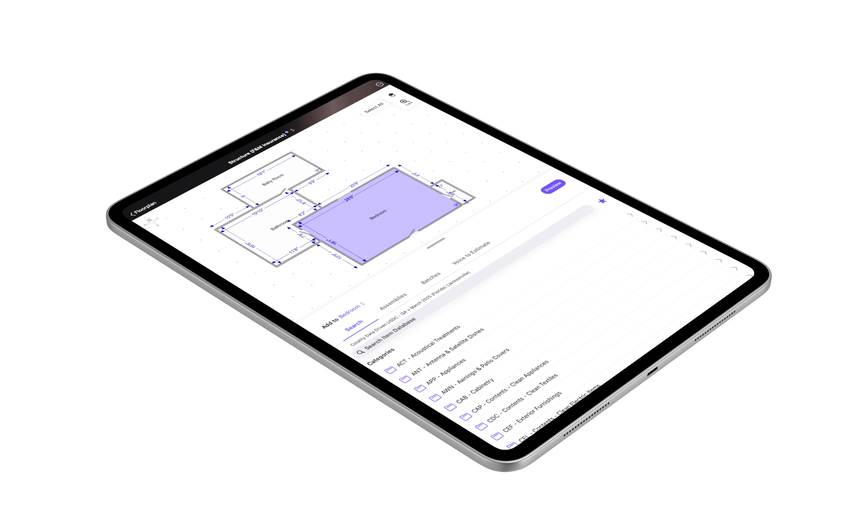
Converting tech features into real business value
Modern claims estimating software directly impacts the bottom line for carriers and independent adjuster firms by turning technical capabilities into tangible operational advantages.
- One-and-done scoping: Combining LiDAR scanning withAI voice-to-estimate drastically reduces the time spent on-site. This allowsadjusters to process claims faster, so they can handle a much higher dailyvolume without additional stress. Cotality Estimate™ on iOS is built to helpadjusters safely add more claims to their daily routing without burning out.
- Bypassing the onboarding hurdle: Features like guidedscoping and intelligent assemblies act as built-in guardrails, loweringtraining costs and empowering novice or catastrophe support staff to outputseasoned, veteran-level results with zero-to-hero consistency.
- Eliminating after-hours: The ability to finalizefiles on-site completely removes the grueling requirement of late-night dataentry, the traditional painful requirement for estimates to exhaustivelycomplete documentation from a truck or hotel room at 2 AM. Estimate™ for iOSlets users dictate the damage, scan the room, and finalize the file before theyeven pull out of the property’s driveway. Also, with the applicationconsistently reminding users to follow carrier compliance and guidelines whilestill on the property, it reduces rejections and eliminates costly return sitevisits.
When high-volume insurers equip adjusters with these features in the field, they can reduce estimating time significantly, often achieving a productivity gain of 50% or more.
Experience the shift with Cotality
The era of spending all day in the field only to spend all night typing data into a desktop app is officially over. To protect margins, retain field talent, and keep up with relentless speed demands, insurance professionals require a field-first toolkit.
Cotality’s highly anticipated Estimate™ for iOS has officially launched. Built specifically for Apple devices (and optimized beautifully for iPad), it delivers secure Gemini AI voice dictation, LiDAR room scanning, and complete offline functionality to help you close claims faster, more accurately, and completely onsite.
