


Overview

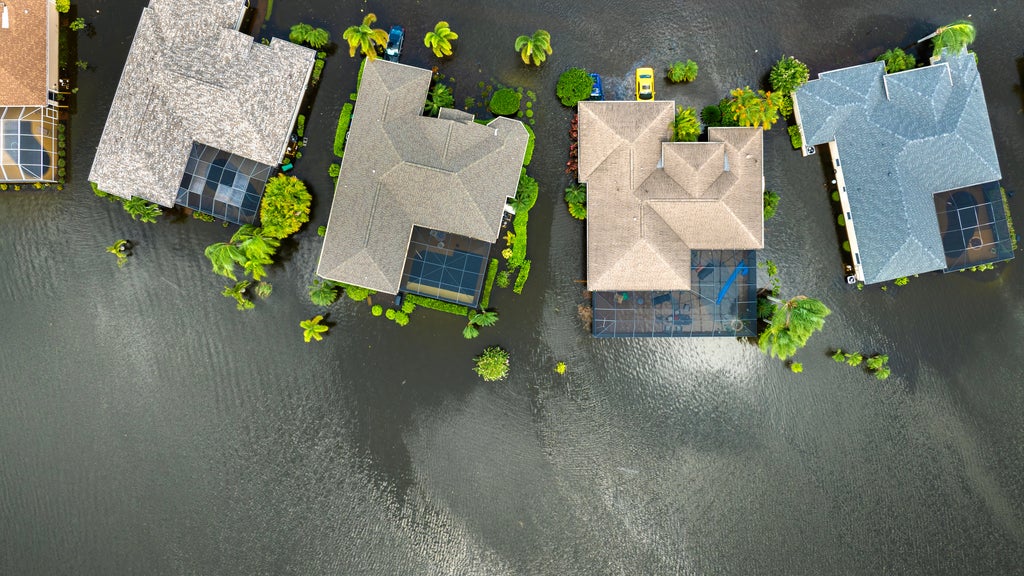
Hurricane Isaias holds the title for a lot of “firsts” this season. As a Category 2 hurricane, it was the first storm of the 2026 Atlantic hurricane season. It was the first storm to make U.S. landfall since Hurricane Milton. It may also be the first to accelerate change in the insurance industry.
In this discussion, Cotality's Chief Scientist Dr. Howard Botts and Data in Context host Allie Barefoot explored the storm's footprint and its broader ramifications across underwriting, claims, and regulation.
What are the estimated insured losses from Hurricane Isaias?
Cotality estimates insured losses from Hurricane Isaias at $2 billion to $3 billion. Most of the damage is in the Florida Panhandle and southern Alabama.
The estimate includes wind and storm surge losses. It also accounts for demand surge, the rise in labor and material costs after a major storm, and additional living expenses for displaced policyholders. Cotality validated the estimate against post-event aerial imagery combined with its proprietary models.
Inland flooding losses are not included. Isaias is not expected to produce significant flood losses like Hurricanes Helene or Harvey.
Exposure was high where the storm hit. Cotality data shows more than 350,000 homes at moderate or greater wind risk across Escambia, Santa Rosa, Okaloosa and Walton counties, with about $116 billion in reconstruction cost value.
How will this impact 2027 risk modeling?
Cotality expects the storm to speed the industry's shift from models built on historical events to fully coupled, climate-driven models. These simulate wind, pressure, storm surge and inland rainfall together against the vulnerability of each structure, rather than treating each peril separately.
"Storms like Isaias demonstrate that we can no longer rely on static historical weather patterns to price catastrophe risk," Botts said.
Will this storm accelerate state regulatory approvals for updated catastrophe models?
When residual markets such as Florida's Citizens Property Insurance Corp. or the California FAIR Plan take on more exposure, regulators face pressure to keep private capital in the market.
"These storms don't really create risk to homes as much as they expose it," Botts said.
Broad, territory-wide averages can miss the tail risk facing individual properties. Approved structure-level models allow more precise pricing. They avoid blanket rate increases across entire ZIP codes and reward homeowners who invest in mitigation.
Are multi-peril models properly separating wind versus water damage footprints?
The claims delays attributed to the uncertainty over whether wind or water caused damage are shrinking along the Gulf and Atlantic coasts.
Submeter geospatial modeling can now separate high-velocity wind damage from storm surge inundation at the individual property level. By combining radar, anemometer wind data, and storm surge gauge readings in real time, claims teams can determine whether a roof failed before or after water entered.
That distinction matters because wind is typically covered under a homeowners policy, while storm surge falls under flood insurance. Settling the first cause of loss early reduces friction between homeowners and their insurers and gets recovery money to families faster.
Did properties built to resilient building standards perform better than the models predicted?
They performed as expected, which Botts said validates Cotality's vulnerability curves.
"In the case of Isaias, the models performed exactly as we expected in terms of structural loss," he said.
Homes built to the Insurance Institute for Business & Home Safety's FORTIFIED standards, with features such as sealed roof decks, ring shank nails and impact-resistant windows, see much lower loss severity. The bigger issue is the legacy gap.
Cotality's 2026 Hurricane Risk Report found that nearly 62% of homes in coastal flood zones sit below the base flood elevation, the height floodwaters are expected to reach in a 100-year flood. Older homes like these continue to drive most portfolio losses.
Programs such as Strengthen Alabama Homes, which provides grants for wind mitigation on existing owner-occupied single-family homes, help close that gap.
How will post-storm material and labor shortages alter 2027 replacement cost baselines?
They could push reconstruction cost values significantly higher heading into 2027 renewals. Botts pointed to localized demand surge inflation of 20% to 30% on materials and labor.
Time is the other major cost driver. Cotality research shows that waiting seven days to begin water mitigation raises restoration costs by at least 53%. If contractor backlogs stretch that delay to three weeks, costs can climb 155% to 290% as mold and structural decay set in.
Across a region, those delays compound and raise reconstruction cost baselines throughout the Southeast.
For storm details and Cotality exposure data, read our Hurricane Isaias coverage.
Cotality will continue monitoring this event and may provide updates when available.

