


2026 El Niño: Rewriting the Rules of Wildfire Underwriting


The 2026 Super El Niño is driving severe inland threats, forcing carriers to evolve underwriting beyond past baselines.
- Expand Risk Focus: Move past hurricane-only metrics to address Pacific Northwest drought and post-rain Southwest fuel loads.
- Differentiate Risk: Separate natural wildfire from structure conflagration using address-level analytics over ZIP codes.
- Drive Action: Use aerial imagery to incentivize home hardening in non-mandated states and safeguard portfolio solvency.
In the spring of 2026, the global climate transitioned toward an El Niño phase — one that many scientists project could become one of the strongest on record. Ocean surface temperatures are reaching unprecedented highs, and communities across North America are already experiencing the signs: relentless summer heatwaves, severe regional droughts, and now, disastrous wildfires breaking out in places that previously hadn’t seen such high levels of fire risk.
A compounding problem for insurers is that residential and population growth is accelerating across the regions of the Western U.S. that are vulnerable to El Niño-related wildfires. Insurance underwriting must adapt quickly; a single fire has the potential to disrupt an entire portfolio.
By pursuing probabilistic risk models that analyze current and likely future conditions—rather than relying solely on past El Niño averages—insurers can gain a realistic understanding of what present-day patterns actually drive. When carriers leverage tools that show how properties will realistically stand up to climate extremes, underwriters can incentivize proactive mitigation. This approach helps lessen the intensity of destruction and ensures a faster, more resilient recovery when losses do occur.
Generally, when people talk about El Nino, the conversation has something to do with hurricanes. Coastal storms are the visible headline, but focusing there is shortsighted. El Niño is one phase of the broader El Niño–Southern Oscillation (ENSO) pattern — a driver of global wind and water circulation that touches virtually every kind of natural disaster, not just the ones that originate in the ocean.
Expected to persist through early spring 2027, this "Super El Niño" highlights the urgent need for wildfire mitigation everywhere, even in areas not known for unwieldy flames. As wildfires expand into regions historically outside core insurer focus, underwriters everywhere—especially in areas like the Pacific Northwest where mitigation isn't state-mandated—must proactively understand and incentivize these practices. Otherwise, they may not be able to protect policyholders in the long term or remain solvent in an evolving climate landscape.
What is ENSO, and why should underwriters care?
ENSO isn't a single event — it's a spectrum, and where the world sits on it changes which risks deserve attention right now:
- Neutral: Ocean temperatures and trade winds sit near their historical averages. No strong lean toward more coastal storms or more inland drought and fire risk — the baseline everyone measures against.
- El Niño (where we are now): Trade winds weaken, the Atlantic gets choppier at altitude, and that typically quiets hurricane season. That calm is deceptive for carriers with Western books: wetter Southwest winters fuel fast-growing brush and grass that becomes fire fuel the moment things dry out again.
- La Niña: Trade winds strengthen, Atlantic hurricane conditions get more favorable, and the Southwest dries out — often setting up the fire seasons people remember. The destructive Los Angeles wildfires broke out within weeks of NOAA declaring a return to La Niña.
The pattern shifts every two to seven years, and a quiet hurricane season under El Niño doesn't mean quelled cumulative risk — it means the risk has moved inland and changed shape.
El Niño’s impact on U.S. wildfires
The Southwest — including areas long associated with high wildfire risk, like Southern California — is getting more rain under this El Niño. That suppresses fire activity in the short term, but it also waters lower-elevation vegetation, feeding fine-fuel growth that turns dangerous the next time conditions swing dry. Think about the Los Angeles wildfires that California is still reeling from: the Palisades and Eaten wildfires occurred during a La Nina phase that followed a strong El Nino.
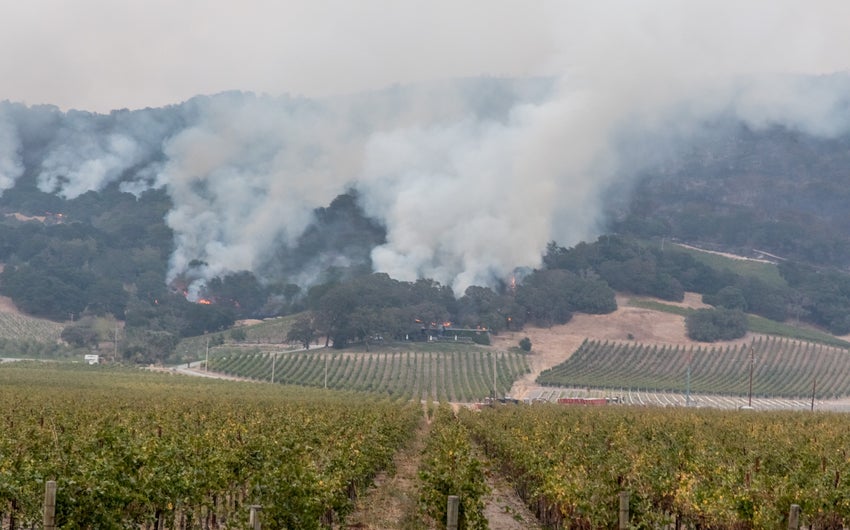
A closer look at the West during Super El Niño
The Southwest. Extra winter and spring moisture through 2027 would help refill the Colorado River Basin and ease near-term fire threat. But that same moisture acts like fertilizer for low-elevation grasses and brush. Once summer heat bakes this new growth, it builds a continuous layer of fine fuel — the setup for fast, high-intensity fires once dry spells return.
The Pacific Northwest. Here, conditions are moving in the opposite direction. Even without a Super El Niño, the Pacific Northwest is already in significant drought. The combination of existing conditions with the intensifying El Niño is contributing to unprecedented regional wildfires now, and the potential of a warm, dry winter translates to a heightened fire risk straight into next year.
On August 1, 2026, three fast-moving wildfires broke out in Spokane County, Washington, and are still burning days later. Within 48 hours, they escalated into one of the most destructive fire events in the state's recorded history — reconstruction value collectively inside the three fire perimeters is already approaching $800 million. Behind that number are homeowners finding out in real time whether their coverage, and their home hardening, held.
Emerging priorities for insurers
As this Super El Niño develops, it raises the odds of exactly the kind of seasonal anomaly that hit Washington.
At the same time, residential development keeps expanding into the Wildland-Urban Interface (WUI) in states like Oregon and Washington — states where, unlike California or Colorado, insurers aren't statutorily required to offer premium discounts for home hardening.
That combination is the opportunity: carriers who proactively promote mitigation — to new applicants and at renewal — get ahead of losses that mandated-discount states are only addressing after the fact.
Insurers need to distinguish flame fuel to effectively educate homeowners
Promoting mitigation effectively, especially where discounts aren't mandated, takes more than a basic home-hardening checklist. It takes a clear read on the difference between two risks that get frequently talked about like they're the same thing:
- Wildfire risk: driven by natural vegetation, terrain, and wildland fuel loads.
- Conflagration risk: what happens when a wildfire crosses into the built environment and starts feeding on structures and building materials instead.Conflagrations are historically larger, faster, and more destructive.
There are conflagration components to the current Spokane fires.
A home with one type of risk does not determine whether it carries the other. A property with sparse wildland vegetation nearby might score low on traditional wildfire risk and still carry high conflagration risk if it sits tightly clustered among unhardened homes. Telling those two risks apart — and telling a homeowner why it matters — takes property-level detail, not a neighborhood-level score.
This is where property-level imagery analysis earns its place in the underwriting process. Aerial and high-resolution imagery can show whether a specific home's roof, siding, and the first five feet of vegetation around it would feed a conflagration or halt one. This is the kind of resolution a ZIP-code –based risk model can't give you. These tools give insurance professionals what they need to turn "your property scores high for wildfire risk" into a specific, actionable conversation with an unassuming homeowner. The right insights can help professionals convey the benefits of a a defensible-space — a fix that a homeowner can feasibly make before renewal.
Distinguishing between conflagration and wildfire risk is imperative because home hardening for conflagration risk isn't always the same fix as hardening against direct wildfire exposure—which is exactly why that property-level distinction matters.
El Niño occurs roughly every three to seven years. And with the current unprecedented Super El Niño reminding us that an intense climate pattern is always possible ), this isn't a one-time analysis; it's a risk that can manifest multiple times over a mortgage lifecycle. This is true in the Pacific Northwest currently, and will be true in the Southwest once dry conditions return.
Proactive intervention now is what keeps that next cycle from costing a family their home.
Read Cotality's take on the 2026 wildfire season.
Also, learn about Cotality’s Wildfire Solutions to see how property-level imagery and analytics help carriers evaluate mitigation, wildfire, and conflagration risk at the address level.