


Gunite swimming pools | Wildfire damage, recovery, and resilience


As wildfires escalate, gunite pools—representing investments often exceeding $100,000—require specialized risk assessment. This guide analyzes how reinforced concrete structures endure extreme heat while remaining vulnerable to surface spalling, contamination, and mechanical failure. With over 127,000 California pools in high-risk zones, insurance leaders must understand these restoration protocols to manage claims and foster long-term resilience.

Executive summary
Wildfires have emerged as a significant and escalating environmental threat across the United States, particularly in California. A convergence of factors, including prolonged drought, evolving climate patterns, and the expansion of the wildland–urban interface (WUI), has increased the vulnerability of homes and outdoor amenities. Though not typically classified as primary infrastructure, residential swimming pools represent substantial long-term investments susceptible to considerable damage during these events.
Gunite pools—characterized by their construction using pneumatically applied dry-mix concrete—dominate the custom in-ground pool market in high-risk regions due to their inherent durability, structural strength, and design flexibility. While their robust, reinforced concrete shells often endure the intense heat of a wildfire, the overall pool environment remains vulnerable to various forms of contamination, surface deterioration, and critical mechanical system failures.
This white paper offers a comprehensive, research-grounded analysis designed to equip homeowners, contractors, and emergency-planning professionals with the knowledge necessary to understand the resilience of Gunite pools and the appropriate post-fire response.
Key areas of examination include:
- Gunite construction fundamentals: An explanation of the materials and methods that define Gunite as a durable construction choice.
- Impact analysis: A detailed look at how wildfires specifically affect Gunite pool shells, interior finishes, and essential mechanical equipment.
- Post-wildfire recovery Protocols: The necessary steps and best practices for assessment, cleanup, and restoration after exposure to fire and smoke.
- Long-term resilience strategies: Recommendations for mitigating future risk and enhancing durability in high-risk fire regions.
- Industry data: Current U.S. and California pool industry data relevant to wildfire risk and recovery.
The objective of this document is to provide a clear, actionable perspective on safeguarding these investments and fostering informed decision-making in the face of increasing environmental threats.
The impact of wildfires on gunite pools: damage, recovery, resilience
While options such as vinyl liner and fiberglass pools offer an accessible entry point into pool ownership, they often require compromises in shape, depth, and longevity. For designers, builders, and homeowners seeking true customization backed by decades of reliable service, reinforced concrete remains the definitive choice. Creating these lasting, high-quality water features demands a material that offers both extreme strength and total design flexibility. Gunite, a type of “shotcrete” has become the industry standard for precisely this reason, enabling the creation of durable, fully custom-designed structures. Let us explore the application methods, structural advantages, and long-term value of Gunite construction, reinforcing its ongoing role as the premier foundation for sophisticated and enduring aquatic designs.
Construction process
Building a Gunite pool is a multi-step process that typically takes several weeks to a few months from design to completion. The main steps include:
- Design and Permitting: The process begins with finalizing the pool design, shape, and features with a contractor, followed by obtaining all necessary local building permits and approvals.
- Layout and Excavation: The pool's design is marked out on the ground using paint or forms, and heavy machinery is used to excavate the area to the proper depth and contours.
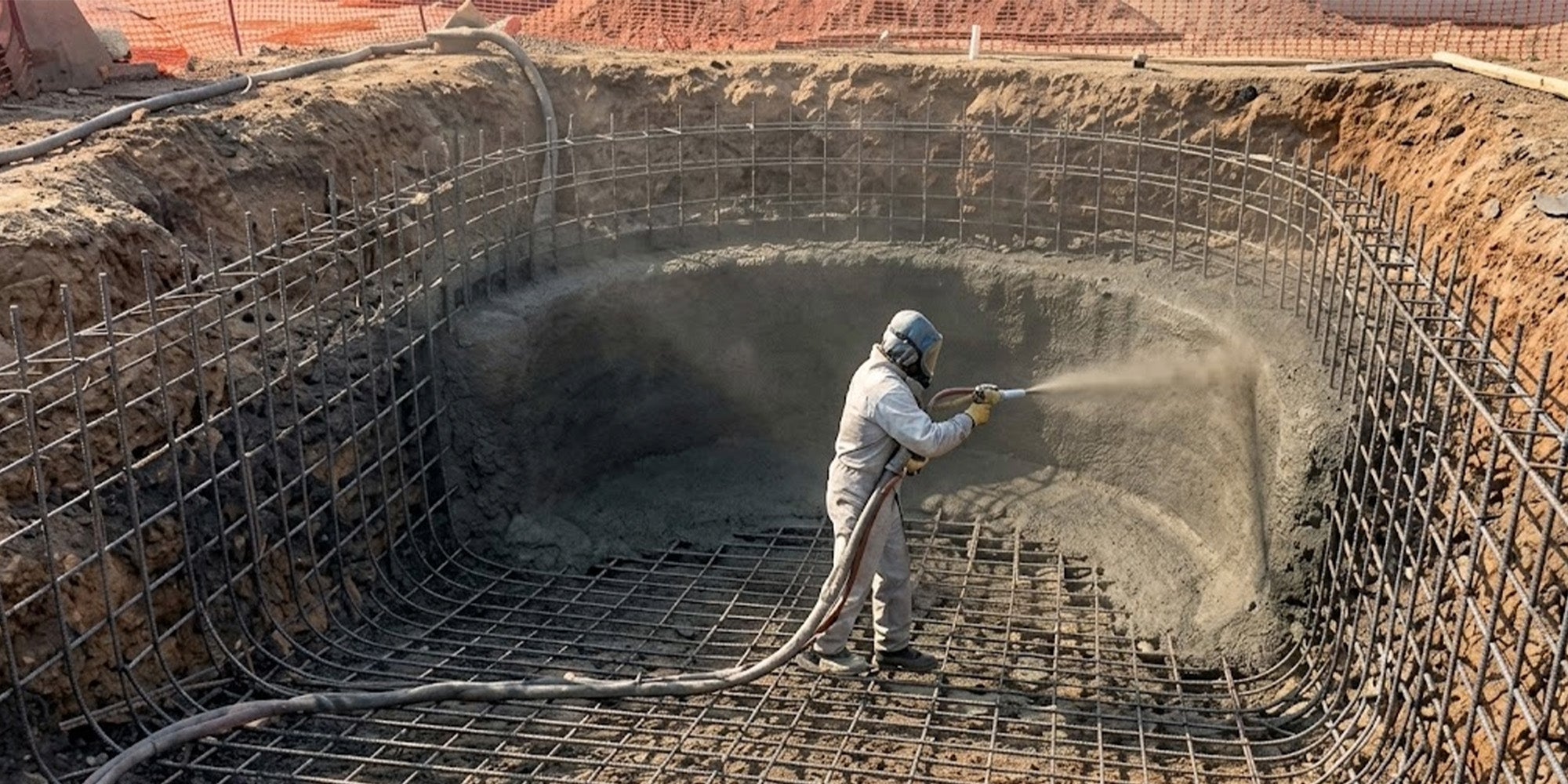
- Steel Reinforcement Installation: A framework (skeleton) of reinforced steel rods (rebar) is installed within the excavated hole. This provides the structural support and strength for the pool shell.
- Plumbing and Electrical Rough-in: The plumbing lines for water circulation, filtration, and any water features, along with electrical conduits for lighting and equipment, are installed and often pressure-tested at this stage.
- Gunite Application: The Gunite mixture (dry mix of cement and sand) is pneumatically sprayed at high velocity onto the rebar framework, and skilled workers then trowel it smooth to form the solid, durable pool shell.
- Curing: The newly applied Gunite shell requires a crucial curing period, usually around 28 days, during which it needs to be kept moist to achieve maximum strength and durability.
- Tile and Coping Installation: Once the shell has cured, the waterline tile is installed, and coping (the material around the pool's edge, such as stone or concrete) is placed to transition to the deck.
- Decking and Equipment Set: The surrounding deck or patio is installed, and the main pool equipment (pump, filter, heater, etc.) is set on a concrete pad and connected to the plumbing and electrical systems.
- Interior Finish and Fill: The final interior surface, typically plaster or a pebble finish, is applied to waterproof the pool shell and provide a smooth finish. Immediately after this step, the pool is filled with water to begin the curing process of the finish.
- Start-up and Landscaping: The water chemistry is carefully balanced during an initial start-up period (often 10-28 days), the equipment is tested, and final landscaping touches are completed.
The process begins with designing the pool layout, followed by excavation of the site to the desired shape and depth. A steel rebar framework is installed to reinforce the structure. This grid provides the skeleton for the pool and ensures structural integrity. Gunite, a dry mix of cement and sand, is sprayed onto the rebar using a high-pressure hose. Water is added at the nozzle, allowing the mixture to adhere and harden quickly. After application, the surface is shaped and smoothed. The Gunite must cure for 28 days to reach full strength. Once cured, the pool is finished with plaster, tile, or pebble surfaces then, plumbing, lighting, and decking are installed.
Advantages of gunite pools
Gunite pools can withstand various weather conditions. Because they are custom-built, Gunite pools can be any shape, size, or depth, with features like waterfalls, spas, sun-shelves, and infinite edges. A wide range of finishes and materials allows for a high-end, personalized look. A well-designed Gunite pool can also enhance both the value and appeal of a property. California ranks second in the U.S. for total swimming pools, with approximately 1.34 million pools statewide, averaging one pool per 29 residents. A significant percentage of these are Gunite pools, especially in upscale residential areas and commercial properties. California’s warm climate and long swimming season make Gunite pools a popular choice due to their durability and design flexibility.
Construction trends
Gunite pools are commonly installed in new luxury home developments and renovations. Builders prefer Gunite for its versatility to conform to irregular lot shapes and for its resilience against seismic activity, which is a concern in California. California’s strict environmental regulations have led to innovations in Gunite pool construction, including energy-efficient pumps, solar heating systems, and water saving covers. Many owners now incorporate smart technology for automated maintenance and chemical balancing.
Effects of wildfire on gunite pools
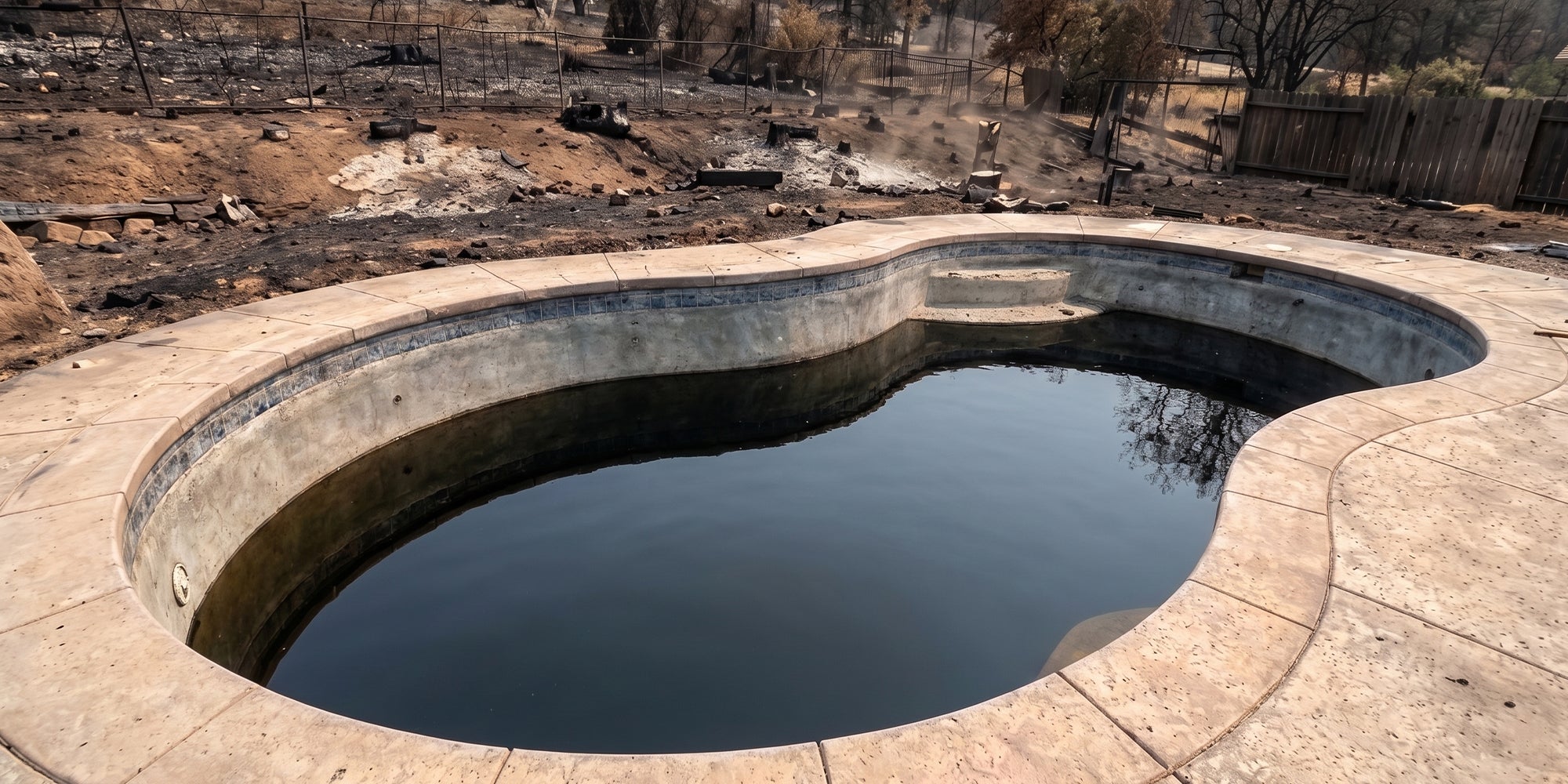
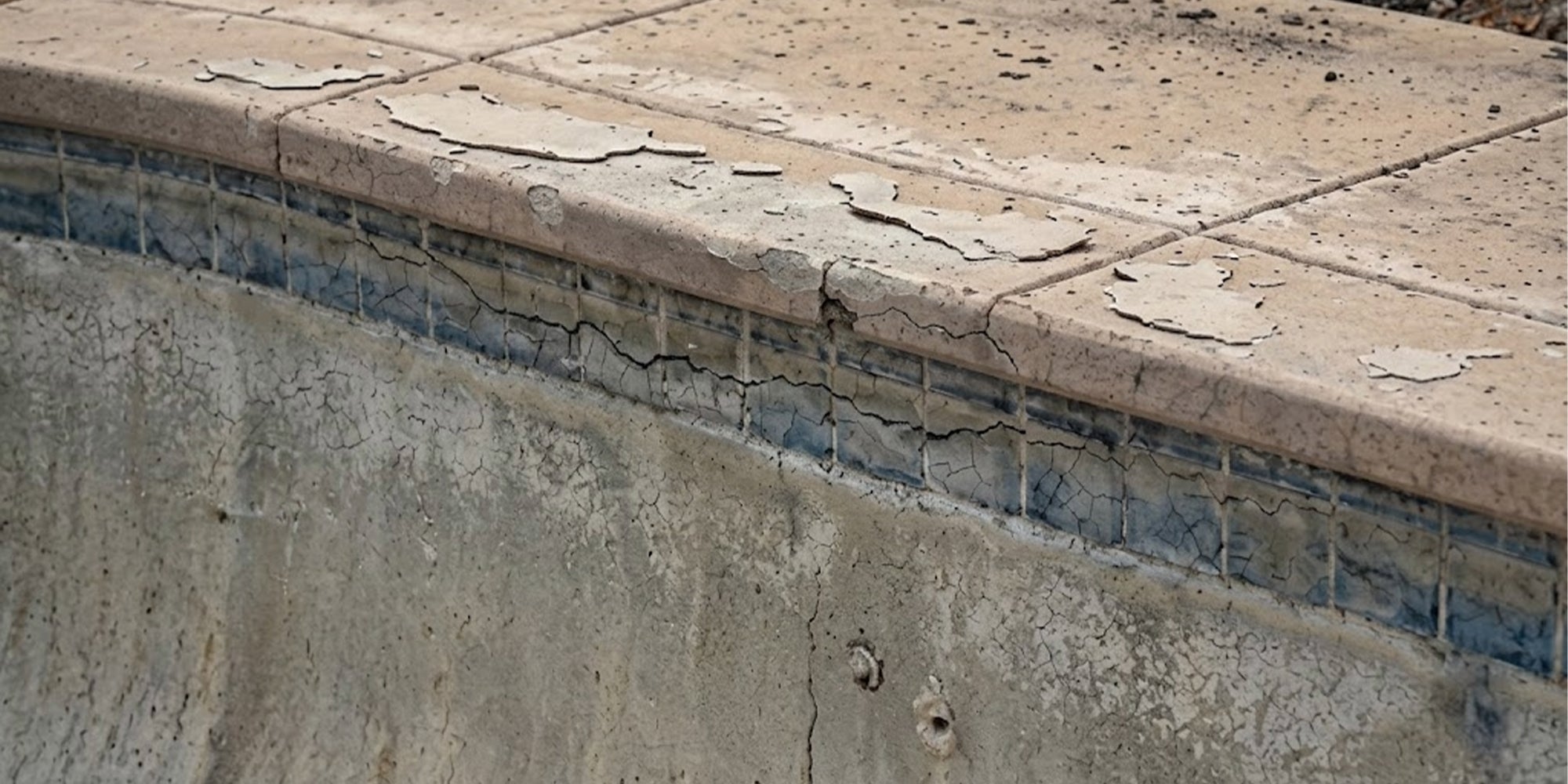
After a wildfire, Gunite pools can survive structurally but often suffer from surface-level damage and contamination. If the pool is empty, rapid heating of the shell, followed by sudden cooling, such as from firefighting water, can increase the risk of surface damage. These extreme temperatures may cause the following issues:
- Surface cracking or checking
- Spalling – when thin layers of concrete flake away
- Tile and coping failure due to thermal expansion
- Degradation of plaster or pebble finish
Wildfires release fine particles like ash, soot, and char that can travel miles and settle in pools. These materials disrupt water chemistry, increasing phosphates, carbon, and nitrogen compounds, may cause cloudy water and algae blooms, clog filters, and strain pumps. Fire retardants used in firefighting efforts may end up in the pool, introducing harmful chemicals. Above-ground equipment (pumps, heaters, filters) may melt or be destroyed by heat and flames. Plumbing lines can also be compromised if exposed. Gunite itself is heat-resistant and often survives wildfires, however extreme heat can cause surface cracking or spalling, especially if the pool was empty during the fire. Rapid temperature changes and exposure to intense heat can also lead to flaking of the concrete surface. Decorative tiles and coping stones may crack or detach due to thermal expansion. Despite these risks, the core structure of a Gunite pool typically survives, while a vinyl liner would most certainly melt and fail completely making it a viable candidate for post-fire restoration.
Post-Wildfire restoration
Following a wildfire, the restoration of a Gunite pool is a multi-step process. The first step is to remove any large debris from the water. The pool's filtration system will then need to be run continuously to remove as much of the ash and soot as possible. The water chemistry will need to be tested and rebalanced, and the pool will need to be "shocked" with a high dose of chlorine to kill any bacteria or algae. In cases of extreme contamination, it may be necessary to drain the pool partially or fully. Any damaged equipment, plumbing, and surfacing will need to be repaired or replaced. Gunite pools typically require resurfacing every 7–10 years, and wildfire exposure may accelerate this need. Consideration should be given to using fire-resistant plants and materials around the pool to reduce future risk. Regular testing and proactive chemical treatments during fire season can also help mitigate potential damage caused by ash and soot contamination.
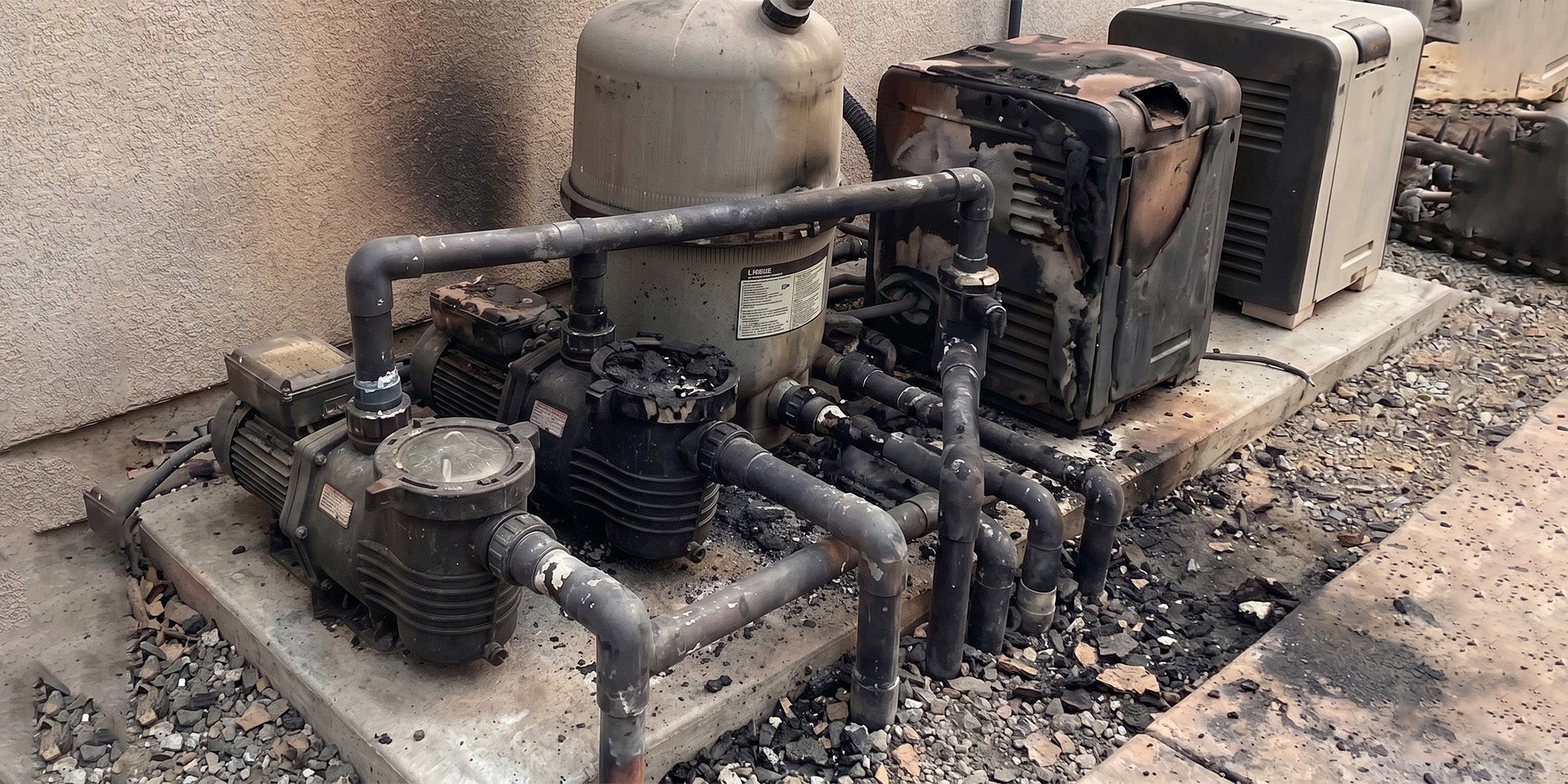
While the Gunite shell may endure, the pool systems and infrastructure are not immune to the effects of wildfires. The pool’s mechanical systems are highly vulnerable to fire damage. Liquid contamination, equipment damage, and surface degradation are common issues that require prompt and thorough restoration. Common issues include melted or burned equipment such as pumps, heaters, filters, and electrical components. PVC pipes and fittings can warp or crack under heat, leading to leaks or system failure. Ancillary damages require a thorough inspection and replacement of affected components before the pool can safely be used again. As wildfires become more frequent, understanding, and preparing for their impact on outdoor infrastructure is essential for homeowners, contractors, and emergency planners alike.
Industry statistics
The U.S. pool market is a robust, multi-billion-dollar industry, encompassing both new construction and long-term service.
- Market Size & Scope: The pool construction market reached $16.5 billion in 2025.
- Total Pools: There are approximately 10.7 million swimming pools in the U.S., with 6.1 million being residential in-ground.
- Construction Methods: Gunite and shotcrete account for about 60% of all residential installations. (Shotcrete is a wet-mix application, while Gunite is a dry mix. “Shotcrete” is a term for any concrete “shot” through a hose at a high velocity. Gunite is just one type of shotcrete.)
- Homeowner Cost: The average in-ground pool costs approximately $66,000 to build, with annual maintenance ranging from $3,000 to $6,000. Depending on overall size, features, soil and site conditions, landscaping and other considerations- this figure can easily exceed $100,000 and even $200,000 for extremely elaborate designs.
- Service Industry: This ongoing maintenance supports a $7 billion annual service industry, comprised of over 55,000 companies.
- Homes in High-Risk WUI: Of those 4.5 million homes, 1.4 million were found to be in high fire-risk areas.
Given this information, it is reasonable to estimate that approximately 9.5% of California’s 1.34 million pools are in a high risk WUI zone. This equates to roughly 127,000 pools at higher risk.
In conclusion, Gunite construction represents the highest standard for durability, strength, and design flexibility in aquatic architecture. Its moldability allows architects and designers to create fully customized, permanent water features without the limitations of prefabricated alternatives. When paired with proper maintenance and wildfire preparedness, Gunite pools offer the strongest long-term return on investment and the highest resilience in fire-prone environments.
While specific post-wildfire survival statistics are limited; the structural characteristics of Gunite provide clear evidence of its ability to endure extreme conditions. As a result, Gunite remains the preferred choice for homeowners seeking beauty, customization, and long-term durability, even in regions facing ongoing environmental challenges.

References
"Exploring California's Gunite: The Ultimate Guide to Durable Pools." Concrete Captain, https://www.concretecaptain.com/. Accessed 5 May 2026.
"Swimming pool statistics & industry insights." https://renosys.com. Accessed 5 May 2026.
“What is a Gunite Pool? A Comprehensive Guide.” Pool Life, https://pool-life.com/. Accessed 5 May 2026.
