Overview

Cotality Hazard HQ Command Central™ released preliminary industry insured loss estimates for Storm Nils/Ulrike. Economists utilized newly available, validated wind gust observation data from various European meteorological agencies to formulate these figures.
· France insured loss estimate range: 800 million EUR – 1,200 million EUR
· Spain insured loss estimate range: 75 million EUR – 140 million EUR
This estimate represents insured losses from wind damage to buildings, contents, and business interruption to residential, commercial, industrial, and agricultural properties across the most affected countries. Localized flooding and landslides are not included.
Alerts issued
Météo-France issued an orange alert for strong wind gusts along the Atlantic coastline of Southwest France, accompanied by a yellow alert for coastal flooding in the region. Additionally, officials issued a rare red alert in the Aude department of Southeast France on the Mediterranean coast.
The Spanish State Meteorological Agency (AEMET) issued orange alerts for wind in Catalonia and the Balearic Island regions. A red alert was also issued for coastal flooding on the northern coast for the Cantabria and Basque regions near the French border.
Meteorological details
Nils is the 31st named storm of the 2025–2026 season and the 14th named by the southwestern group of European countries. Météo-France named the storm on Feb. 10. Freie Universität Berlin named the system “Ulrike” on the same day. The storm's winds hit France the hardest and impacted Spain toa lesser degree.
By 6 p.m. UTC on Feb. 11, the center of Storm Nils reached the English Channel with a central pressure of around 975mb. It then tracked in an approximately eastward direction over the next 24 hours before dissipating. The strongest winds were located along the Atlantic coastline and Southwest of France. Notably strong gusts occurred in the Aude department, where a speed of 98 mph was recorded at Leucate.
The Impact
France
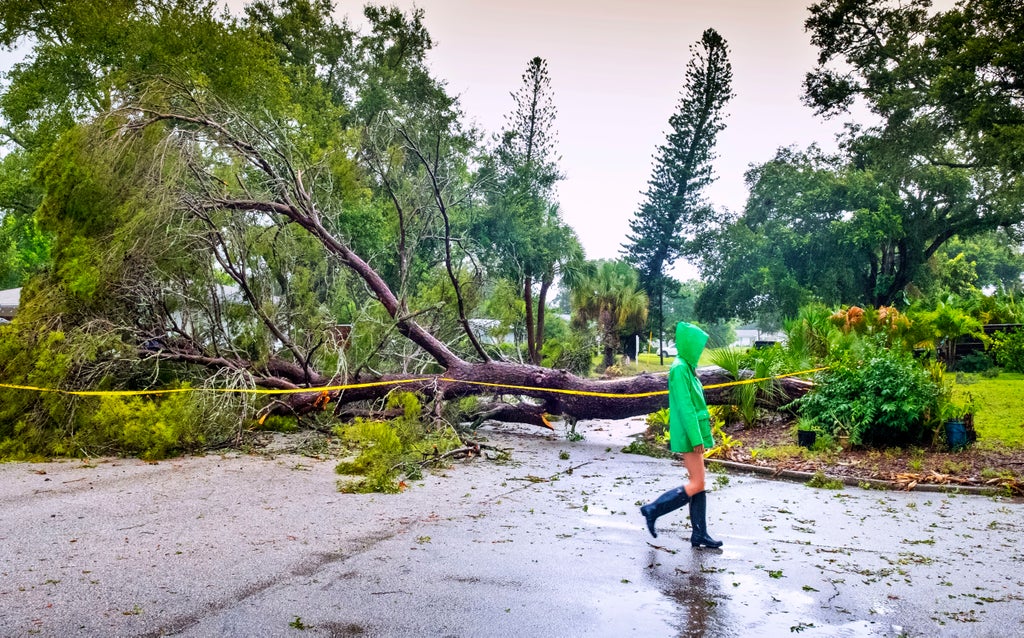
Storm Nils is the most damaging storm to impact Southwest France since Storm Klaus in 2009. Nils made landfall in southwestern France, impacting coastal communities from Bordeaux to the Spanish border and causing widespread damage to buildings, cars, and forestry. Critical transport infrastructure was severely damaged, causing widespread interruptions. As the storm tracked east, more than 150 flights were canceled and over 2,000 delayed across western Europe. Train services were canceled across the region, and the motorway network was subjected to multiple lengthy closures.
Enedis, the manager of the public electricity distribution network in France, stated that around 850,000 homes were without power Thursday morning (12 February) as Storm Nils swept across southern France. More than 450,000 homes remained without power on Friday morning. The precipitation from the storm system led to a red alert for flooding on the Garonne River in western France. Observations showed damaging gusts over 80 mph in the Aude region.
In addition to the Atlantic coast departments, damage occurred along the French border departments of Pyrénées-Atlantiques, Hautes-Pyrénées, Haute-Garonne, Ariége, Aude, and Pyrénées-Orientales. There are widespread reports of damaged roofs, water ingress, trees falling onto cars, blocked roads, and localized flooding.
Reports indicate large, damaging waves in Mediterranean communities around Marseille. In the port of Sète, near Montpellier, a 600-toncrane collapsed onto a cargo ship, and pleasure craft sank in nearby ports dueto large, wind-driven waves. Météo-France classified the storm as an “unusually strong event.” The storm also caused significant snowfall in the French Alps, leading to avalanches in the Savoie region and the closing of several major ski resorts.
Spain and Portugal
Storm Nils brought damaging gusts to the northwest of the Iberian Peninsula. Heavy precipitation increased flood risks and impacted recovery efforts from the recent storms Kristin, Leonardo, and Marta. There are further reports of damaged roofs, infrastructure disruption, and flooding in Catalonia and Aragon. With Storm Oriana expected over the weekend, Portugal and Spain face continued challenges. This sequence of storms is the result of a negative NAO phase, as discussed in our recent Storm Kristin article.
Cotality continues to monitor damage reports and may provide updates on the impact of Storm Nils once they are available.