


When risk rewrites real estate
Featuring

Overview
The U.S. property market is losing its traditional stability as rising insurance premiums and environmental volatility rewrite the rules of homeownership.
- In some high-risk regions, monthly escrow payments are now outpacing the actual mortgage payment.
- Features like wind-resistant roofs or elevated foundations can lower insurance costs and increases property desirability.
- Property value is moving away from "the view" and toward structure resilience scores—using granular data to ensure a home can withstand future disasters.
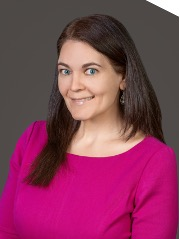
A conversation with Howard Botts and Maiclaire Bolton Smith
For generations, the American Dream was anchored by the predictability of homeownership: a fixed mortgage, a plot of land, and a sense of permanent security. But today, the financial foundation of a home is undergoing a profound shift.
Across the country, the quiet variables of property taxes and insurance premiums have become loud, urgent disruptions—to the point where escrow payments are now outpacing mortgages in some high-risk regions.
This shift is forcing an overhaul of the traditional affordable home model, as environmental volatility rewrites the rules of the game. Whether it’s the hurricane risks in Galveston or the shock of flash floods in Asheville, homeowners are learning that low risk doesn’t mean no risk.
However, the narrative shifts from despair to a new kind of empowerment through the lens of data-driven resiliency.
In this episode of Beyond the Buildings, host Maiclaire Bolton Smith sits down with Howard Botts, Cotality’s Chief Scientist, to unpack how the increasing frequency of natural disasters is destabilizing the property market and how the promise of stability once associated with owning a home is shifting.
In this episode:
02:59 – Are rising insurance premiums creating an affordability crisis?
06:27 – What is the true impact of natural disasters to the housing market?
08:27 – What'’s the danger of assuming safety in inland or elevated areas
10:31 – Where are the riskiest places to live in the U.S. from a natural hazard risk perspective?
15:47 – Where are the safest areas to live in the country?
20:00 – Allie Barefoot breaks down the latest property market numbers in The Sip.
21:30 – How will environmental risks affect the housing market over the next decade?

Transcript:
Howard Botts: We hear our chief actuaries say that all the time, low risk doesn't mean no risk. And even in risky areas, we see huge differences. Sort of my favorite poster child for risk is Shore Acres in St. Petersburg, Florida, where unless your home is elevated 10 feet or more above ground level...There's a high probability of a home will flood during high tide events or from hurricane driven storm surge. And you you think about, you know, one property to the next can be tremendous differentiation in loss.
Maiclaire Bolton Smith: Welcome to Beyond the Buildings by Cotality. I am your host, Maiclaire Bolton Smith, and I’m just as curious as you are about everything that happens in the property industry. On this podcast, we satisfy our collective curiosity, explore questions from every angle, and look beyond the obvious. With every conversation, we illuminate what is possible.
Homeownership used to mean stability. Today, that promise is cracking under pressure. Insurance premiums are soaring, property taxes are climbing, and in some areas of the country, escrow payments now exceed the mortgage. Why? A large part of it is due to environmental risk. This risk is quietly rewriting the housing map, and the consequences are anything but abstract. From wildfires to hurricanes, climate exposure is reshaping affordability and choice.
So here is the question we’re tackling today: Is resiliency becoming the new currency in real estate? And if so, what happens to communities that find themselves on the riskier side of the divide? To talk about which areas of the country are sheltered from climate risk and which are facing elevated risk, we have our Chief Scientist, Howard Botts, back on the show. Howard, welcome back to Beyond the Buildings.
Howard Botts: Well, thank you, Maiclaire. It’s always a pleasure speaking with you.
Allie Barefoot: Before we get too far into this episode, here’s a friendly reminder about how to see what’s coming up next in the property market. To make it easy, we curate the latest insight and analysis for you online. Find us using the handle @Cotality on all our social media channels. But now, let’s get back to today’s show.
Maiclaire Bolton Smith: Okay, so it’s all over the news: insurance premiums are skyrocketing in high-risk areas. Is this the market’s way of pricing environmental risk, or is it creating an affordability crisis?
Howard Botts: Well, the answer to both questions is yes. Insurers annually evaluate the environmental or natural hazard profiles of their insured properties. Based on past or expected claims, they will request rate increases from their state departments of insurance, which then get passed on to customers as higher rates.
Insurers also have the option—as we saw in the wildfire areas of California—of non-renewing policies for a variety of reasons. Affordability is then impacted through these higher rates in counties or areas of increased risk. And if you’re non-renewed, as many were in California recently, you’re forced to go onto a state "FAIR plan," which can be thousands of dollars more per year. So, all of this—increased environmental risk and increased losses—is creating higher rates, which definitely creates an affordability issue.
Maiclaire Bolton Smith: And I know, Howard, you are far too familiar with that yourself, given the situation you've been in with your own home being non-renewed and then being impacted by the Los Angeles wildfires as well.
Howard Botts: Yes, it’s something I’m living every day. I’m still not back into my house. The California FAIR Plan, which is my insurer, has yet to pay a smoke claim. Although my house survived the fire, it was heavily lead-contaminated.
Maiclaire Bolton Smith: So, at Cotality, our data really underscores how geography both defines a property’s physical risk and its affordability. Do we think this is just a temporary trend, or are we really moving toward a "new normal"?
Howard Botts: I think it’s absolutely a new normal. Insurers have largely moved to by-peril rating, which means evaluating all the natural hazard risks associated with a property—except for flood and, in some states, earthquake risk. By-peril rating basically looks at all the different hazards that will impact a property and assigns a rate for each one.
Instead of being part of a large rating area, which could be a zip code or a county, each individual home is priced separately and reflects the specific hazards for that property. As you suggested, Maiclaire, we are a major provider of highly granular risk models. We look at things like structural vulnerability, year built, first-floor height, and many other factors. We can see when we map risk that loss or risk varies significantly, even on the same city block. So, definitely, by-peril rating is the new normal and will continue to drive insurance costs, at least directly related to what we believe is the specific risk to a property.
Maiclaire Bolton Smith: Now, let's dive into that a little bit more, Howard, because I think if we look across the country, there are lots of counties that are relatively sheltered. So, when we look at the country as a whole and we see these skyrocketing insurance premiums, are we overestimating the impact of natural disasters, or is there really that big of an impact that the insurance industry is changing the new normal?
Howard Botts: Yeah, I think you've hit on an interesting topic where I think the press tends to attribute all of these increased losses purely to natural hazards or disasters. But not all losses are attributable to these. A significant contributor is increased losses from urban growth—migration of individuals to high-risk areas in Florida, cities across the Midwest and Great Plains that are subject to tornadoes, hail, other things—are certainly driving more loss. And a single event like a damaging hailstorm as Texas cities expand outward, it just puts a lot more homes at risk for loss. So, I think you are correct—in many places, there's relatively low risk, and others, we see high risk at either local level or county level. Huge variability. So, you are correct: in many places, there’s relatively low risk, and in others, we see high risk at either the local or county level. Huge variability.
Maiclaire Bolton Smith: Yeah, I feel like natural disasters get the bad rep sometimes, but ultimately, I think you’ve touched on a really important part there, Howard. And I mean, the other thing, too, is something we say here at Cotality a lot is "low risk doesn't mean no risk," which is what you just alluded to. So I want to unpack this a little more: What’s the danger of assuming you are safe from natural disasters if you are inland or away from some of these more talked-about high-risk areas?
Howard Botts: I think that's an interesting comment. And we hear our chief actuary say that all the time: low risk doesn't mean no risk. And even in risky areas, we see huge differences. Sort of my favorite poster child for risk is Shore Acres in St. Petersburg, Florida, where unless your home is elevated ten feet or more above ground level, there's a high probability of a home will flood during high tide events or from hurricane-driven storm surge. And you think about one property to the next, there can be tremendous differentiation in loss.
Similarly, high-severity wildfire areas, homes can vary significantly in risk based on the kinds of mitigation factors a home has. But assuming, as to your question, locating inland away from the coast certainly doesn't assume no risk. We're seeing significantly increased losses in places we thought were relatively safe. All of us probably have friends in places like Asheville, North Carolina, which moved there because it’s aesthetically beautiful but were hammered by floods. Or Vermont, places in Montana, all of which we thought had relatively low risk, have been impacted by increased rainfall, flash flooding events. So, just by picking an area that you assume is safe doesn't mean, obviously again, there is no risk.
Maiclaire Bolton Smith: Well, I want to just get into it, Howard. The title of this podcast was not clickbait: We ARE going to talk about where the riskiest places to live are. So let’s just get into it. If we look across the U.S., where are the riskiest places in the country from a natural hazard risk perspective?
Howard Botts: Yeah, I think there's a lot of ways we can measure that, Maiclaire. And I like to think about counties that would be big enough we'd actually want to move to, that may have 50,000 people or more in them. And when we map this or look at these, it's the Gulf Coastal areas that have the highest risk.
As probably no surprise to anybody, Orleans Parish, home to New Orleans, is one of the very highest. Its sister parish of Jefferson is another one. Galveston, Texas; Biloxi, Harrison County, Mississippi; Pascagoula, Mississippi, and Jackson all have triple-threat perils that are very high: inland flood, hurricane wind, surge—all being big, big issues.
Conversely, the alternative—there are safe places. So, for those that are looking for somewhere, we could move to Skagit County, Washington, just north of Seattle, and it has very few high-risk properties.
Maiclaire Bolton Smith: Well, let’s just kind of compare some of those, Howard. You mentioned Galveston and on the opposite end you mentioned Skagit. So what do those two look like differently from purely a cost perspective?
Howard Botts: Yeah, I think they’re both coastal-facing counties—Galveston on the Gulf and Skagit on Puget Sound, just off the Pacific. Galveston is a low-lying barrier island just off the coast of Texas, which is frequently impacted by hurricane wind, storm surge, and flooding. Galveston also is experiencing some of the most rapid sea-level increases in the US.
And we tend to think of sea-level rise maybe as a slow process, and in Galveston, it's risen over two feet in the last century. But if we look at just 2010 to the present, sea-level rise has been eight inches, which is pretty scary. And by the end of this century, it could be as much as three to eight feet higher than now. So, if you have an older home sitting on a slab or a low-elevation foundation, you are highly likely to be impacted by hurricane-driven storm surge.
I was recently in Galveston and drove along the island, and you can see every one of the newer homes, based on local changes in building codes, were now often elevated 12 feet or more above current sea level. So, there is an understanding of risk. And so that’s one of the reasons or many of the reasons why Galveston rates so high.
Versus Skagit, Washington, located just north of Seattle. It's sheltered from the direct impact of Pacific Ocean storms by Puget Sound, and with the exception of sea-level rise being the major future environmental risk for low-lying coastal areas, it doesn't experience any of the other kind of major natural hazards we would typically think of. So, really a tale of two different counties in terms of risk.
Maiclaire Bolton Smith: So, Howard, when I hear you talk about Puget Sound, my brain instantly goes to earthquake and tsunami. Is that considered as part of this analysis as well, or did we only look at climate disasters?
Howard Botts: No, we absolutely look at all the impacts of earthquake, fire following earthquake, and tsunami as things. But the thing people talk a lot about is what happens if the Cascadia fault offshore sends a tsunami as high as 100 feet high toward the Washington, Oregon, British Columbia coast. The benefit that Skagit has is it’s protected because it is in Puget Sound. It's a lot of islands offshore will protect it from the major impacts. So, I would be much more worried if I was on the coast of Washington or Oregon than I would be inland on the Puget Sound. Similarly, Seattle, when you look at what is the tsunami risk there—also a Puget Sound city—much, much lower than the coast.
Maiclaire Bolton Smith: No, that’s great. I think that that perspective is necessary to include. I guess staying on this topic, Howard, of these more sheltered or less risky areas, where are the safest places in the country?
Howard Botts: Well, for counties that have a larger population, as we mentioned, Skagit is one, its sister county Bellingham is another. Some may be a little more surprising, like Grand Junction, Colorado, which is in Mesa County, or Seguin in Guadalupe County, Texas—not too far from Austin. Or El Paso, Texas, would all be relatively safe areas.
But if we look at counties that have populations less than 50,000, some surprising counties start to pop up—a number of them in Florida, Georgia...
Maiclaire Bolton Smith: Florida? Wow. I know, yeah, you wouldn't think that.
Howard Botts: You know, across the Midwest we’ll have lots of them, Montana, other states. So, small counties, rural counties, there are lots of them in Texas across the Southwest that are all relatively safe areas. I think as you move away from coastal areas, away from wildfire risk areas, you see a lot lower environmental risk and a lot lower insurance premiums, which is certainly one of the focuses that we're talking about today.
Maiclaire Bolton Smith: Sure. Okay, I have to dive into this Florida topic more because that's just so fascinating. Because I think Florida's kind of the poster child for natural disasters when you think of hurricane risk and such. How can one part of the state be one of the safest places when the bulk of the state is on the most riskiest places?
Howard Botts: Yeah, that is an interesting dichotomy. Certainly when we're talking about Southern Florida, nowhere is safe by relative standards. But the counties that are safe in Florida tend to be those that are further inland and particularly those that are located along the Florida-Georgia border up in the Panhandle area. And they're also benefiting from the fact that Florida counties have very strong building codes.
And so the further away you are from the coast, yeah, you may have winds, but they won't be as strong as coastal, and building codes really protect homes from loss there. We've looked at counties just across the border in Georgia that have weaker building codes, and we've seen that those counties suffer more loss even though they're further away from the coast. And so building codes in this case really driving the relatively low risk from particularly wind.
Maiclaire Bolton Smith: Yeah, it's a really important part to add—the resiliency factor and mitigation and what it can do with building codes and such to be prepared for natural disasters, how it really can make a monumental impact.
Howard Botts: Oh, absolutely. And we’re even seeing coastal areas that are high risk like in Alabama. There's a resilient home initiative there where the state is giving grants to homeowners to remediate their homes, and those that are doing that against wind risk are suffering claims loss that's much, much lower than neighbors that haven't upgraded their homes. So, a resilient home even in a high-risk area, you're going to see far fewer losses, far fewer insurance claims. So, I think the future of America and dealing with increased climate risk is absolutely going to be looking at individual properties and what you can do to mitigate their risk.
Allie Barefoot: It’s that time again! Cotality just dropped new numbers about what’s happening in the housing market. Here’s what you need to know
Sellers are currently paying a massive premium for peace of mind. As the market becomes more volatile, "cash is king" has taken on a literal—and expensive—meaning. Cotality data shows the price gap between cash and financed offers has widened to a record 9% discount in 2025, up from just 4% in 2021.
With interest rates and insurance hurdles causing nearly 6% of financed deals to fall through, sellers are choosing the "sure thing" over the highest price. However, the math is getting lopsided: on a median $410,000 home, sellers are essentially leaving about $17,000 on the table just to avoid the risk of a deal unraveling. This trend is handing a huge advantage to investors, who now make up 36% of cash purchases, while traditional buyers using mortgages are forced to offer even higher prices just to stay competitive.
To learn more about the widening gap between cash and financed offers, visit Cotality.com/insights. There’s also a link in the show notes.
Maiclaire Bolton Smith: Well, the future is where I want to end off with today, Howard. I’d like you to pull out your crystal ball right now. And I guess if we think of the climate that we live in today, it really has started to define where we live. You and I live in California because we love the weather. There are other things that go along with that that we all have lived firsthand. But I guess, do you think across the country, do you think environmental risk will continue to redefine where people call home if we look over the next decade or so? Or do we think that there's ways to translate that risk into resilience strategies like better building codes, better mitigation to help prepare for things that maybe are ahead of us?
Howard Botts: Yeah, I think that's a really interesting way to end this conversation. We certainly know that climate risk and rising insurance costs are impacting decision-making now and in the future. We're already seeing homeowners working closely with their real estate agents to understand risk to individual properties and making decisions often based on finding homes that are lower risk. We also see migration away in some cases from homeowners that have moved to Florida, realize they can no longer afford the costs of insurance, which I'm sure ruined their retirement dreams of living in a warm climate.
And the other trend I think we see is exactly what you kind of were alluding to—that homeowners are moving beyond understanding risk to looking at property resilience. And one of the things we at Cotality are really on the leading edge of is modeling Structure Resilience Scores and also doing return on investment analysis for homeowners looking to improve property resilience. So, depending on where I am and what the risks are, what can I do to make my home more resilient and what's the most cost-effective way to do it?
Unfortunately, as I think you mentioned in your introduction, we're finding that the cost of homeownership, which used to be fairly predictable—we knew what our mortgage was, we knew what our HOA fees were if we were in one—today insurance and energy costs, interestingly, are the two biggest impacts on homeowners that weren't initially calculated into what they could afford and what they couldn't afford.
Maiclaire Bolton Smith: Well, the future is ahead of us, the future is here. Howard, this is going to continue to unfold. Thank you so much again for joining me today on Beyond the Buildings.
Howard Botts: Always a pleasure, Maiclaire. I love our conversations.
Maiclaire Bolton Smith: And thank you for listening. I hope you've enjoyed our latest episode. Please remember to leave us a review and let us know your thoughts and subscribe wherever you get your podcast to be notified when new episodes are released.
Allie Barefoot: You still there? Well, thanks for sticking around! Are you curious to know a little bit more about today's guest? Dr. Howard Botts is Cotality's Chief Scientist and Executive Leader of the Science and Analytics team. Dr. Botts leads climate change and natural hazard science, analytics, and geospatial professionals who generate and maintain solutions for the insurance, capital markets, mortgage, banking, and energy industries. With over 30 years of experience in GIS, Dr. Botts is a recognized expert in developing natural hazard risk solutions and his work has been published extensively. He frequently presents to business and professional organizations on a variety of topics such as climate change impacts on the real estate ecosystem, natural hazard risk, weather forensics, market potential models, and geographically based market analysis.
Related Resources

