Overview
- Regional dwelling values eased 0.1% in the three months to July, outperforming a 2.5% decline across the combined capitals.
- Regional areas of Western Australia and South Australia recorded the strongest quarterly growth nationally, with dwelling values increasing 2.1% across both states.
- Regional New South Wales and Victoria recorded the weakest conditions nationally, reflecting softer markets across Sydney and Melbourne.
- Regional rental growth moderated to 1.1% over the quarter (down from 1.8%), with Albany recording the strongest increase at 3.0% and regional vacancy rates holding at 1.9%.

Regional Australia's housing market has continued to outperform the capital cities, despite a broad slowdown that has seen value growth in almost every major regional market slow or decline in the past three months.
The latest Cotality Regional Market Update shows regional dwelling values eased by 0.1% in the three months to July, compared with a 2.5% decline across the combined capitals. Compared to the previous quarter, 47 of Australia's 50 largest regional Significant Urban Areas (SUAs) had slower growth, while 22 of them recorded a decline in home values.
Cotality Australia Head of Research Gerard Burg said even though regional markets continued to outperform the capitals, they were not immune to the broader housing market slowdown.
"Regional markets have consistently outperformed the capital cities since housing conditions began to soften in late 2025, but even the regional markets are now being impacted by the broader market slowdown," Mr Burg said.
"Relative affordability continues to attract buyers to many regional markets and support internal migration from the capitals. However, softer buyer demand is becoming more evident across the country, with fewer markets recording the strong growth seen earlier this year."
Mr Burg said Australia's housing downturn first emerged in Sydney and Melbourne as high interest rates and affordability constraints weighed on buyer demand, before weaker consumer confidence and reduced investor activity contributed to a broader slowdown across the country.
Western Australia and South Australia continue to lead
Regional areas of Western Australia and South Australia recorded the strongest quarterly growth nationally, with dwelling values increasing 2.1% across both states. Port Pirie led South Australia with quarterly growth of 6.7%, while Kalgoorlie-Boulder (6.4%) and Geraldton (3.8%) recorded the strongest gains in Western Australia.
Mr Burg said some of the momentum in the previously high-performing south-west areas of WA has started to ease as the state’s strongest growth became increasingly concentrated in more affordable regional centres.
"Growth across Western Australia remains the strongest in the country as markets with buoyant local economies and relatively affordable housing markets are proving more resilient as buyer demand becomes increasingly selective," he said.
"We're no longer seeing growth concentrated in the lifestyle markets that benefited most from spillover demand we saw during the market’s prolonged upswing. Instead, buyers are gravitating towards regional centres where their dollar stretches further and local demand is supporting housing values."
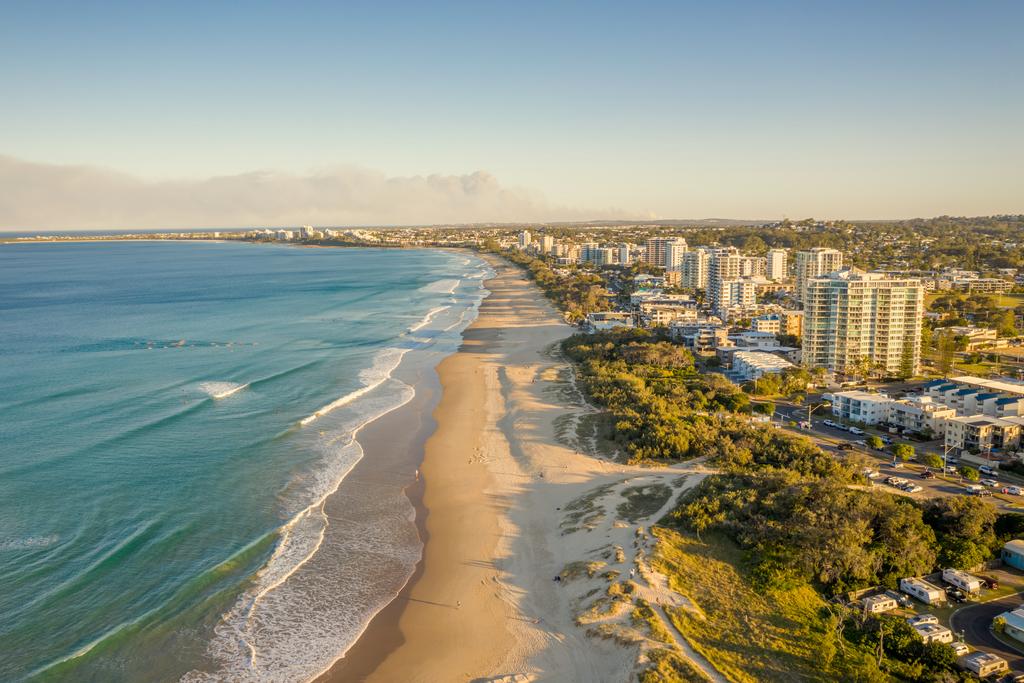
Regional Queensland dwelling values were flat over the quarter as values fell across the state’s south east markets for the first time since early 2023.The Gold Coast, Sunshine Coast and Cairns all recorded declines of 0.8%, 0.5% and 0.6% respectively, offsetting gains of 2.0% in Maryborough, 1.6% in Gladstone and 1.2% in Townsville.
"Queensland has been one of Australia's standout regional performers over the past few years, but we're starting to see a more selective market emerge. As higher-value markets lose momentum and buyers become more cautious, we’re seeing demand swing to more relatively affordable regional centres," Mr Burg said.
"Higher interest rates have reduced borrowing capacity and buyers are more price sensitive so they’re looking for value areas, which has supported demand in regional centres such as Maryborough, Gladstone and Townsville.”
Regional New South Wales and Victoria recorded the weakest conditions nationally, reflecting the softer housing markets across Sydney and Melbourne. Coffs Harbour (-3.3%), Goulburn (-3.2%) and Nelson Bay (-3.0%) led declines across Regional NSW, while Geelong (-1.2%) and Warragul-Drouin (-1.5%) recorded the largest falls in Victoria. Inland markets including Dubbo, Tamworth and Albury-Wodonga continued to record comparatively strong growth of 3.9%, 2.2% and 2.0% respectively.
Selling conditions soften
Selling conditions weakened across much of Regional Australia during the quarter, with the median time on market increasing in 44 of the country's 50 largest SUAs.
Western Australia continued to record the strongest selling conditions with Kalgoorlie-Boulder still Australia's fastest-selling regional market, with a median selling time of 11 days, followed by Albany (16 days) and Geraldton and Bundaberg (18 days).
Regional New South Wales recorded the weakest selling conditions, led by Bowral-Mittagong where homes spent a median of 86 days on the market, ahead of Batemans Bay (70 days) and St Georges Basin-Sanctuary Point (66 days).
Regional rents continue to moderate
Regional rental growth eased to 1.1% over the three months to July, down from 1.8% in the previous quarter and marginally below the 1.2% increase recorded across the combined capitals.
The strongest increase in rents in the three months to July was recorded in Albany (3.0%) followed by Toowoomba (2.9%) and Kalgoorlie-Boulder (2.8%). Seven SUAs saw a decline in rents in the three months to July, led by Hervey Bay (down 1.1%), Mildura-Buronga (0.7%) and Maryborough and Mount Gambier (both down 0.5%).
Mr Burg said rental conditions had become less competitive than during the peak of the rental shortage, although supply remained constrained across many regional markets.
"Rental growth has moderated alongside broader housing market conditions, but vacancy rates remain relatively tight across many regional centres," he said.
"Limited rental supply continues to support rents in many markets, even as demand has become more balanced."
Regional vacancy rates were 1.9% in July, compared with 1.7% across the combined capitals. Lismore and Forster-Tuncurry recorded the country's tightest regional rental markets, both with vacancy rates of 0.8%, followed by Warrnambool in Victoria at 0.9%.
Gross rental yields remained stable at 4.2%, comfortably above the 3.6% recorded across the combined capitals. Kalgoorlie-Boulder continued to record the highest gross rental yield among the country's largest regional markets at 7.7%.