From 30 November 2026, Awaab’s Law takes a significant step forward.
For social housing landlords in England, the change is not simply an extension of the list of hazards covered. It increases the number of situations in which landlords will need to act on risks within statutory timescales.
That makes the practical challenge increasingly clear: how do you know where the risks are, how do you prioritise them, and how do you make sure the right intervention addresses the underlying problem?

Phase 1 of Awaab’s Law came into force on 27 October 2025, applying fixed requirements to all emergency hazards and significant damp and mould hazards in the social housing sector. From 30 November 2026, Phase 2 extends the significant-hazard requirements to:
- excess cold
- excess heat
- falls, including falls on level surfaces, stairs and between levels
- structural collapse
- fire and explosions
- electrical hazards
- domestic hygiene, including personal hygiene and food safety.
Government intends to extend the requirements again in 2027 to the remaining Housing Health and Safety Rating System (HHSRS) hazards, with overcrowding excluded.
For landlords, therefore, 30 November is another stage in a broader shift towards more time-bound and evidence-led management of housing hazards.
The government's Awaab’s Law Phase 2 guidance for social landlords was updated in July and includes further guidance on communication, triage, categorisation, access, investigations and the information that should be provided to residents.
What are the Awaab’s Law timescales?
The legal clock matters.
Under the expanded requirements, social landlords must:
- investigate a potential emergency hazard and, where one is identified, complete relevant safety work within 24 hours of becoming aware of it
- investigate a potential significant hazard within 10 working days
- provide the resident with a written summary within three working days of completing that investigation
- where a significant hazard is identified, undertake relevant safety work within five working days of the investigation concluding
- begin, or take steps to begin, supplementary preventative work within five working days. Where it cannot begin within that period, it must begin as soon as reasonably practicable and within 12 weeks.
The detailed requirements are set out in the government's Awaab’s Law Regulations.
This introduces a simple but important operational question: what happens on day zero?
Once a landlord becomes aware of a potential hazard, having reliable information and a clear route from report to investigation, decision and action can make a significant difference.
Five steps social landlords can take to reduce Awaab’s Law risk
1. Know where to look first
Resident reports are crucial, but they should not necessarily be the first point at which a landlord knows that a home may be at risk.
Landlords already hold significant amounts of information across stock condition surveys, EPCs, repairs histories, compliance systems and investment programmes. Bringing that evidence together can help identify homes where further investigation may be warranted.
This is where predictive analysis can complement, rather than replace, professional assessment.
Cotality's approach uses property data and machine-learning HHSRS risk analysis to identify homes more likely to contain key hazards, helping landlords prioritise where surveys, inspections and monitoring may be most useful. That moves the starting point from treating every property equally towards risk-based prioritisation.

2. Make the route from awareness to action clear
Phase 2 makes effective triage increasingly important.
A report may arrive through a call centre, repairs system, contractor, housing officer or another route. Government guidance explicitly addresses awareness, triage and categorisation, alongside landlord record-keeping and engagement where access is required.
Landlords should therefore test the full journey:
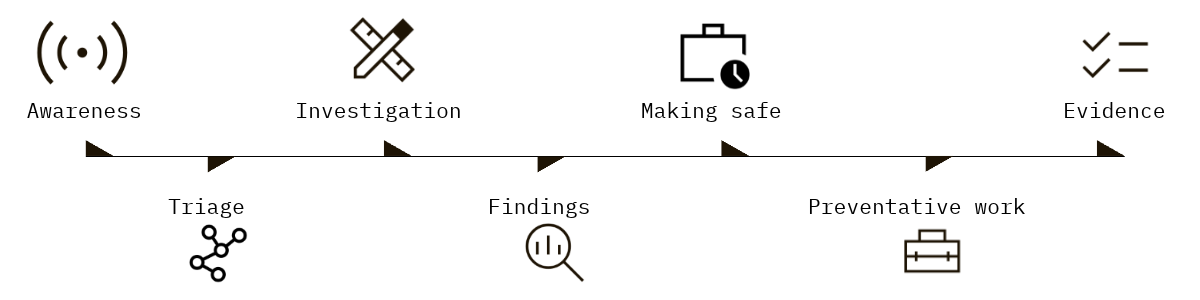
The question is not simply whether each team understands its own role, but whether information can move quickly enough between teams for the organisation to meet the statutory timescales.
3. Connect hazard management with asset investment
Awaab’s Law should not become another isolated compliance programme.
A home identified as being at risk of excess cold, for example, may also have an ageing heating system, poor fabric performance, ventilation issues and planned investment already sitting elsewhere in the asset programme.
Bringing those signals together creates an opportunity to address underlying causes, rather than repeatedly responding to symptoms.
That is consistent with the approach already set out in our internal landlord proposition: connect reports of damp, mould, excess cold or heat, fire, electrical and structural risks with condition, repairs and investment information, then use that evidence to prioritise work and demonstrate completion.
4. Treat retrofit, repairs and resident safety as connected issues
There is an important crossover between Awaab’s Law and retrofit.
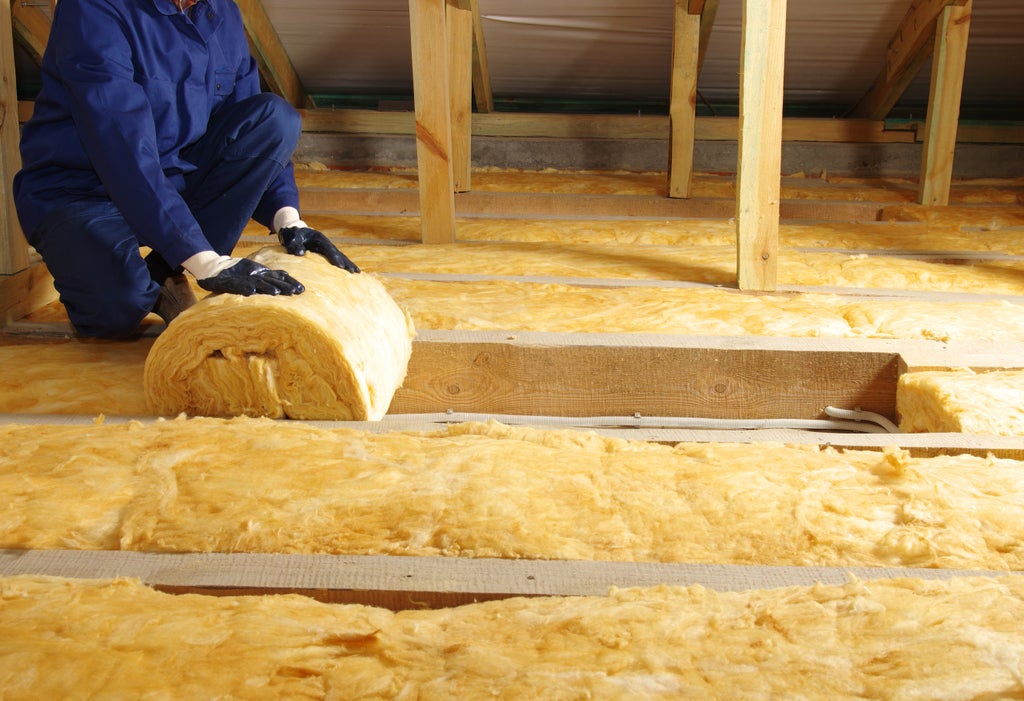
Well-designed retrofit can help reduce risks associated with excess cold, excess heat and damp through appropriate improvements to insulation, heating, ventilation and overall building performance. But poorly specified or installed measures can also contribute to overheating, condensation, poor indoor air quality or fire-safety concerns.
That makes a whole-house approach increasingly important.
Rather than treating a retrofit project, repair and housing-health issue as three separate interventions, landlords can look across the property and ask what combination and sequence of work produces the safest and most effective outcome.
Cotality's Retrofit 360 approach connects property data, HHSRS and climate-risk analysis, investment planning, retrofit delivery and quality assurance. It can also help align retrofit with repairs and maintenance programmes to reduce duplication and unnecessary disruption for residents.
5. Build the evidence trail as you go
Speed alone isn't enough.
Landlords also need confidence that they can demonstrate what was known, when it was known, how the risk was investigated and what action followed.
That means retaining clear property-level evidence across surveys, assessments, decisions, works, inspections and completion. Good records can help demonstrate that hazards were considered, action was taken and works were completed appropriately.
It is also valuable operationally. Better evidence today improves the decisions landlords can make about the same home tomorrow.
The bigger opportunity: intervene earlier
The ambition behind Awaab’s Law is ultimately much more important than compliance with a deadline. It is about homes being safe and healthy.
For landlords, Awaab's Law and upcoming changes to Decent Homes encourage a move from:
complaint → investigation → urgent response
towards:
evidence → prioritisation → investigation → planned intervention
That does not mean replacing resident reports and professional inspection with an algorithm. It means continuing to respond promptly to issues raised through surveys, monitoring and complaints but also making better use of the information already available to understand where to conduct surveys and monitoring.
The expansion of Awaab’s Law on 30 November adds value to preemptive action. And with the requirements expected to extend to the remaining HHSRS hazards in 2027, building an approach that can scale across the housing stock is likely to be far more effective than creating another process for each new phase.