EPC C compliance. At the lowest cost.
See every property you let in one dashboard, and the lowest-cost route to compliance for each - for portfolios of 10 to 500+ homes.
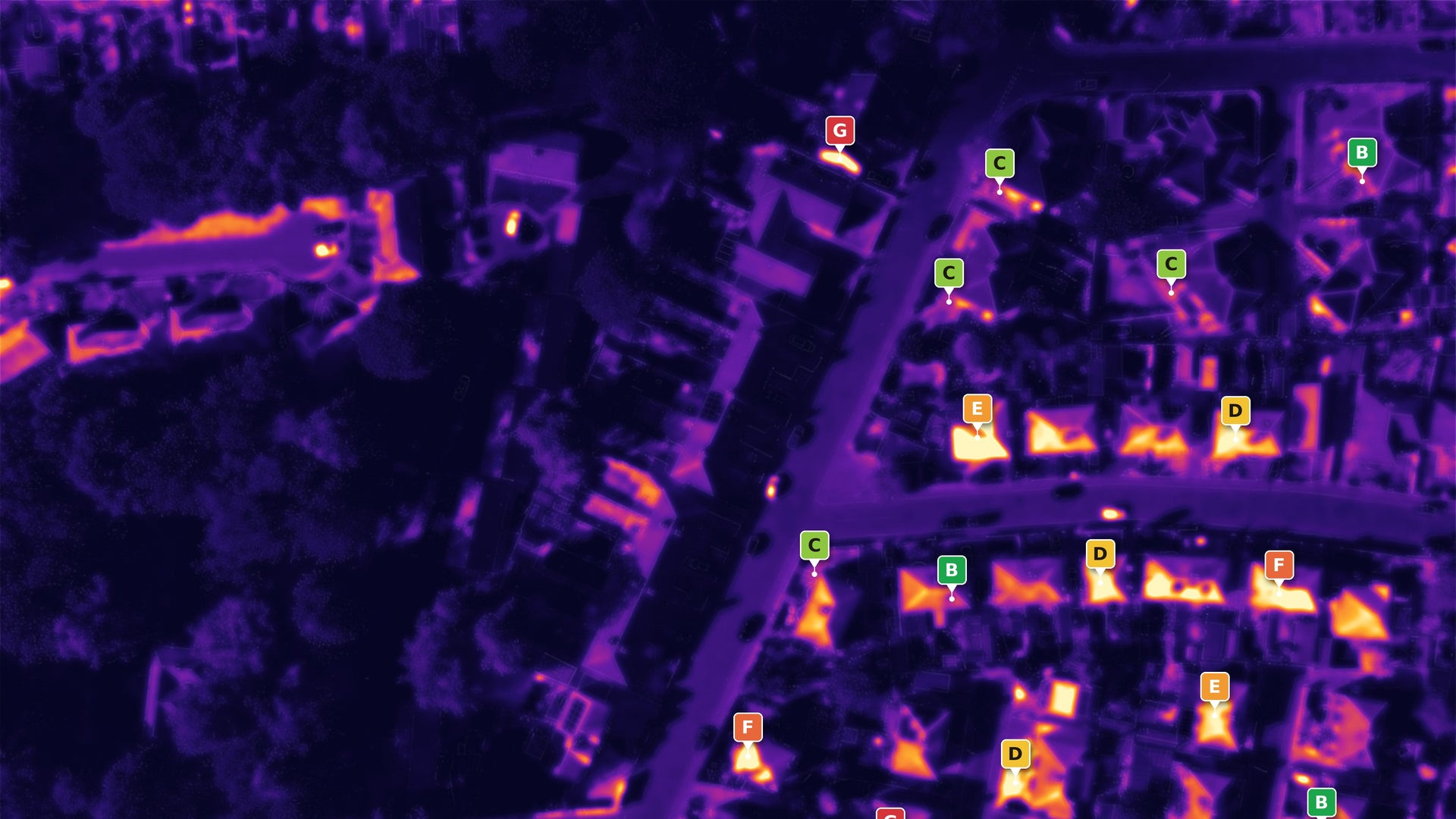
A clear, costed plan for every property you let
From 1 October 2030, every rented property in England and Wales must reach EPC C. Homes that don't can't be legally let, and fines run up to £30,000 per property, per breach*.
Cotality maps your whole portfolio, rules out the homes that are already compliant or exempt, and finds the lowest-cost route to C for the rest - cutting your spend by up to 65%. View our video to see how it works.
* Based upon the proposed MEES rules for privately rented homes in England & Wales
Up to 65%
Less upgrade spend
Avoid unnecessary works by finding the cheapest compliant route for each property.
£10,000
Average expected fine
Per property, per breach, from 1 October 2030 - up to a maximum of £30,000*.
£2,135
Average spend per property
Our modelled client average, against a government estimate of £6,100**.
Know before you spend
See where you stand
Every property's EPC position in one view - including missing, expired and doubtful records. See a clear overview of your portfolio.
Spot the exemptions
Find the homes that already meet C, and those likely to qualify under the £10,000 cap. Prevents you from spending money unnecessarily.
Model every option
Insulation, heating, glazing, renewables. What's right for one home is different for another. See which mix reaches C for the least money.
Plan to works
You can use your least-cost plan with your own installers or we can help. We can introduce you to accredited installers and oversee the quality of works.
Not every upgrade earns its place
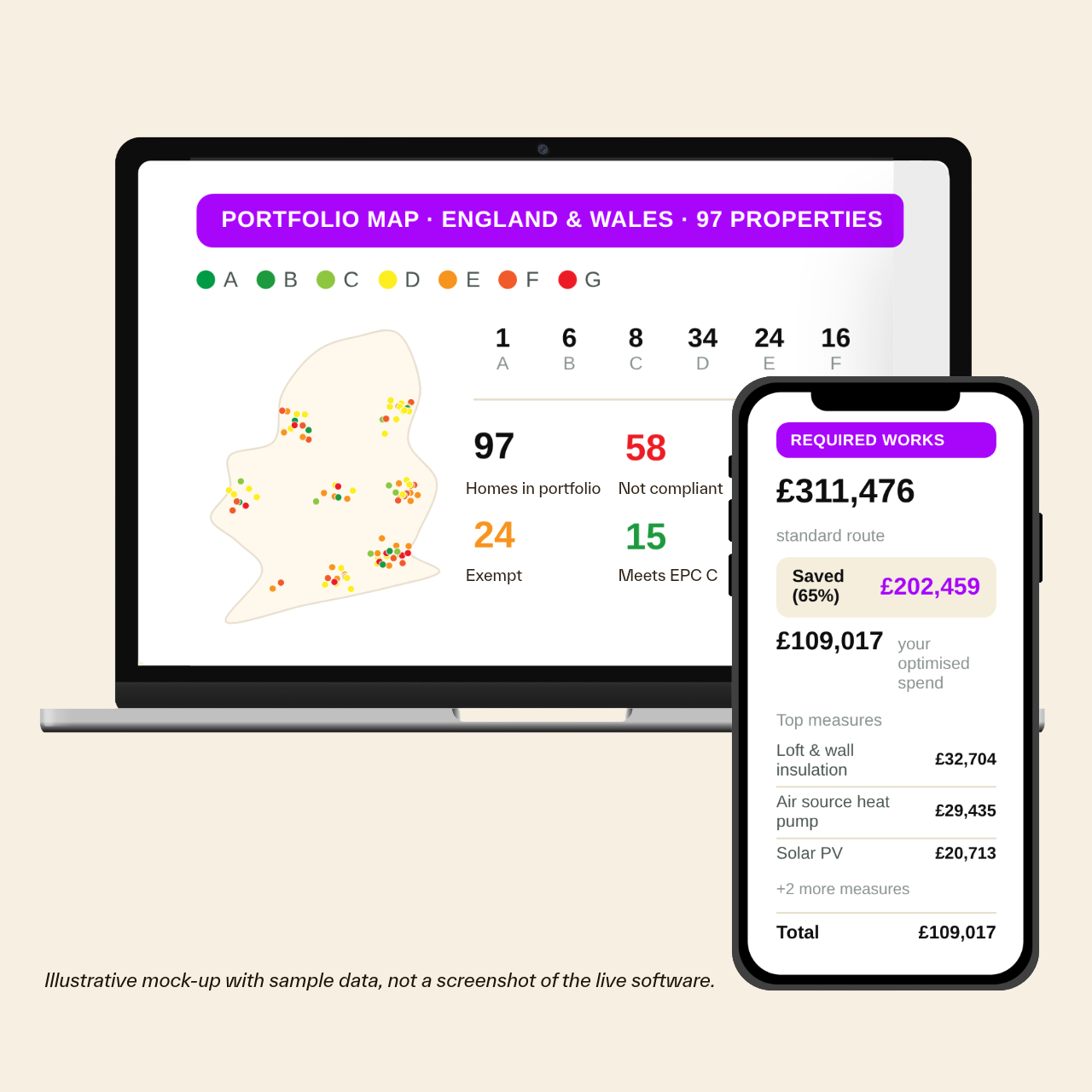
Standard EPC recommendations don’t rank measures by value for money. We do, for every property, cutting costs by up to 65%**.
- Double glazing: high cost, around 3 EPC points
- Roof insulation: a fraction of the cost, closer to 10 points
- 100-property portfolio: around £200,000 in potential savings
- One screen: every property, its grade and the works it needs, ranked by cost
** Based upon Department for Energy Security and Net Zero (DESNZ) 2025 estimate of £6,100-£6,800 per property and Cotality's data modelling.
FAQ
What exactly does the platform do?
It's the report behind everything on this page. It gives you full visibility of your whole portfolio, flags anything that's exempt or already compliant, and builds a plan for the cheapest route to EPC C for whatever's left - simplifying everything so you can coordinate the works in the most effective and cost-efficient way. It also minimises your risk and takes out the guesswork, while stopping you overspending on works you don't actually need.
Is this relevant if I have a smaller portfolio?
This service is built for portfolio landlords with multiple properties, where the deadline stops being one decision and becomes many, each needing its own plan. That covers smaller landlords with multiple properties, regional portfolios and developers with 100–499, and enterprise or institutional portfolios of 500 or more - including HMOs and organisations like housing associations.
How do I know where my portfolio stands right now?
The quickest way is our cost & risk check above - it gives you a quick view based on how many properties you manage. Once you're set up on the platform, everything's sorted automatically, so the picture stays current.
Why must I carry out these upgrades? It feels like an optional expense?
It won't stay optional for long. Once the MEES changes take effect, you won't be able to legally let a property below EPC C. So really, this is the cost of keeping your rental income, not something extra on top of it. Acting early, at the lowest cost, is what stops it turning into a bigger bill later. It also means you're not competing with every other landlord for a limited pool of contractors and installers once the deadline's looming.
What happens if I don't reach EPC C by the deadline?
You could face fines of up to £30,000 per property, per breach - and you won't be able to re-let it legally until it's brought up to standard.
Does the deadline apply the same way to new and existing tenancies?
No. There's now a single deadline: from 1 October 2030, all privately rented homes in England and Wales - new and existing tenancies must meet EPC or have a valid exemption registered.
Why should I start now rather than closer to the deadline?
Every portfolio landlord is working to the same deadline, so there's likely to be a capacity crunch in quality trades. And in the second half of 2027, the measurement criteria is changing. The government hasn't yet confirmed the exact criteria to achieve compliance, so it's possible that properties rated C now may not be later. If you lock in a C rating before HEM replaces RDSAP 10 EPCs, that certificate is valid for 10 years — potentially thousands of pounds more saved per property.
Is there a limit to how much I'll have to spend?
Yes. The government has confirmed a £10,000 cost cap per property. If you've spent up to £10,000 on the recommended improvements and the property has still reached EPC C, you can register a cost cap exemption. Reasonable EPC assessment costs count towards the cap. In practice, our clients average £2,135 per property, against a government estimate of £6,100.
Why do landlords end up overspending on the wrong works?
Usually because they're working without visibility of where they actually stand. One industry survey found that 95% of landlords don't know their property's current EPC points score, which makes it easy to spend on the wrong thing. Double glazing, for example, can cost a lot and adds only 3 points, while roof insulation costs less and adds 10. Without that visibility, it's easy to pour money into upgrades that barely move the rating. Our engine ranks every measure by cost-effectiveness for your specific property, so you're never guessing.
Can you also manage the building works?
As an optional add-on, we can oversee the works through our network of accredited installers, so everything's completed to standard, and you're not the one chasing quotes, scheduling trades or losing evenings to it. We all know there are unscrupulous tradespeople out there. Get it wrong and you're looking at failed inspections, repeat visits, and potentially paying for the job twice. All of our approved installers are accredited to the government's standard to give you peace of mind.
Speak with a data expert
Let's get this conversation started! Our team is here to provide you with more information and answer any questions you may have.