


Mitigate wildfire risk with precision catastrophe modelling
Escalating wildfire volatility threatens property insurance portfolios. Cotality’s advanced stochastic model delivers the technical precision needed to accurately quantify exposure, prevent correlated losses, and secure underwriting profitability.
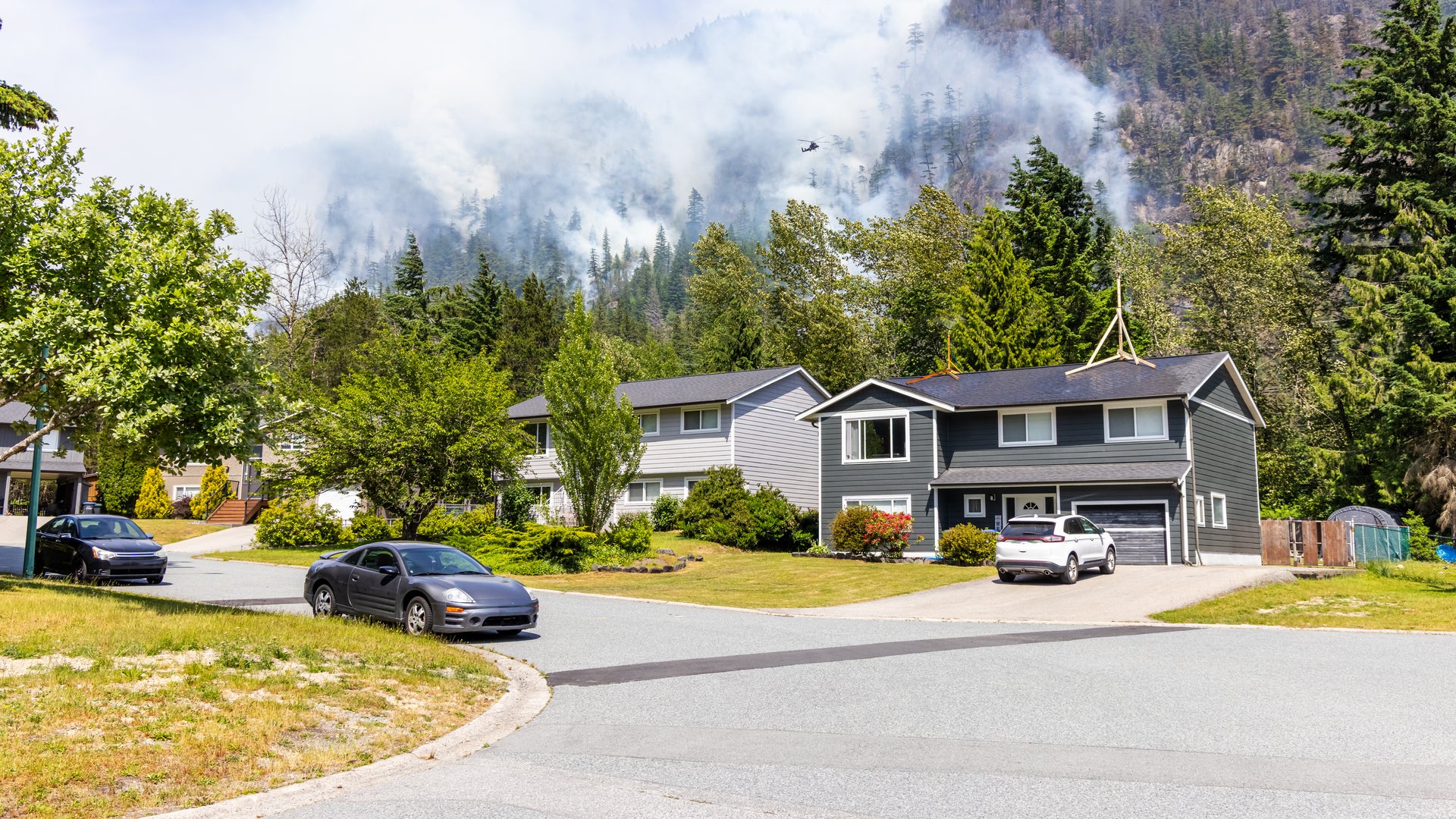
Wildfire catastrophe modelling for insurers
Climate shifts, Wildland-Urban Interface (WUI) expansion, and inflation have transformed wildfire risk into a material threat for Western U.S. property insurers. Cotality provides the predictive analytics required to assess this evolving exposure and protect underwriting margins.

8x
Annual area burned by Western U.S. wildfires has increased eightfold since 1985, accelerating portfolio exposure.
10x
Wildfires caused $81.6B in damages from 2017–2021—a 10x increase over the previous five years, compounding insurer losses.
46%
U.S. homes in wildfire-prone zones grew 46% from 1990–2020, significantly raising correlated structural risk.
Strategic wildfire risk models
High-fidelity modelling
Our wildfire model acts as a predictive digital twin of the landscape, accounting for climate variability, human ignition volatility, and the mitigation steps taken at individual property levels.
Granular risk precision
To optimise portfolio management, our model resolves the strict "Risk Gradient." This prevents the blind accumulation of correlated losses by calculating accurate risk differentials between adjacent properties.
Seamless API interoperability
Using standardised inputs, secure cloud computing, and seamless APIs, Navigate delivers scalable, real-time data. Easily integrate high-fidelity catastrophe modelling outputs directly into existing underwriting workflows.
U.S. wildfire catastrophe model

Cotality's U.S. wildfire catastrophe model is a probabilistic risk-assessment solution designed to quantify physical burn and smoke damage across 14 high-risk U.S. states (including California, Texas, and Florida). Driven by expanding wildland-urban development and catastrophic historical events, such as the $12 billion in insured losses from the 2017 California wildfires, the model evaluates property-specific risk modifiers, including roof types, perimeter clearance, and local fuel loads, within a full simulation framework. Empirically validated against historical claims data, it equips insurers with the data needed to manage risk transfer and capital adequacy, while helping mortgage lenders identify impaired property assets across vulnerable portfolios.
Related Resources


How can we help you?
Let's get this conversation started! Our team is here to provide you with more information and answer any questions you may have.