Foreword
Energy efficiency in housing is something I have experienced personally, professionally and increasingly, as part of Australia’s national housing conversation.
When we rebuilt our own home to a high standard of energy performance, I saw first-hand what good design can deliver. A home that is quieter, holds its temperature, is healthier, more comfortable and less expensive to run. Time spent in Europe reinforced the same point.
In many countries, people expect their homes to perform and for energy ratings to be visible. They expect comfort, efficiency and running costs to be part of the ordinary conversation when a property is bought, sold or leased.
In Australia, we have too often treated those things as optional extras. That must change.
This has also been central to my message internationally. At the United Nations in New York this year, I spoke about the global housing crisis, arguing that one of the great mistakes in housing policy is to separate supply, affordability, energy performance and resilience into different conversations. They are not separate. The homes we build, upgrade, sell and manage today will determine the cost, comfort and sustainability of Australian households for decades.
For the real estate profession, this presents both an obligation and an opportunity.
Rather than waiting for energy efficiency policy changes to arrive and scrambling to respond, it is the Real Estate Institute of Australia’s (REIA) view that the real estate profession should be among the leaders.
Agents have always helped consumers make sense of property. We explain location, land, condition, presentation, comparable sales, rental yield, buyer sentiment and risk. Energy performance should be no different. It’s another essential element of the sought-after professional advice we provide.
A home’s orientation, insulation, glazing, heating, cooling, solar, draught sealing and hot water systems are not technical side issues. They’re integral to how a property feels, what it costs to live in and, increasingly, how the market values it.
There is a growing commercial case that energy-efficient features have a positive influence on buyer engagement and price. Agents who understand this impact will be better placed to advise vendors, support purchasers and property investors, and identify value that might otherwise be missed.
But this transition cannot be designed in a policy vacuum. It must work at the kitchen table, at the listing presentation, at the open for inspection, in the property management office and in the negotiation between buyer and seller.
For that to happen, the industry and agents need the appropriate tools, training, confidence and reliable information, not another layer of unclear compliance dropped onto an already complex transaction process.
This report is intended to move the needle in this evolution. It examines the condition of Australia's housing stock, the policy changes underway and the growing body of evidence linking energy performance to household costs, comfort and property value. It also draws on the experiences of agents already engaging with these conversations and identifies the practical steps needed to support successful implementation across the industry.
The REIA’s immediate responsibility is to ensure our members are active contributors to the design and delivery of this transition. We want, and will benefit from, a system that improves consumer information, supports better housing outcomes, recognises the realities of implementation and positions real estate professionals as trusted advisers in a changing market.
About this report
Energy performance is becoming a non-negotiable part of residential property transactions.
Governments are progressing home energy rating frameworks, lenders are paying closer attention to housing efficiency, and buyers and renters are asking more questions about running costs, comfort and energy use. Information that was once difficult to access is becoming more visible across the property market.
Home performance is no longer a niche or specialist topic. It is another factor influencing how homes are marketed, compared, valued and managed.
REIA and Cotality have collaborated on this report to help the industry understand what is changing, what it means in practice, and where opportunities and challenges are likely to emerge.
The report examines the current policy and disclosure landscape, and the evidence linking home performance to property value, consumer behaviour and investment decisions. It also considers the practical realities of implementation, including ratings systems, data availability, technology, industry capability and market readiness.
As trusted advisers to buyers and sellers at point of lease or sale, real estate agents are uniquely positioned as the front line of the energy transition. Agents can effectively communicate a property’s genuine points of difference, including whether it has solar generation capability, system size and battery storage capacity. This is part of the agent’s fiduciary and due diligence responsibility towards their clients, which guards against misrepresentation and promotes a better understanding of the associated benefits.
Drawing on research, market analysis, case studies and consultation with industry leaders, the report sets out practical actions for industry bodies, agencies and property professionals as home performance becomes an established part of Australia's residential property market.
Executive Summary
Home energy performance is becoming an increasingly important part of residential property transactions, influencing how homes are marketed, compared and assessed.
Not only are buyers and renters paying closer attention to running costs, comfort, and energy use, but governments are advancing the Home Energy Rating Disclosure Framework (Disclosure), lenders are moving towards incorporating energy data into lending decisions, and new assessment tools are making home performance information more accessible.
Most of Australia's existing housing stock was built before modern energy efficiency standards were introduced. As a result, there is a substantial performance gap between newer and more established homes, and consumers often have little information about how the properties they buy, sell or rent are likely to perform.
For most buyers, renters and investors, home performance is about more than sustainability. It affects comfort and the ongoing running costs of owning or occupying a home. Research from Australia and overseas shows those factors are increasingly reflected in buyer behaviour, with higher-performing homes attracting stronger demand and price premiums in many markets.
Consumer expectations and policy reform are making home performance another consideration in residential property transactions. The case studies drawn upon in this report show there is an increasing expectation for more transparency about a home’s performance, creating new opportunities for property professionals to explain to clients what that means in practical and financial terms. Will this property be more comfortable, cheaper to run and, ultimately, more valuable?
Successful implementation of more rigorous disclosure requirements will depend on industry capability, consumer education, accessible data, practical assessment pathways and technology that integrates energy information into the systems practitioners already use.
Property professionals do not need to become technical experts, but they do need the confidence to explain home performance in practical language. Those who build that capability early will be better placed to advise clients, communicate value and respond to changing market expectations.
The current state of Australian homes

The performance gap of Australian homes
When people inspect a home, they make quick judgments about comfort, running costs and how it’s likely to perform. They notice whether it feels cool on a summer afternoon, how sunlight reaches key rooms, or how hard the heating and cooling systems are working. Yet these observations often rely on guesswork. Unlike appliances or vehicles, there has been no simple, consistent way to compare the energy performance of an established home before buying or renting.
Australia's housing stock reflects decades of relatively cheap energy and building standards, with many homes designed to rely on mechanical heating and cooling rather than passive design. As a result, homes of similar size, age and location can perform very differently once occupied with some staying comfortable with low energy use and others requiring significantly more to achieve the same outcome.
This gap is significant, with around 70 per cent of established houses, excluding apartments, estimated to perform below 4 stars out of 10 under NatHERS, compared with the 7-star standard now required for new homes.1 Improving a home from 3 to 5 stars can reduce heating and cooling energy use by around 40 per cent.1
This matters as home performance directly impacts running costs, year-round comfort, resilience in extreme weather and overall affordability. While buyers and renters can easily compare size, location and presentation, they often have limited visibility of how a home will actually live day to day. Plus, much of what drives better energy performance, such as insulation, glazing, orientation and draught sealing, is often hidden or inconsistently described in listings.
As energy costs rise, Cotality analysis suggests that buyers and renters have placed greater weight on the features that influence energy use. Growing evidence suggests those preferences are now being reflected in market outcomes.
Home performance is beginning to influence buyer behaviour, rental demand, lending decisions and investment choices, as shown in the case studies detailed later in this report. As more information becomes available, those market signals are likely to become stronger.
Cotality analysis of more than six million Australian homes found houses with solar panels achieved prices around 2.7 per cent higher than comparable properties without solar. Separate analysis found each additional NatHERS star was associated with an estimated average 1.3 per cent greater value nationally.²

A national framework for measuring performance
Australia's primary framework for measuring home performance is the Nationwide House Energy Rating Scheme (NatHERS). Introduced in 1993, NatHERS assesses the thermal performance of a home on a scale from zero to 10 stars based on the amount of heating and cooling required to maintain comfortable indoor temperatures throughout the year.
Higher-rated homes require less energy to maintain those conditions, while lower-rated homes rely more heavily on mechanical heating and cooling.
For many years, NatHERS was primarily used to assess new homes. Its expansion to existing homes in 2025 marks an important step towards creating a nationally recognised framework capable of assessing Australia's established housing stock.
Stage 2 of NatHERS for Existing Homes was launched on 1 July 2026, providing a nationally consistent pathway for assessing the energy performance of existing homes. All states and territories have also agreed to a nationally aligned Home Energy Ratings Disclosure Framework, creating a consistent structure through which disclosure schemes can operate across different jurisdictions. The Federal Government has launched homeenergyrating.gov.au, a national website and platform giving consumers and industry direct and accurate access to home energy rating information and resources. The ACT provides Australia's longest-running example of home energy efficiency disclosure in practice. Energy efficiency ratings have been required at the point of sale since 1999, giving the territory more than two decades of market experience.
Energy ratings do not, on their own, determine whether a property represents good value or suits a buyer's needs. They help the market better understand a property’s potential running costs, long-term comfort and potential upgrade opportunities.
The move towards disclosure
Beyond the ACT, home energy performance disclosure in Australia is moving from policy development to implementation.
Under the National Energy Performance Strategy, governments have committed to improving the performance of Australia's housing stock and developing nationally aligned approaches to disclosure.
Although implementation and timing will differ between states and territories, there is a national consensus to make home performance information more visible during residential property transactions.
The ACT has required energy ratings at the point of sale since 1999, demonstrating that disclosure can become part of the normal buying and selling process. The NSW and Australian governments have been conducting a Home Energy Ratings Disclosure trial to inform the possible implementation of disclosure at the point of sale or lease. While Victoria will have minimum energy efficiency standards for rental housing from 2027.
Minimum energy efficiency standards for rentals are also progressing in other jurisdictions. Some states and territories have introduced minimum rental requirements relevant to energy efficiency, while others are developing or considering further reforms.
Consumer support has also been strong. Research by the Australian Government's Behavioural Economics Team found 86 per cent of participants considered it important to see a home's energy rating when buying and 75 per cent when renting. Yet the level of information available currently falls short, with consumers usually able to access far clearer energy performance data for a $1,000 washing machine than a $1 million home. A national cost-benefit analysis released by Energy Ministers in December 2024 also found mandatory disclosure at the point of sale would deliver a net economic benefit.
Australian Energy Efficiency Standards by State and Territory (2026)
What disclosure means for the industry
More widespread mandatory disclosure will introduce another category of information into residential property transactions.
Buyers and renters will have greater visibility of how a home is likely to perform once occupied. Sellers and landlords will have greater opportunities to identify, improve and communicate the features that influence comfort, running costs and value.
Home performance is likely to become another consideration during appraisals, listing presentations, leasing discussions and investment decisions. Solar, insulation, draught sealing, efficient heating and cooling, electrification and other upgrades are likely to feature more often in conversations with clients.
Real estate professionals can prepare to help clients understand what those features mean in practical terms and how they influence comfort, running costs, future upgrade opportunities and property value.
Creating a common language for home performance
As home performance becomes a more visible part of residential property transactions, the industry would benefit from a consistent way to record and communicate information about how homes perform.
One of the biggest challenges is inconsistency. Features such as solar, insulation, glazing, draught sealing and efficient heating and cooling are often described differently across listings or omitted altogether, making it difficult for buyers and renters to compare homes.
Research from the New South Wales voluntary disclosure trials found consumers responded more positively when energy ratings were presented alongside features that improved a home's performance. While a rating provides an overall measure, the supporting information helps explain what it means in practical terms.
The PropTech Energy Efficiency Features Standard (EEFS) was developed to address that challenge. Created through collaboration between government, real estate institutes and major property technology providers, including Cotality, REA Group, Domain and MRI Software, it establishes a common set of fields for recording energy performance features and formal NatHERS ratings across property platforms.
Consistent data standards will make it easier to compare homes, improve how energy features are recorded across the market and give property professionals greater confidence when discussing home performance with clients.

Finance and green lending
Finance markets are also adapting to support home energy improvements. The Australian Government has committed $1.3 billion to establish the Household Energy Upgrades Fund, administered by the Clean Energy Finance Corporation in partnership with major lenders to support upgrades across more than 110,000 homes.3
More than $800 million has already been committed through participating lenders. Separately, banks including Westpac, Commonwealth Bank, NAB and ANZ offer various finance products to help fund upgrades such as solar, batteries, insulation, double glazing and electrification.4
As home performance information becomes more widely available, lenders will have greater opportunities to incorporate it into finance products, while government-backed programs continue supporting households to improve the performance of existing homes.
Data, tools and industry capability
Disclosure requires more than a ratings framework. It also depends on accessible data, practical technology and industry capability.
While legislation is still being introduced and formal ratings become more widely adopted, estimated ratings can play an important role. By combining property data with CSIRO’s AI-based RapidRate engine, Cotality has generated estimated energy ratings for millions of Australian homes. While they do not replace formal assessments, these estimates provide a practical starting point for understanding performance at scale and enable earlier comparison between homes.
Technology providers are also integrating energy information into the systems used for appraisals, market analysis and client conversations. Making performance information available through existing systems will help reduce barriers to adoption.
Training is expanding alongside those technology solutions. Real estate institutes, governments and industry are developing education and resources that explain home performance and how the industry can communicate it confidently as disclosure becomes more widely adopted. Again, these offerings will only grow and improve as the agenda gathers momentum.

Real impact from Energy Efficiency:
Case studies from across Australia
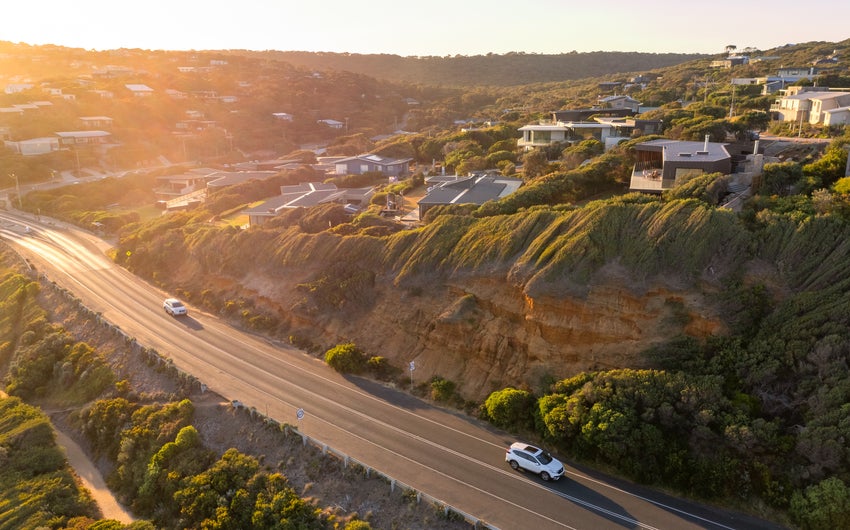
Case Study 1: Energy performance drives buyer demand and a premium price
198 Tobys Hill Road, Cygnet TAS
Four-bedroom, two-bathroom
Rural lifestyle property
Sold August 2025: $1,475,000
Sale-period comparable median:
$890,000 (four-bedroom house)
198 Tobys Hill Road, Cygnet demonstrates how contemporary design and energy efficiency can materially elevate the value proposition of a regional lifestyle property. Sold in August 2025 for $1,475,000, the property achieved a significant premium to the broader Cygnet housing market. Against the four-bedroom median of approximately $890,000, the sale represented a value differential of $585,000, or approximately 66 per cent above the median.
While the property’s scale, rural setting and lifestyle appeal were important, its value was amplified by the quality and performance of the home itself. This was not simply a large landholding with a dwelling attached. It was a contemporary, high-comfort, energy-efficient home that offered buyers a rare combination of architectural appeal, self-sufficiency and lower ongoing running costs.
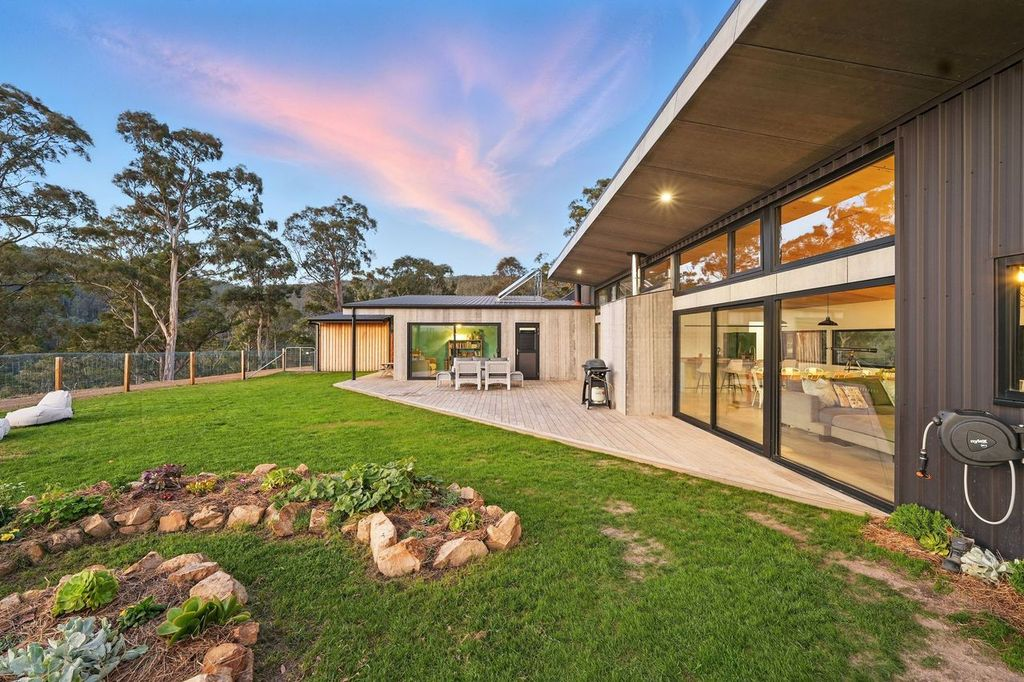
As a contemporary off-grid home in Tasmania’s Huon Valley, 198 Tobys Hill Road was unlike most properties buyers had previously encountered. Rather than adopting the region’s more traditional off-grid style of mud-brick, earth construction or owner-built dwellings, the home paired modern architecture with practical energy performance.
Its features included thermally broken double glazing, an insulated concrete slab providing thermal mass, hydronic heating and a fully integrated battery system.
The home was not only more efficient, but more comfortable, more resilient and less exposed to rising household energy costs.
Homelands Property agent Amber Leighton said the vendor's goal was not to build an off-grid home solely for off-grid enthusiasts.
“They wanted to create a really beautiful, aesthetically pleasing house that happened to be off-grid and happened to have lower running costs,” she said.
Buyer interest was strong from the outset. The campaign generated 23 formal enquiries, numerous phone and SMS enquiries, and 19 inspections. Interest came from a broad buyer pool, including professionals, families and semi-retirees seeking a modern rural lifestyle property. The result reflected the strength of the property’s overall value proposition. Buyers were not only responding to the location and land size, but to the practical advantages of a high-performance home.
Leighton believes the combination of contemporary design, energy independence and low running costs helped distinguish 198 Tobys Hill Road from more traditional lifestyle offerings in the region.
“The rarity increased its value,” she said.
The sale suggests that, where energy efficiency is integrated into a desirable and well-designed home, it can become more than a technical feature. It can form part of the property’s market appeal, helping create stronger buyer engagement, increased competition and a measurable price premium.
198 Tobys Hill Road sold in August 2025 for $1,475,000, approximately 66 per cent above the Cygnet four-bedroom median of $890,000. The campaign generated 23 email enquiries and 19 inspections, with four buyers progressing to near-offer before a single formal offer, close to the asking price, was presented to the vendors and accepted.
Case Study 2: Comfort, liveability and performance result in same-day offer
117 Kalgoorlie Street, Mount Hawthorn WA
Three-bedroom, two-bathroom home, 200sqm lot
Sold August 2023: $1,250,000
Sale-period comparable median: approximately $1.01 million to $1.10 million
Current rental return: $1,250 per week
Current suburb median rent: $950 per week, three-bedroom houses
117 Kalgoorlie Street, Mount Hawthorn demonstrates how thoughtful design and energy performance can materially elevate the value proposition of a compact urban home.
Sold in August 2023 for $1.25 million, the property achieved a price approximately 14 to 24 per cent above comparable three-bedroom homes sold during the same period. Based on that comparable range, the sale represented a value differential of approximately $150,000 to $240,000, despite the property occupying a compact 200sqm lot.
While location, architectural quality and inner-urban convenience were important, the result was amplified by the way the home performed. This was not simply a well-located small-lot dwelling. It was a carefully designed, high-comfort, energy-efficient home that offered buyers natural light, cross-ventilation, lower running costs and a level of liveability that exceeded expectations for its size.
Designed as an inverted home, the living areas, kitchen and master suite were positioned on the upper level to capture northern light, park views and passive solar gain. Energy performance was integrated through thermally broken double glazing, crossflow ventilation, strategic shading and polished concrete flooring, helping regulate indoor temperatures throughout the year. A wood burner provided efficient heating during winter.
The home was brighter, more comfortable and less expensive to operate, while delivering a quality of living that distinguished it from more conventional three-bedroom homes in the area.
Community West Real Estate founder and buyer’s agent Chiara Pacifici, who introduced the buyers to the property, said the buyers were not necessarily using technical energy-efficiency language, but they were clearly seeking the benefits that a better-performing home provides.
“The majority of buyers don’t walk in asking for energy efficiency,” she said.
"I start the conversation around liveability and design features that matter to them. These features can include natural light, indoor air quality, north-facing living areas and spaces that feel good to be in."
Pacifici obtained the design specifications from the selling agent and researched energy performance information online and translated it into practical outcomes the buyers could understand, including comfort, ventilation, natural light benefits and likely running costs.
The buyers made an offer the same day and paid the full asking price.

After moving into the home, the buyers said the design delivered exactly what they had hoped for.
“A lot of natural light comes in during the day, so we almost feel like we’re outside in the park,” the buyer said.
"It’s actually very cosy in winter; we get the fireplace going when it is really cold, and then in summer we open the windows. There’s a bit of a breeze coming through, and the light works in all seasons.”
The property’s performance has continued beyond the initial sale. It has since been rented for $1,250 per week. Against a current Mount Hawthorn three-bedroom house median rent of approximately $950 per week, that represents a rental differential of around $300 per week, or approximately 32 per cent above the current suburb median.
Pacifici believes the experience highlights the importance of understanding and communicating home performance in practical, buyer-focused language.
“If buyers are looking at two similar homes and one performs better, but nobody explains the difference, they can make the wrong decision. A better-informed client makes better-informed decisions.”
The sale suggests that energy performance does not need to be the headline feature to influence purchasing decisions. When integrated into good design and explained in terms of the value to buyers, such as comfort, natural light and lower running costs, it can strengthen buyer confidence, support stronger competition and contribute to measurable sale and rental premiums.
117 Kalgoorlie Street sold in August 2023 for $1.25 million, approximately 14 to 24 per cent above comparable three-bedroom homes sold during the same period. The sale represented an estimated value differential of approximately $150,000 to $240,000, despite the property occupying a compact 200sqm lot.
The buyers offered the full asking price after understanding the home's design and performance credentials. Since the sale, the property has achieved a rental return of $1,250 per week, approximately 32 per cent above the current Mount Hawthorn median rent for a three-bedroom house.

Case Study 3: Energy performance helps drive sale price 22% above median
3/8 Wood Street, Fremantle WA
Three-bedroom townhouse,
East Village at Knutsford
Sold April 2026: $1,555,000
Sale-period comparable median: $1,276,000 (three-bedroom townhouses)
Broader unit median: $725,000
3/8 Wood Street, Fremantle demonstrates how energy performance can become a measurable point of difference in medium-density housing, strengthening buyer demand and broadening a property’s market appeal.
Sold in April 2026 for $1,555,000, the townhouse achieved a significant premium to the broader Fremantle unit market. Against the current three-bedroom unit/townhouse median of approximately $1,276,000, the sale represented a value differential of approximately $279,000, or around 22 per cent above the median. Against the broader Fremantle unit median of approximately $725,000, the sale was more than double the suburb benchmark.
While the property’s location, design quality and near-new condition were important, its value was amplified by the quality and performance of the home itself. This was not simply a new townhouse in a desirable Fremantle location. It was a high-performing, low-maintenance, energy-efficient home within a development designed to make sustainable living practical, comfortable and accessible.
The townhouse is part of the East Village at Knutsford development, a project which demonstrated how sustainable medium-density housing could be delivered at scale. Each townhouse in the development achieved a 7.5-star NatHERS rating and incorporated rooftop solar, a shared community battery, rainwater storage, bore-fed irrigation and passive design principles.
Rather than requiring buyers to upgrade an existing home over time, energy performance had been integrated into the development from the outset. These homes delivered greater comfort, lower running costs and improved resilience while simplifying the transition to more energy-efficient living.
The market response was strong. The campaign generated 230 enquiries, 90 inspections and six offers, significantly outperforming comparable townhouse campaigns in the surrounding area despite similar bedroom and bathroom configurations.
Ray White Dethridge Groves sales executive Kat Goddard said the sustainability features attracted buyers from well beyond Fremantle’s traditional catchment.
“We had buyers coming from a really wide range of postcodes that we wouldn’t normally see for a Fremantle property,”
she said.
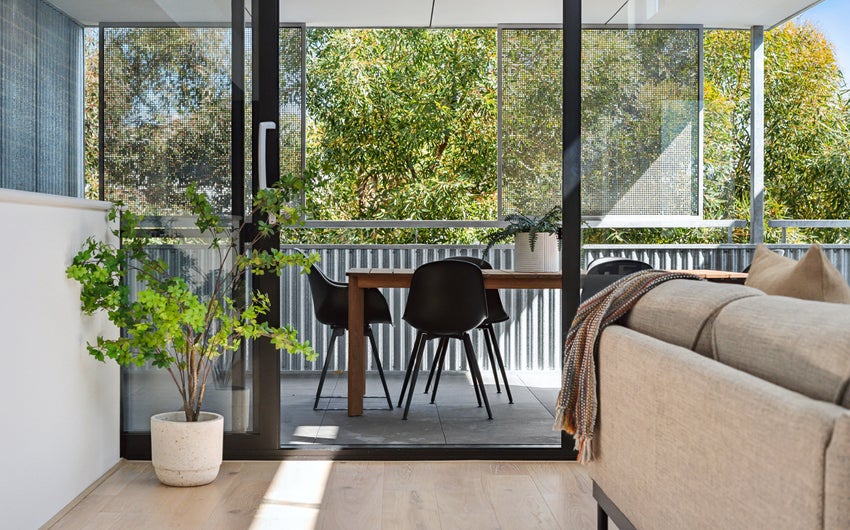
“They were specifically coming because they liked what the development was delivering.”
Buyer feedback suggested sustainability had become more than a marketing feature. One purchaser rated the home’s sustainability credentials eight out of 10 in influencing their decision to buy, while another described the features as a significant bonus alongside an already desirable location.
“People felt like the hard work had already been done for them,” Goddard said.
Selling the homes also required a deeper understanding of the technology behind them. Buyers regularly asked questions about the community battery, rooftop solar and how the shared infrastructure operated. One purchaser said the agent played an important role in explaining how the systems worked and what they meant in day-to-day living.
Goddard believes that understanding home performance is becoming an increasingly important part of selling modern housing.
The campaign suggests that energy performance can influence far more than running costs. When integrated into the design of a development and clearly explained during the sales process, it can expand the buyer pool, generate stronger engagement and support a measurable price premium.
3/8 Wood Street sold in April 2026 for $1,555,000, approximately 22 per cent above the current Fremantle three-bedroom unit median and more than double the broader Fremantle unit median. The campaign generated 230 enquiries, 90 inspections and six offers, attracting buyers from well beyond Fremantle’s traditional catchment and significantly outperforming comparable townhouse campaigns in the surrounding area. The result demonstrates how energy performance, when built into the design and clearly communicated, can create a meaningful competitive advantage.
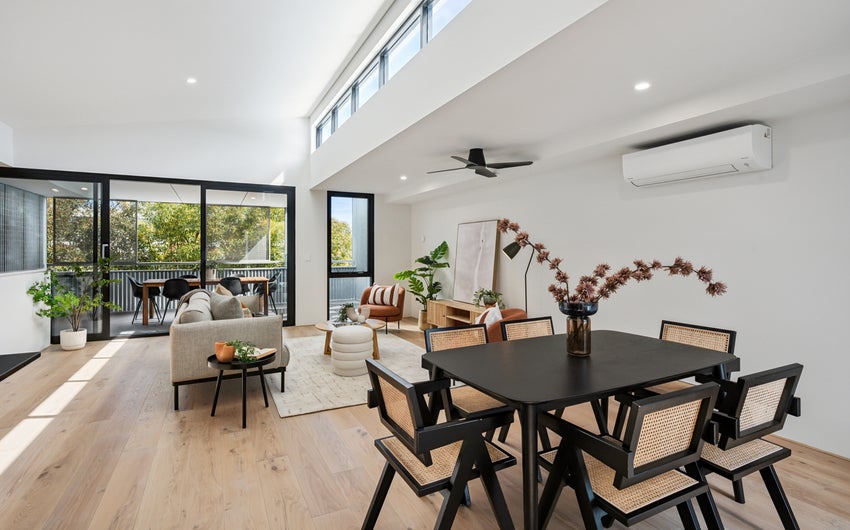
Case Study 4: Six-star home rented for 35% more than comparison 2.5-star property
O’Connor, ACT
Four-bedroom family home
Six-star home rented 2023: $1,350 pw
2.5-star alternative inspected: $1,000 pw
Rental differential: $350 per week (35%)
A family relocating to Canberra compared two four-bedroom homes available for lease in the inner-north suburb of O’Connor. One was an older home with an energy rating of 2.5 stars out of six, renting for approximately $1,000 per week. The other was a high-performing energy-efficient home with a six-star rating, renting for $1,350 per week, approximately $350 per week more.
Compared with the alternative property considered by the tenants, the higher-performing home represented a rental differential of approximately 35 per cent, or $18,200 in additional annual rental income. Compared with the current O’Connor four-bedroom house median rent of approximately $980 per week, the energy-efficient home rents for approximately $370 per week above the suburb benchmark, or around 38 per cent higher.
While the higher-performing home was newer and provided an additional bathroom and larger internal floor area, its energy performance formed a key part of its value proposition. Double glazing, hydronic heating, a heat pump hot water system, induction cooking, reverse-cycle air conditioning and a 20kW rooftop solar system were integrated into the home, alongside rainwater reuse and other energy-efficient features.
These features created a home designed to deliver greater comfort, lower running costs and improved resilience throughout Canberra’s hot summers and cold winters.
Despite the significant difference in rent, the tenants believed the higher-performing home would provide a better living experience. Having previously lived in Canberra, they were familiar with cold winters, poorly performing homes and the energy bills that often followed.
“I’d lived in plenty of cold houses in Canberra and knew how expensive they could be to heat,” the tenant said.
After moving into the property, the household’s first electricity account recorded in a $146 credit, including a government rebate, rather than an electricity bill.
More significant than the savings was the comfort. The tenant said living in a high-performing home had fundamentally changed their expectations of what a home should provide.
“We’re looking to buy a house, but if we were living in a poorer-performing home, we probably would have bought by now.”
The comparison highlights that energy performance can influence more than household running costs. For renters, it can become a deciding factor when weighing up competing properties, particularly where comfort, health and ongoing affordability are important considerations. For property managers and landlords, it demonstrates that well-performing homes can command higher rents while delivering a better living experience for tenants.
Faced with two comparable four-bedroom rental properties in O’Connor, the tenants chose the six-star home despite paying approximately 35 per cent more than the alternative 2.5-star property they inspected. Under the ACT’s rating system for established homes, six stars is the highest available rating. Against the current O’Connor four-bedroom house median, the rent represents an uplift of approximately 38 per cent, or around $370 per week.
After moving in, the home delivered net-positive electricity bills and an unexpected level of year-round comfort. The experience has been significant enough that the tenants have continued renting the property rather than purchasing a home, highlighting the value tenants can place on home performance.
The path forward for the property industry

The path forward
Industry consultation undertaken as part of this report identified broad support for improving the visibility of home energy performance, alongside recognition that successful implementation will require practical support for consumers and industry.
Participants identified five priorities for the successful adoption of energy performance disclosure:
- Strong implementation pathways
- Consumer education
- Practical incentives for property owners
- Better integration of energy information into existing real estate systems
- Training that gives agents and property managers the confidence to discuss energy performance with clients.
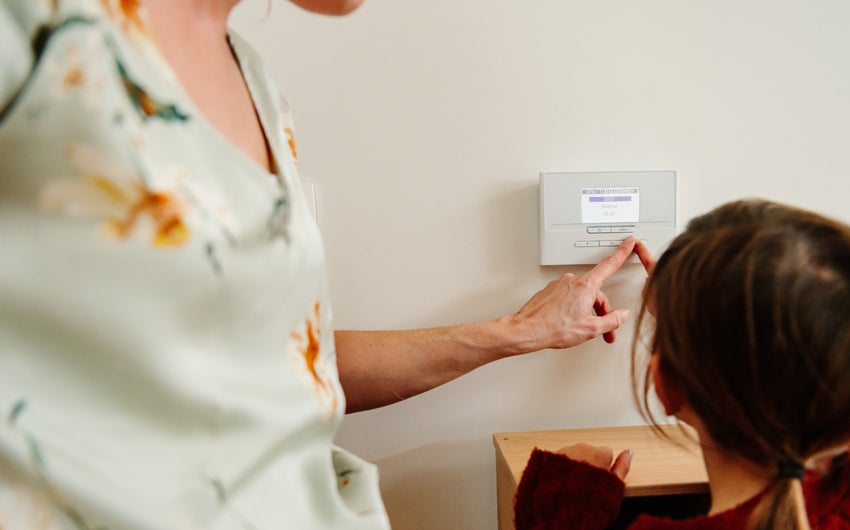
Home energy performance is becoming part of the property process. The focus now is ensuring it is introduced in a way that is practical, consistent and easy for consumers and industry to understand.
What the industry needs from government
Successful implementation will depend on more than ratings and disclosure frameworks. Industry participants consistently identified the need for certainty, consumer education and practical support for property owners.
The timing and structure of disclosure frameworks will differ between jurisdictions, but the industry needs clear information about what is changing, when it will occur and how new requirements will be introduced. Agencies, technology providers and training organisations need time to adapt systems, resources and workflows.
Consumer education will be equally important. Many buyers and renters understand the appeal of lower energy bills, comfortable homes and efficient heating and cooling, but fewer understand how energy ratings relate to those outcomes.
Explaining ratings through practical examples, such as comfort, running costs and household savings, will help consumers make more informed property decisions.
Property owners also need practical pathways to improve the performance of their homes. Rebates, grants and green finance products are already helping households undertake upgrades in many parts of Australia. Expanding those programs and making them easier to navigate will encourage more owners to improve their homes before sale or lease.
Governments also have an opportunity to continue working closely with industry. Real Estate Institutes are already engaging governments on disclosure policy, while agencies, technology providers and training organisations are developing the systems and resources needed to support practitioners. Ongoing collaboration will help ensure implementation remains practical, consistent and focused on better outcomes for consumers.
What the industry can do now
Preparing the industry starts with knowledge and confidence. Agents and property managers may not need to become technical experts, but they do need a practical understanding of ratings, common energy efficiency features and the factors that influence how a home performs.
Training already being developed across the industry will help property professionals explain energy performance in plain language and connect it to the issues clients care about most, including comfort, running costs, value and future improvement opportunities. There is likely to be a strong role for state REIs to build on national-level resources and tailor them to local market conditions.
Property managers may require particular attention because many of the decisions that influence home performance are already part of their day-to-day role. Conversations about heating and cooling, hot water systems, insulation and appliance replacement happen regularly and will increasingly influence both compliance and long-term property performance.
Access to information will be just as important as training. Property data providers, listing platforms and technology companies are already developing ways to incorporate energy information into the systems and platforms used every day. As automated assessments, digital property logbooks and comparison tools become more widely available, home performance will become easier to understand, compare and communicate.
What you can do now
Preparing for home energy performance disclosure does not require waiting for new regulations. Practical steps can be taken now to build knowledge and confidence.
Conclusion
Governments, lenders, technology providers and the property industry have already begun building the foundations needed to support the transition to greater disclosure in residential property transactions.
Mandatory disclosure is already operating in the ACT and looks to be on its way in New South Wales. Financial institutions are introducing green lending products and upgrade finance. Property technology providers are developing tools that integrate energy information into the systems agents already use. Real Estate Institutes across Australia are working with governments and industry to help shape practical implementation and support members through education and advocacy.
Real estate professionals do not need to wait for mandatory disclosure before building their knowledge. Every appraisal, listing presentation, leasing discussion and property management conversation provides an opportunity to better understand how homes perform and how those features influence comfort, running costs and value.
The case studies in this report show that home performance can influence sale prices, buyer demand, rental returns and tenant satisfaction. They also demonstrate that consumers are looking for practical information rather than technical language. Explaining what double glazing, insulation, solar or efficient heating means for everyday living is becoming as important as describing a renovated kitchen
or outdoor entertaining area.
Preparing for that shift does not require becoming an energy assessor. It requires understanding the features buyers, sellers, landlords and tenants are increasingly asking about, knowing where to find reliable information and having the confidence to explain it clearly.
Energy performance is set to become a central part of how residential property is marketed, managed and valued. Those who build that capability now will be better placed to advise clients, demonstrate value and adapt as disclosure becomes the standard across Australia.
The content of this report is provided for general information purposes only and should not be relied upon as professional advice.
Sources:
* Clean Energy Council: Rooftop solar and storage report, July-December 2025. Report published February 2026.
2. Cotality: Watt’s it Worth: Quantifying the value of solar and energy efficiency in real estate, September 2025.
3. Australian Government, Department of Climate Change, Energy, the Environment and Water: Household Energy Upgrades Fund.
https://www.dcceew.gov.au/energy/programs/household-energy-upgrades-fund
https://www.dcceew.gov.au/about/news/household-energy-upgrades-fund-reaches-10000-installations
4. Westpac, CBA, NAB and ANZ green home loans
https://www.beckmcleanfinance.com.au/blog/green-home-loans-rewards-for-energy-efficiency