Overview

Update: August 17, 2026
Over the weekend the record crest moved downstream through the White River system into the Indianapolis metropolitan area. Rescue crews conducted boat operations along the river in Indianapolis, the city operated its flood gates, and floodwaters cut through the Hazel Dell Parkway bridge in Carmel. On Monday morning, a levee break in Morgan County prompted new evacuations as the crest passed Martinsville.
Additional storms crossed the state Sunday, though drier weather is finally expected beginning Tuesday, which should allow rivers to recede and damage assessments to accelerate across the dozens of affected counties.
Cotality will continue monitoring this event and may provide updates when available.
Update: August 14, 2026
Indiana's flood emergency deepened overnight as rivers across the state rose to levels not seen in generations. Several gauges are breaking records that have stood for more than a century, and the National Weather Service office in Indianapolis issued 14 rare flood warnings in a single day after issuing just 10 in the previous seven years.
The threat has now reached the Indianapolis metropolitan area. The city of Anderson, home to roughly 54,000 people, issued a mandatory evacuation order for flooded sections of the city, and Hamilton County declared a state of emergency as the White River rose through Noblesville. Hamilton County commissioners also issued a travel watch amid renewed flash flooding.
Farther east, the damage picture is coming into focus. Connersville saw historic flooding with 26 water rescues, Cambridge City was inundated with dozens of residents rescued by boat and a night curfew imposed, and Muncie declared a local disaster emergency, with Delaware County officials warning of toxic gases in the air as floodwaters mix with fuel and chemicals during cleanup. The White River at Muncie crested near record levels.
The washed-out section of Interstate 70 near the Ohio border has reopened. However, storms struck the saturated flood zone for a sixth consecutive day on Friday, triggering new flash flood warnings across central Indiana, and forecasters warn the flood threat will persist into next week as additional rounds of rain move through.
Cotality will continue monitoring this event and may provide updates when available.
Update: August 13, 2026
A destructive one-two punch of severe weather has hit the Midwest this week, first from the sky, and then from the rivers.
On Tuesday, Aug. 11, a rare derecho raced across the Chicago metropolitan area and Northwest Indiana, spawning at least five confirmed tornadoes in the Chicago suburbs, including Mokena, Monee, and Orland Park, according to the National Weather Service. At its peak the storm system knocked out power to nearly 1 million customers across Illinois, Indiana, and Ohio.
In Northwest Indiana, utility NIPSCO reported approximately 250,000 customers without power in what the company called the largest outage event in its history, with "unprecedented" damage to the power grid. The city of Gary declared a citywide emergency after storm damage shut down much of the city, and the Indiana National Guard deployed to assist with cleanup across the region.
Record river flooding follows the wind
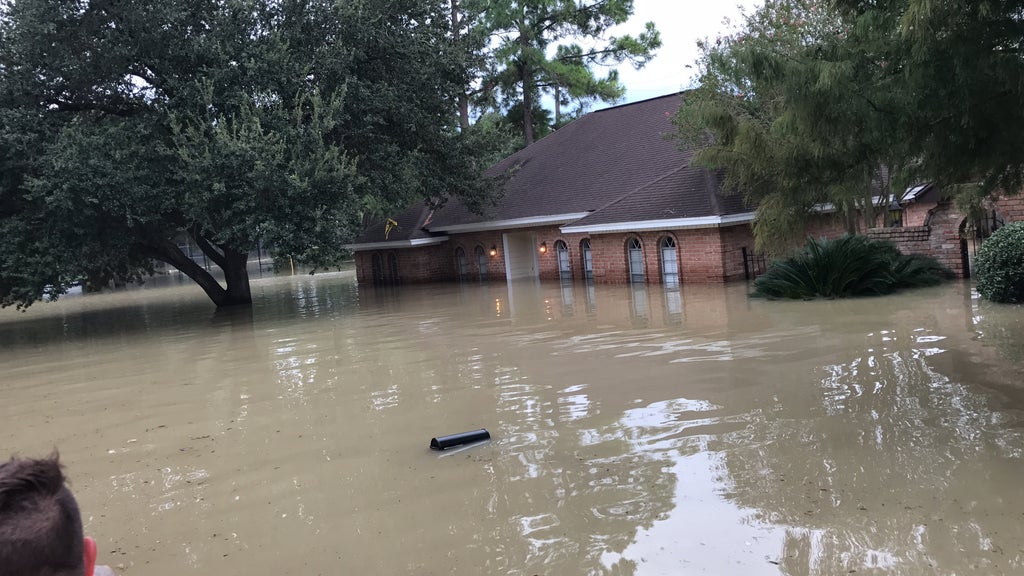
The same storm complex then stalled over central and southern Indiana, dropping torrential rain that has produced what officials describe as historic flooding. Gov. Braun declared a statewide disaster emergency on Thursday.
The Whitewater River in southeast Indiana rose to a record crest, forcing evacuations in Laurel and other river communities, and floodwaters washed out a section of westbound Interstate 70 near the Ohio border, closing a stretch of one of the nation's principal freight corridors.
Neighborhoods in New Castle and Muncie are underwater, travel advisories cover multiple counties, and loose barges on the swollen Ohio River briefly closed a bridge connecting Indiana and Kentucky.
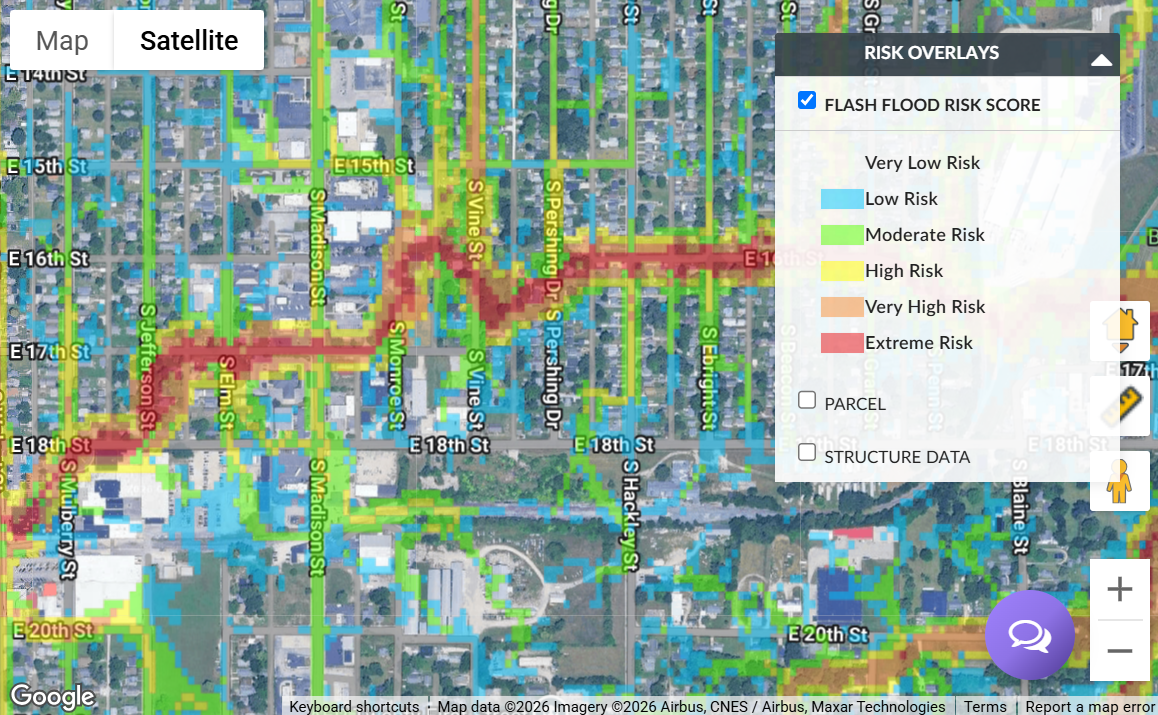
Figure 1: Map of Cotality Flash Flood Risk Score in Muncie, Indiana
Data source: Cotality RiskMeter™, 2026
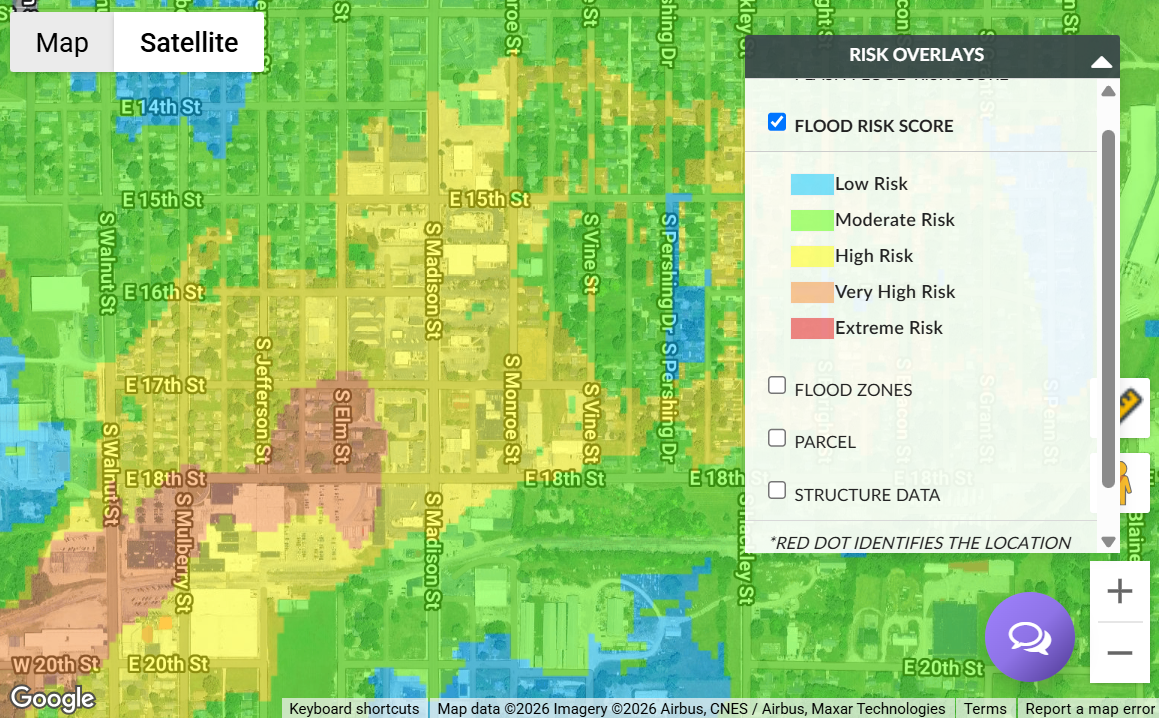
Figure 2: Map of Cotality Flood Risk Score in Muncie, Indiana
Data source: Cotality RiskMeter™, 2026
Forecasters warn that additional rounds of storms are expected to track over the saturated flood zone in the coming days, prolonging both the flood threat and the strain on recovery crews.
What this means for insurers
This event will generate claims across two distinct perils. The derecho and tornadoes will drive a classic severe convective storm claims profile across Northwest Indiana and the Chicago suburbs: roof, siding, and tree-fall damage, food spoilage and outage-related losses, and concentrated structural damage along tornado tracks.
The flooding presents a different picture. Standard homeowners policies exclude flood, and inland flood take-up in Indiana is low outside mapped floodplains, so much of the residential flood loss along the Whitewater and in New Castle and Muncie is likely to be uninsured, while commercial, auto, and NFIP policies absorb a portion.
The August 2020 Midwest derecho, which produced roughly $11 billion in insured losses, remains the benchmark for how costly this storm type can be, though this week's wind event was smaller in footprint.
Cotality will continue monitoring this event and may provide updates when available.