Overview

A major winter storm is impacting a broad portion of the United States. The system has produced heavy snow, sleet, freezing rain, and an intrusion of very cold air, with impacts extending from the southern Plains into the Mid-Atlantic, the Northeast, and New England.
Snowfall totals have varied considerably across the affected regions. Many locations have reported several inches of snow, while some areas in the Northeast received totals approaching 15 inches. Ice accumulation farther south has led to hazardous travel conditions and placed strain on infrastructure. Ice-covered trees and power lines resulted in widespread power outages across parts of the South and Southeast. The storm was accompanied by an outbreak of Arctic air that brought very cold temperatures across much of the central and eastern United States.
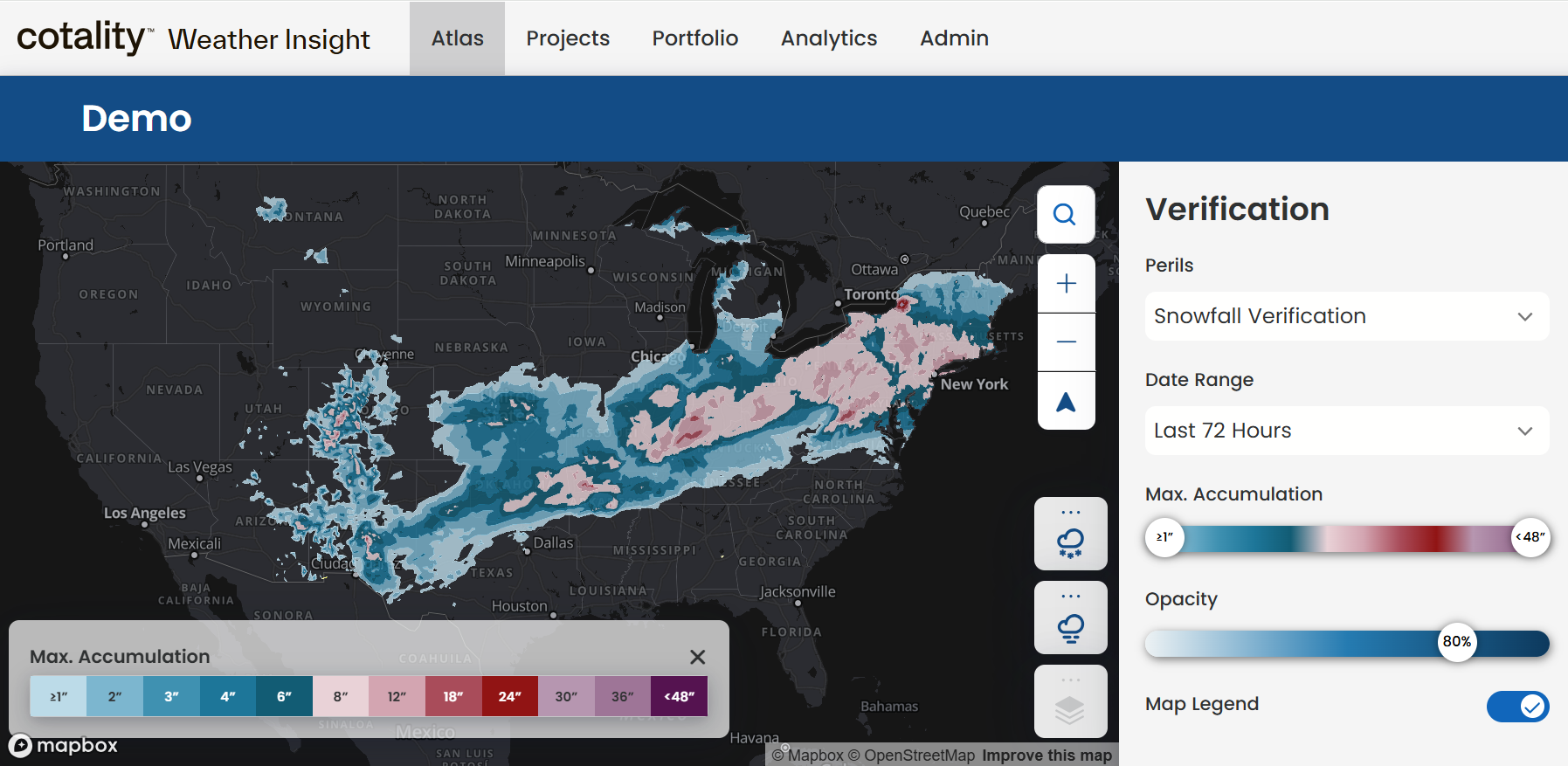
Figure: January 2026 winter storm snowfall accumulation. Source: Cotality Weather Insight (January 25, 2026)
Along the warmer southern edge of the system, thunderstorms developed across parts of the Gulf Coast and the Deep South on January 25. Forecast outlooks from the National Weather Service indicated a risk of severe weather across portions of southeast Alabama, southern Georgia, and the Florida Panhandle. The primary concerns included damaging wind gusts and the possibility of a few tornadoes, but subsequent updates indicated that the severe weather threat had diminished.
Disruptions were widespread nationwide. Airlines canceled more than 11,000 flights on January25, and many additional delays were reported as snow and ice affected major transportation hubs. Power outages impacted hundreds of thousands of customers and reached levels near one million customers at their peak. Restoration efforts are often slowed by ongoing cold temperatures and hazardous conditions.
Winter storms of this scale can lead to increased insurance claims associated with burst pipes and water damage. Extended power outages during periods of subfreezing temperatures can also raise the risk of business interruption and otherservice-related losses.
The storm prompted comparisons to previous major cold weather events in the United States, including the February 2021 winter storm that caused widespread failures in the Texas energy system and left more than 4.5 million customers without power. Peak outage levels during the January 2026 storm remained well below those experienced in 2021. Even so, the storm’s large geographic footprint and widespread disruption serve as a reminder of the serious risks posed by severe winter weather events.
Cotality will continue to monitor this event and provide updates as new information becomes available.